Ahead of the Nutrition for Growth Summit in Paris, Madagascar announces its national commitments to address the nutrition challenge
Significant political and financial mobilization is needed for Madagascar to achieve the 2030 Sustainable Development Goals, including Goal 2.1, which aims to eradicate hunger worldwide.

Antananarivo, 25 February 2025 - A workshop was held today under the high patronage of the Prime Minister, Head of Government, to launch Madagascar's commitments to accelerate nutrition policies and actions in preparation for the Global Summit on Nutrition for Growth, which will take place in Paris at the end of March.
The event was organized on the occasion of the visit of Ms Afshan Khan, United Nations Assistant Secretary-General and Coordinator of the Scaling Up Nutrition (SUN) Movement, and Mr Brieuc Pont, Secretary-General of the Summit.
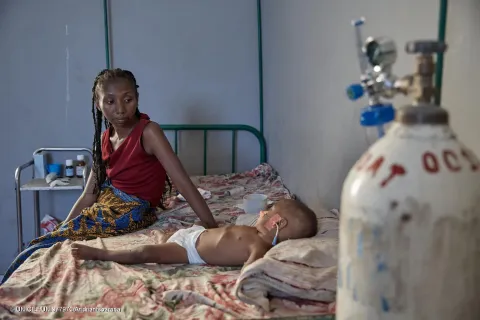
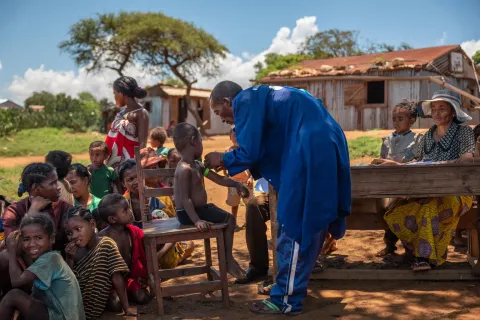
Malnutrition is a significant development challenge in Madagascar. Madagascar is one of the 28 countries in the world where chronic malnutrition has remained above 30% for more than a decade.
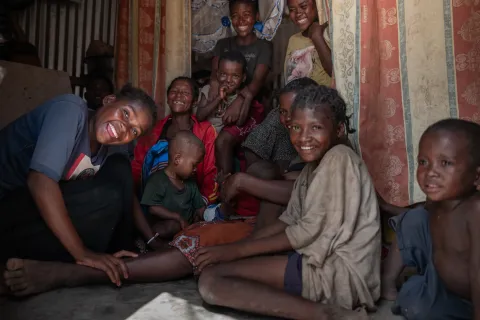
According to WHO standards, children under two should consume at least five of eight defined food groups to develop their cognitive and physical abilities. However, a recent report[1] found that 74% of children in Madagascar consume only three to four food groups per day, while 24% consume only one or two, which is considered severe food poverty. In southern Madagascar, 86% of households cannot afford a varied and nutritious diet.
In this context, the Nutrition for Growth Summit in Paris invites countries to make firm commitments through programmatic, financial and political targets. It is also an opportunity for all stakeholders - including governments, civil society, the private sector, and technical and financial partners - to mobilize efforts and ensure substantial investments in nutrition.
Madagascar's commitments focus on reducing chronic and acute malnutrition by 2030 and strengthening multi-sectorial coordination among all stakeholders
Nutrition requires a multi-sectorial approach involving agriculture, health, social protection, education, water, sanitation and hygiene, livestock and fisheries.
One of Madagascar's key commitments is integrating nutrition into all agricultural programmes by 2030. Malnutrition, especially child food poverty, can only be reduced by producing more diverse and climate-resilient food.
The United Nations, French Cooperation and all members of the SUN Movement are committed to working with the Government of Madagascar to ensure thatevery child, family and community has access to healthy and nutritious food to reach their full potential.
[1] UNICEF Report 2024 - Child food poverty