

Children caught in escalating violence in Lebanon
UNICEF Lebanon is delivering critical aid and support in Lebanon following the recent escalation of hostilities
- English
- العربية
Situation Update
As hostilities escalate across Lebanon, children and families are once again paying the heaviest price. Intense airstrikes have been reported across multiple areas north and south of the Litani River, including the South, Nabatieh, Beirut, Bekaa, Baalbek-El Hermel, Mount Lebanon and the North. Ground clashes have also been reported in parts of southern Lebanon. Evacuation warnings issued across villages south of the Litani River, including Tyre city and the southern suburbs of Beirut, have forced hundreds of thousands of people to flee their homes in search of safety, many with little time to gather belongings or plan where they would go.
According to the Lebanese Ministry of Public Health, at least 4,322 people have been killed and more than 12,219 injured, including over 253 children killed and more than 1,036 injured.
Across the country, hundreds of shelters have been opened, most of them in public schools, with many already operating at full capacity. Families arriving at these shelters often face crowded conditions and urgent needs for basic supplies, healthcare, safe water and psychosocial support for children. To date, more than 1,100,000 people have been displaced across the country, including an estimated 390,000 children.
For many families and children this is not their first crisis. It is another shock layered on top of years of instability.
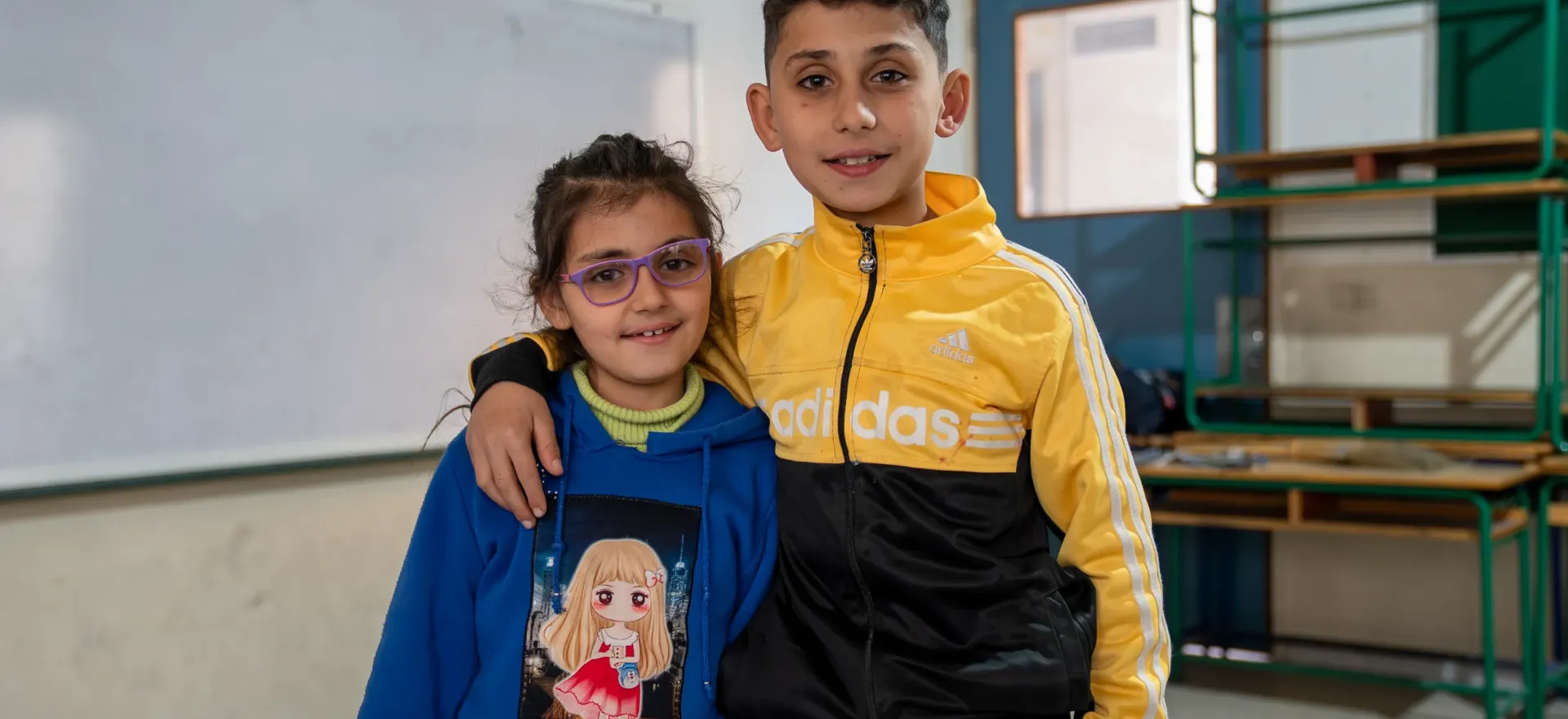
UNICEF2026/Fouad-Choufany/Lebanon

UNICEF2026/Fouad-Choufany/Lebanon
The airstrikes did not stop while we were on the road, and they were extremely intense.
UNICEF Response
UNICEF is working closely with national authorities and humanitarian partners to scale up emergency support for displaced children and families. This includes providing essential supplies such as blankets, clothing, hygiene kits and learning materials, supporting mobile health services and primary healthcare units, ensuring access to safe water and sanitation, and helping maintain education and child protection services for children affected by the crisis.
Across shelters and communities, young people are also stepping forward to support the response, helping prepare meals, distribute supplies and assist families who have been forced to flee.
In the face of growing humanitarian needs, UNICEF remains committed to ensuring that children and their families receive the protection, care and support they urgently need.
Other immediate actions undertaken by UNICEF as of 19 March 2026 include:
UNICEF Programme
- Since the onset of the emergency, UNICEF has supported the health response for displaced populations through delivery of more than 140 tons of essential medications and medical supplies to MoPH Primary Healthcare Satellite Units (PSUs) and government hospitals. Thirty-eight PSUs (mobile clinics) have actively provided essential primary healthcare services in shelters and host communities, providing more than 7,950 services, with over 4,000 beneficiaries receiving medications.
- Through the AaSalameh PHC community outreach programme, 94 PHC centres have been activated to provide screening and vaccination services, with 2,197 children vaccinated to date. Continued support to the MoPH Public Health Emergency Operations Centre (PHEOC) has strengthened coordination, logistics, and staffing, ensuring effective handling, storage, and distribution of medicines and medical supplies.
- Critical care needs have been addressed, with 134 newborns and children admitted to intensive care units across 11 governmental hospitals. Under the UNICEF-MoPH Assistance and Care for War Wounded and Affected Children (ACWA) programme, 17 children with conflict-related injuries received life-saving surgical interventions, and 60 injured children and caregivers received mental health support.
- In coordination with the Ministry of Energy and Water (MoEW), over 50,000 litres of fuel were supplied to the Water Establishments, supporting around 14 water stations and ensuring continuity of public water supply services for more than 230,000 people, including an estimated 34,328 internally displaced persons (IDPs) hosted in communities.
- As part of the emergency response, UNICEF conducted repair and maintenance interventions in nine water stations and one wastewater treatment plant across the country, benefiting approximately 91,500 people in areas hosting IDPs. These interventions restored access to safe water and sanitation, safeguarding public health and improving the daily lives of communities affected by displacement.
- UNICEF partners are delivering emergency WASH support in 107 shelters across Lebanon, reaching an estimated 28,938 individuals, in addition to critical hygiene items distributed through the Rapid Response Mechanism (RRM). Support in the Sports City shelter includes repairs to existing facilities and installation of new showers and latrines, including disability-friendly units. Approximately 115 centre cleaning kits were distributed to maintain safe shelter operations.
- In addition, 3,120 cubic meters of water were provided through water trucking, reaching 17,493 IDPs, while 88 cubic meters of sludge was safely removed from shelters hosting 444 IDPs through desludging operations. Rapid WASH technical assessments are ongoing to identify evolving needs as displacement increases, including urgent diesel requirements to maintain critical water and wastewater facilities. Displacement locations are being mapped to assess connections to existing water networks and determine the need for water trucking or alternative supply options. Wastewater pumping stations continue to be monitored to prevent overflows and associated public health risks.
- UNICEF continues to support the Ministry of Education and Higher Education (MEHE) to ensure access to online learning for public school students. Accounts and classes have been created for the full teaching workforce (40,000 teachers) and all enrolled public school children (390,000). Access information has been shared through school directors and School Information Management System (SIMS) operators. To facilitate connectivity, the Ministry of Telecommunications has initiated the whitelisting of Microsoft Teams and the Madristi platform, providing up to 20GB of free data on weekdays from 7:30 AM to 2:00 PM. In addition, 830 MEHE SIMS operators were trained on credentials management and dissemination, while UNICEF trained its call centre staff, UNHCR outreach volunteers, and community focal points on remote learning packages to guide students and teachers. MEHE’s call centre capacity has also been strengthened, and a national communication campaign on remote learning has been launched through social media and posters distributed across shelters.
- Through UNICEF’s Multiple Flexible Pathways (MFP) programme, educational and learning kits have been distributed in collective shelters, reaching 13,800 children. Across 32 Makani centres and 25 Dirasa schools operating in safe locations, 19,695 children are currently accessing integrated services and education. MFP partners have conducted community-level outreach to identify displaced children and while mobilizing displaced staff to support activities locally.
- In agreement with MEHE, MFP partners are establishing Temporary Learning Spaces (TLS) to support 25,000 children across Bekaa, Baalbek, Saida, Mount Lebanon, and Beirut. Building on the Dirasa programme, 30 private schools have been identified for TLS implementation, with contracts in process. TLS provide safe and flexible environments for displaced children, supporting face-to-face and blended learning for enrolled students and accelerated learning pathways for out-of-school children, ensuring continuity of education and wellbeing.
- Support for children with disabilities is being integrated into MFP activities, including provision of assistive devices, therapy, and referrals. To date, 55 children with disabilities (CWDs) and 49 persons with disabilities (PWDs) have been identified across 12 shelters, enabling targeted support and inclusion in learning opportunities.
- UNICEF continues to engage youth as active contributors to emergency relief and community support through the Youth and Adolescent Development programme. To meet immediate needs in shelters, youth-produced stocks have been distributed across Technical and Vocational Education and Training (TVET) sites, including 475 sleeping bags, 200 blankets, 200 Eid kits, and 1,880 winter kits.
- In the past three days, 20 youth have directly contributed to food security by producing 1,500 hot meals in coordination with WFP at the Dekweneh TVET shelter community kitchens, providing immediate nutritional support to displaced families.
- Youth engagement in social cohesion, life skills, and psychosocial support (PSS) activities continues, with 21 trained youth facilitators delivering sessions and adolescent kits, reaching 365 children and adolescents in shelters. A Training of Trainers (ToT) session is planned for 24 March to further strengthen facilitators’ capacity to deliver adapted adolescent programming and peer support.
- To ensure continuity of learning and skills development, skilling programmes continue in non-affected areas reachign 500 youth, while delivery in some affected locations has shifted online. Digital modules for formal Technical and Vocational Education and Training are being prepared for rollout in selected shelters. In addition, 15 TVET shelters hosting 8,161 IDPs have received in-kind support valued at US$ 50,000 to meet urgent operational needs, including basic supplies, fuel, and essential materials. Ongoing digitization of TVET modules is further expanding access to learning opportunities for displaced youth.
- UNICEF, as nutrition sector lead, strengthened coordination and quality assurance of the nutrition response by building the capacity of 159 frontline workers on the appropriate provision of nutrition supplies inside and outside collective shelters in alignment with recently developed nutrition guidance and job aids. This capacity building initiative aims to further expand and standardize the quality of the nutrition response across delivery platforms.
- To raise awareness of available support through the national Infant and Young Child Feeding (IYCF) hotline and provide caregivers with clear key messages on IYCF practices in emergencies, UNICEF developed and disseminated IYCF Chatbot link with all Nutrition Sector partners, RCCE teams, and the IYCF Committee. To date, 174 caregivers have interacted with the chatbot, accessing guidance on feeding practices in emergencies, while 71 caregivers contacted the hotline, with 42 referred for additional specialized support. These digital tools complement in-person counselling, reaching caregivers who might not be able to access services physically and enhancing the timeliness of referrals for caregivers in need of counselling. Overall, more than 914 caregivers have received counselling and guidance on IYCF practices, while rapid assessments reached 35 caregivers to ensure timely identification and referral of children needing specialized support.
- To date, 38 nutritionists were deployed to 38 Primary Healthcare Centre Satellite Units (PSUs) to provide nutrition interventions in 88 shelters, host communities, as well as in hard-to-reach high-risk areas. These nutritionists received a two-day training on prevention and management of wasting, key nutrition messages, and appropriate provision of preventive supplements, enhancing their technical capacity.
- To prevent wasting among high-risk populations, 221,000 highenergy biscuit (HEB) packages and 144,060 ready-to-use complementary food (RUCF) jars, along with other energy-protein nutrition supplements, have been prepositioned for over 25,700 children and pregnant and breastfeeding women.
- To date, 8,628 children under five have received emergency food rations including HEBs, Small Quantity Lipid-based Nutrient Supplements (SQLNS), and complementary food jars, and 174 pregnant and breastfeeding women and adolescent girls received micronutrient supplements to prevent from nutritional deficiencies. Additionally, 707 children under 5 were screened for wasting, and 6 children were identified and admitted for treatment.
- Access to life-saving nutrition services has been affected by the disruption of four malnutrition treatment centres, with only one partially operational. To address this gap, UNICEF has operationalized wasting treatment within PSUs, supporting identification, admission, and continuity of care for children with acute malnutrition. Despite these efforts, access remains limited in some affected areas.
- Unsolicited donations and procurement of breastmilk substitutes and baby food during the current emergency continue to create the risk of untargeted distributions, which can undermine breastfeeding and pose health risks for infants. A safe and effective nutrition response requires specialized IYCF support, strict individual assessments, while limited trained personnel and the circulation of such supplies remain key operational challenges. To address this gap, UNICEF is reinforcing the widespread dissemination of the IYCF hotline through partner networks and communication channels to ensure caregivers can access tailored counselling and services.
- Child protection interventions during the emergency have reached thousands of children and caregivers, focusing on case management, psychosocial support, and risk mitigation. Out of the 16 children who received case management services, 13 unaccompanied and separated children were identified, with 12 reunified or placed in community-based care arrangements, ensuring continuity of protection. Community-Based Psychosocial Support (CBPSS) has reached 3,500 children and caregivers through structured sessions and recreational activities, enhancing coping, resilience, and social connectedness, while linking families to services and referral pathways. Outreach beyond shelters has expanded, with partners delivering child protection and GBV services through face-to-face, hybrid, remote, and mobile modalities, targeting the most vulnerable displaced populations.
- Key child protection and psychosocial support messages have reached 17,439 individuals through both direct engagement and social media, strengthening caregivers’ ability to protect and support children, manage risks, and access available services. GBV risk mitigation in shelters is underway following approval from the Ministry of Social Affairs (MoSA), including awareness sessions, dignity kit distribution, and safety audits. GBV case management continues, primarily remotely, ensuring ongoing support to survivors.
- UNICEF is leading interagency coordination (UNFPA, IOM, UNHCR, ESCWA) to support the deployment of 600 MoSA staff in IDP shelters, ensuring a harmonized and government-led response across partners. Deployed MoSA staff play a central role in shelter management and coordination, including supporting site organization, identifying and monitoring the needs of vulnerable groups, facilitating the delivery of assistance, and ensuring the safe identification and referral of protection cases, including child protection and GBV, in line with established pathways.
- As part of the immediate response to the current escalation and to support beneficiaries of the National Disability Allowance (NDA), UNICEF and MoSA advanced the regular cash assistance payment for 38,000 Lebanese and non-Lebanese NDA beneficiaries nationwide, beginning on 10 March.
- Building on previous emergency cash responses in 2024, UNICEF, MoSA, and the ILO have activated emergency financial support for families with persons with disabilities affected by the conflict. This shock-responsive expansion of the NDA has provided urgent cash assistance to offset additional costs related to disability during displacement, including access to healthcare, assistive services, and basic needs. Using established NDA delivery systems and registries, the intervention was launched on 11 March and has reached approximately 8,000 families (6,000 Lebanese and 2,000 non- Lebanese, or around 33,000 individuals) as of 19 March, with each household receiving a US$100 grant for households with a child or young person aged 0–19 years living with a disability.
- The overall target for this emergency support is 45,000 families with a person with a disability from affected areas, to be reached in a phased approach over three months through a one-off cash transfer, based on the availability of resources. This programme complements the national Shock-Responsive Social Protection system, also led by the government, ensuring continuity of support and mitigating the immediate financial impact of displacement on vulnerable households.
- Between 2 and 13 March, UNICEF call centres received approximately 3,169 calls from both IDPs and non-IDPs. Inquiries and feedback focused on shelter, food, cash, NFIs, and mental health services. All cases were followed up with referrals and appropriate actions, ensuring timely response to community needs and concerns.
- In coordination with MoSA and the PSEA Inter-Agency Network, UNICEF has displayed PSEA awareness posters across collective shelters, strengthening awareness of safe reporting mechanisms and available support services.
- To reach the most vulnerable populations, UNICEF partnered with a women-led grassroots organization (FEMALE) to conduct rapid assessments of families living on the streets in Beirut (including BIEL and Horsh Beirut) and Saida. The assessments identified critical gaps, including limited access to sanitation facilities, safety and privacy concerns preventing shelter use, and cases of denied access to shelters. UNICEF is following up through targeted interventions, including deployment of mobile medical units, referrals, and advocacy to address these barriers.
- RCCE coordination mechanisms have been activated to support the emergency response, including a communication tree and an updated UNICEF RCCE landing page serving as a central repository for public messaging, frontline guidance, and information, education, and communication (IEC) materials. Eleven IEC products are being finalized for dissemination in shelters and communities. Partners are being mobilized to integrate RCCE into emergency interventions through existing platforms, including school clubs, parent-teacher associations, and community networks. Capacity-building for responders and volunteers is being prepared, focusing on RCCE, AAP, and PSEA principles to ensure safe, ethical, and effective community engagement.
- In collaboration with headquarters, a social listening dashboard has been launched to monitor publicly available information on social cohesion and emerging tensions, with daily analysis informing response actions. Coordination is also underway to integrate rapid RCCE needs assessments into the Emergency Rapid Needs Assessment (ERNA) and to strengthen rumour tracking mechanisms to address misinformation.
- Gender-transformative interventions are being scaled up. Emergency sessions under the POWER4Girls initiative and the establishment of girls’ groups in shelters and MFP centres are set to begin on 23 March, targeting 3,500 displaced girls, including those on the move. Eighty facilitators have been trained to deliver these sessions, equipping girls with life-saving information and practical skills to navigate risks during the emergency. In parallel, 90 facilitators have been trained to conduct GBV safety audits in shelters, strengthening risk mitigation measures for displaced women and girls.
Related Content