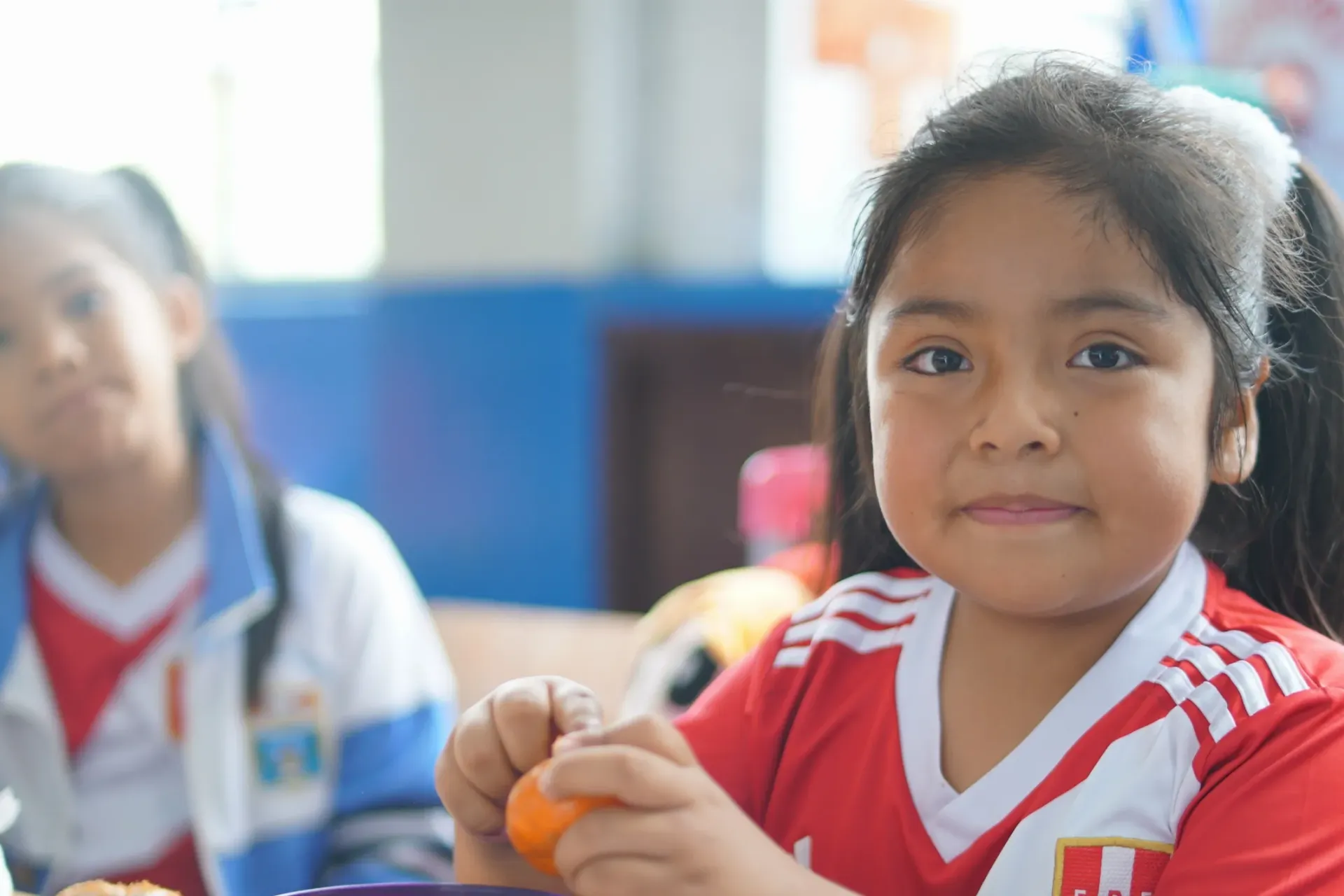
Investing in children, narrowing gaps, unlocking potential
Regional Director's essay for UNICEF Annual Report 2025
- Español
- English
The lives and futures of millions of children across Latin America and the Caribbean are being shaped today by the policies we choose, the investments we make, and the protections we uphold.
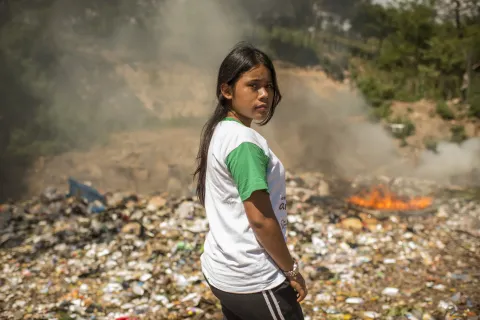
Four in ten children in Latin America and the Caribbean live in poverty. High levels of violence, climate shocks and regressive rollbacks continue to undermine their rights. In 2025, in the face of these challenges and a global funding crisis that called on us to transform how we work, UNICEF remained focused on advancing stronger policies and financing for children while speaking up for their rights across the region.
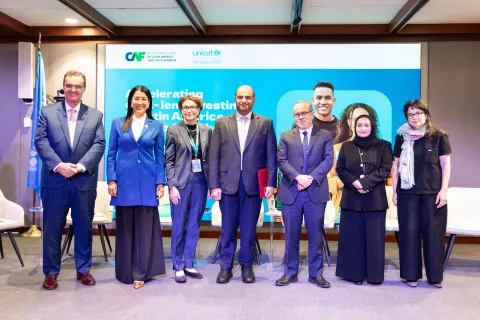
Turning this vision into action, a ground-breaking partnership with CAF – the development bank of Latin America and the Caribbean – led to a truly transformative initiative last year. Banco Futuro LAC aims to mobilize $5 billion over five years to reach 50 million children, adolescents and young people in the region by scaling up national projects and public investments, with the technical assistance of UNICEF. Through this initiative, CAF became the first multilateral development bank to adopt the UNICEF Child-Lens Investing Framework.
While focusing on leveraging large-scale child-focused investment, UNICEF offices throughout the region continued to mobilize resources directly for children. Thanks to contributions from private companies, philanthropists, foundations and faith-based organizations – alongside around 1 million pledge donors – UNICEF in Latin America and the Caribbean raised more than US$131 million to support our work for children in the region and around the world.
At the XVI Regional Conference on Women, held in Mexico, UNICEF set a standard for connecting children’s voices to evidence and policymaking. UNICEF generated knowledge on the distribution of care work, highlighting the disproportionate burden placed on girls, and supported a delegation of adolescent girls to present the findings and help shape the conference’s outcome document, the Tlatelolco Commitment.
At the national level, UNICEF advocacy and action contributed to significant milestones for children. For example, in Colombia, where the civil code once allowed children to marry at age 14 with parental consent, the Constitutional Court declared child marriage unconstitutional. Meanwhile, Peru’s Constitutional Court recently struck down new legislation that allowed 16-year-olds to be tried as adults, preventing an erosion of protections for adolescents. And in Brazil, One Million Opportunities (1MiO), a GenU initiative, reached its goal of providing more than 1 million professional training and decent work opportunities to vulnerable adolescents and young people since its launch in 2020.
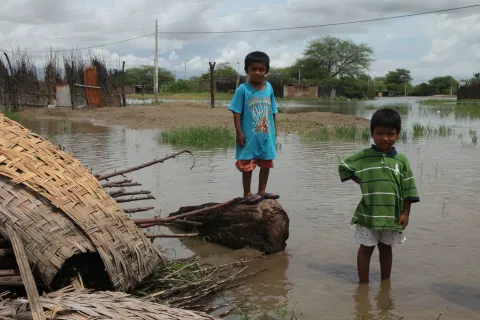
Safeguarding children’s rights also required responding to climate crises across the region. Following Hurricane Melissa, we mobilized over US$12 million and mounted a rapid, multi-country response, supporting governments to reach more than 500,000 people with essential services across Cuba, Haiti and Jamaica.
Throughout 2025, we reaffirmed our purpose in Latin America and the Caribbean as a powerhouse of partnerships, advocacy, knowledge and innovation for children. This is a time in history when the region can rise to its promise and be a leading voice of the Global South. UNICEF can help demonstrate that change is not only possible but also cost-effective and transformative.
I’m proud to lead UNICEF in this region and deeply grateful to all who make progress for children possible. The way forward is clear: investing in children, narrowing gaps, and unlocking potential for safer, more prosperous societies.