1 in 3 children exposed to at least three overlapping climate threats in Latin America and the Caribbean
Heatwaves, droughts and extreme heat are the most prevalent hazards endangering millions of children in the region, according to a new UNICEF climate report
- Español
- English
CIUDAD DE PANAMA, PANAMA, 16 June 2026.– An estimated one in three children in Latin America and the Caribbean – around 58 million – are at risk from at least three overlapping climate hazards, threatening their health, education, and survival, according to a new UNICEF report launched today.
Heatwaves, droughts and extreme heat are the most widespread combination of climate hazards in the region, according to the findings. While around 40 million children could be affected by tropical storms, the report warns.
The Children’s Climate Risk Report 2026 provides a comprehensive picture of the threats to children posed by the climate crisis and its impacts. The report uses advanced technology to map children’s exposure to the eight most frequent climate threats, including coastal floods, droughts, extreme heat, fires, heatwaves, riverine floods, sand and dust storms, and tropical storms.
“Children and adolescents carry the heaviest burden of climate hazards. Their developing bodies are more vulnerable to extreme events such as droughts, heatwaves or tropical storms, and these same events disrupt their schooling, and their families’ livelihoods,” said Roberto Benes, UNICEF Regional Director for Latin America and the Caribbean. “Climate threats are worsening existing inequalities.”
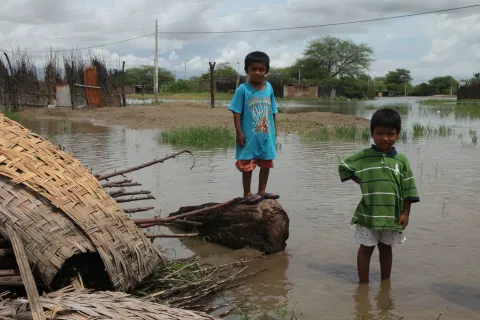
In the region, 141 million children are exposed to more frequent, longer and more severe heatwaves, while 118 million are exposed to droughts, posing profound risks to children's health and wellbeing and deepening poverty and economic hardships in the most vulnerable communities.
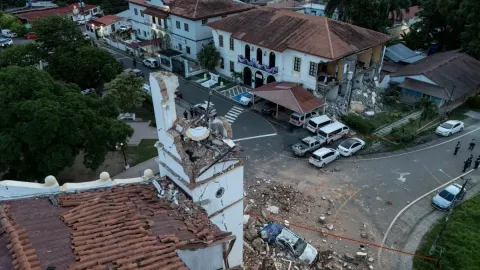
The Caribbean has one of the highest relative exposures to tropical storms, where almost all children are exposed to these hazards. Severe storms result in extensive infrastructural damage, disruption to essential services, displacement, and large-scale water contamination. In 2025, Hurricane Melissa disrupted schooling for nearly 477,000 children across the countries affected by the Category Five storm.
In addition to the most frequent climate hazards, the report analyses air pollution and malaria; two risks that are highly sensitive to the effects of climate change. Data show that air pollution affects nearly every child in Latin America and the Caribbean, while 24 million children are exposed to malaria, adding another layer of danger for children already facing multiple climate hazards.
“This analysis contributes to bringing new evidence to guide decision-makers in investments in making national systems more child-centered and shock-responsive – delivering sustainable, systemic change to protect the most vulnerable,” said Benes.
To protect children’s rights from climate threats and adapt to growing environmental changes, UNICEF is calling on governments, businesses and relevant actors to:
- Reduce emissions and take ambitious action to fulfil existing international commitments, grounded in the best available science, including the urgent phasing-out of fossil fuels and a just transition towards renewable energy.
- Protect children through inclusive climate adaptation and responses to loss and damage that prioritise the resilience of social services, ensuring that children and child-critical services are prioritised in national adaptation plans and sector strategies, disaster preparedness and response plans. This includes developing safe and green learning facilities, climate resilient health care facilities, securing children’s food supply, decarbonised and more efficient water and sanitation services, and shock responsive protection services.
- Empower children and young people to meaningfully participate in climate action by investing in climate education, knowledge and skills, and by strengthening the capacity of decision makers and experts to respect children’s right to be heard, freedom of expression, and participation in decisions that affect their lives.
Notes to editors:
To better understand the potential severity and frequency of climate threats throughout a child's life, the methodology uses a probabilistic model based on a 100-year return period. This approach captures extreme climate events that are highly likely to occur in any given year and highlights the most significant hazards children are exposed to.
The CCRR 2026 looks at children’s exposure to eight climate hazards: coastal floods, droughts, extreme heat, fires, heatwaves, riverine floods, sand and dust storms, and tropical storms, as well as two climate-sensitive hazards such as air pollution and vector borne diseases; while considering inherent vulnerabilities of children across seven dimensions: water, sanitation and hygiene (WASH), nutrition, protection, health, education, poverty, and child survival.
This report includes updated data and models covering a broader range of hazards and vulnerabilities, compared to UNICEF’s 2021 The climate crisis is a child rights crisis report. The analysis now encompasses most countries and territories – including the Small Island Developing States – and utilises a pixel-level multi-hazard approach, providing higher-resolution data at a gridded scale. Hazard data are now available for areas as small as 100 square kilometres in each country, with some hazards mapped at a 100-metre resolution.
*Landlocked Developing Countries (LLDCs) are developing nations that lack territorial access to the sea. Often, the development of LLDCs is constrained by isolation from world markets and high trade costs.
*Fragility: According to the OECD, it is the combination of exposure to risk and insufficient resilience of a state, system and/or community to manage, absorb or mitigate those risks. In this report, countries classified as experiencing extreme or high fragility are grouped together and referred to as “fragile.”
* Small Island Developing States (SIDS) are a distinct group of nations characterized by their small size and remote island geography. SIDS’ unique vulnerabilities include their small size, remoteness, narrow resource and export base, and exposure to external economic shocks.
Data from this analysis part of the UNICEF global report Children's Climate Risk Report 2026. Additional information available here: LINK.
Multimedia materials available here.
Media contacts
About UNICEF
UNICEF works in some of the world's toughest places, to reach the world's most disadvantaged children. Across more than 190 countries and territories, we work for every child, everywhere, to build a better world for everyone.
For more information about UNICEF and its work for children, visit www.unicef.org/lac/en.
Follow UNICEF on LinkedIn, Twitter and Facebook.