


Care for child development
An approach for existing services to promote comprehensive early childhood development
- Español
- English
What is care for child development?
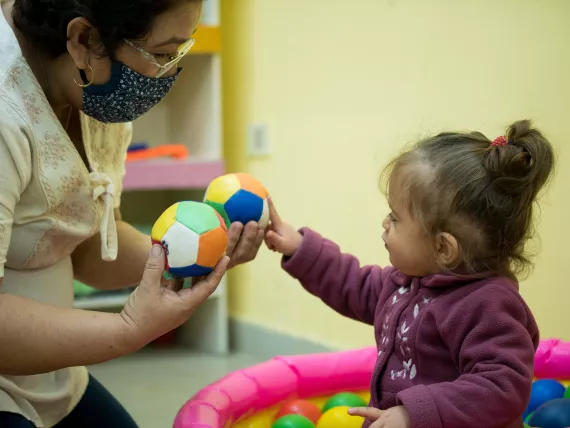
Scientific research has shown that when a parent or caregiver establishes eye contact with his or her baby, communicates, plays and interacts affectionately, a unique bond is created that favors the integral development of that child, and will have lifelong benefits. This base is fundamental for the baby to feel safe and accompanied to explore the world and learn.
Based on neuroscience evidence, together with the World Health Organization, we created Care for Child Development (CCD), which has been implemented in the region since 2012 and is currently in 12 countries. Professionals trained in CCD learn to accompany families by providing play and communication activities, which, in addition to stimulating learning in children, promote loving and sensitive care.

Guidelines and resources to apply the CCD approach in working with parents and caregivers, strengthening caregivers' skills to promote young children's growth and development

Series of useful documents for advocacy on CCD that includes an advocacy-oriented document, as well as five case studies describing CCD implementation.

Four key aspects of Care for Child Development implementation in Latin America and the Caribbean.

Series of videos where professionals across the region share their experiences with CCD in their daily work.
What is the impact of Care for Child Development in Latin America and the Caribbean?
Experiences of how the CCD approach works in existing services in countries throughout the region
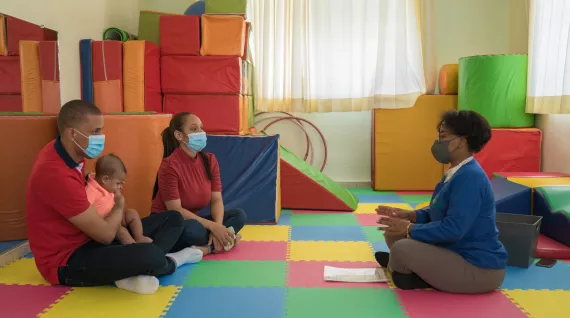
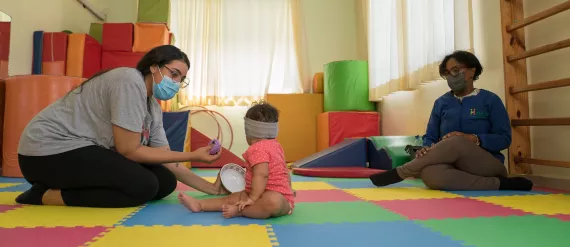
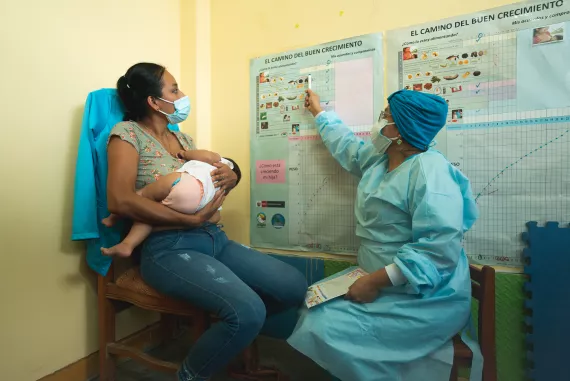
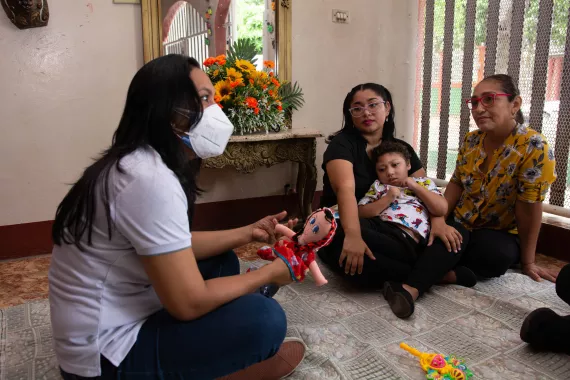
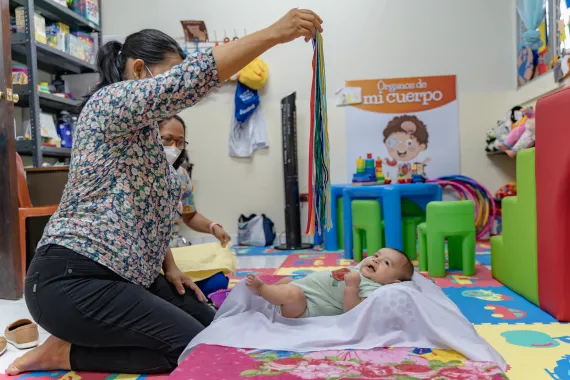
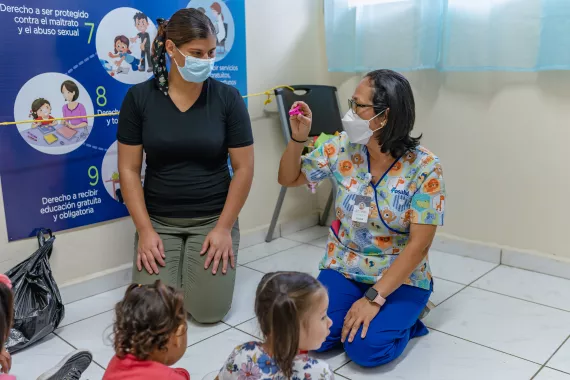
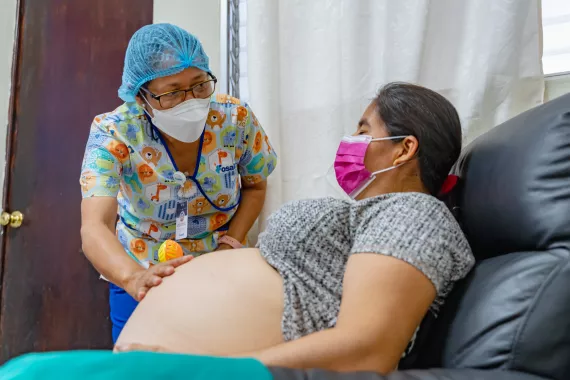
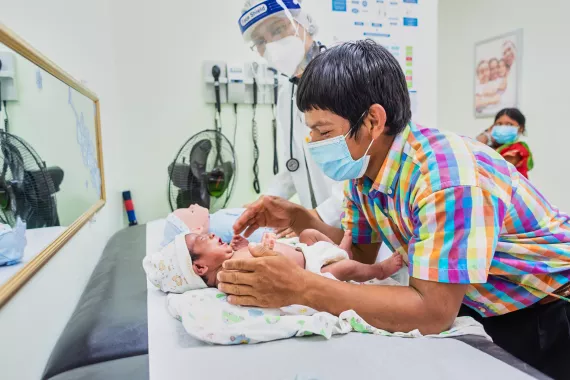
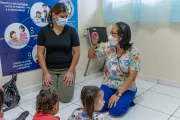
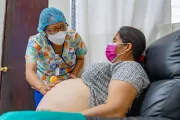
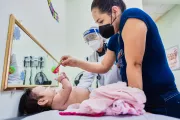
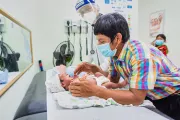
The professionals –in medicine, psychology, early intervention, education and protection, among other disciplines– who have been trained at CCD incorporate a series of recommendations into their work, based on the best available evidence on child development.
In this way, they accompany families in forging a strong bond between young children and their significant others. With CCD, caregivers strengthen their positive parenting skills, as they:
- gain knowledge about early child development;
- learn simple play activities and responsive communication, using everyday objects present in the home;
- are able to stimulate learning in the early years; and
- develop the skills to provide their children with loving and responsive care, which also integrates attention to proper health and nutrition and a safe and secure home environment.


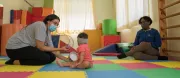
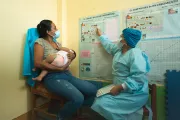
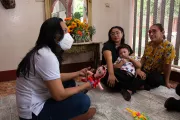
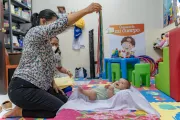
What do we do?
To implement Child Development Care in Latin American and Caribbean countries, we provided assistance in:
- The presentation and first national training on the CCD approach and on the CCD Package of materials.
- The creation of training processes for trainers in each sector.
- The incorporation of the approach in services for populations in vulnerable situations, such as:
- children with disabilities or developmental delays,
- belonging to indigenous peoples and Afro-descendants,
- located in rural areas or areas of difficult access,
- children of persons deprived of liberty or facing various difficulties, among others.
- The development of pilots to extend the use of the approach to other services and scale it up.
- Systematization and other relevant research.
- The exchange of experiences and cooperation between countries.
What is the impact of Care for Child Development in Latin America and the Caribbean?
Below, you will find five videos explaining different aspects of implementing Care for Child Development (CCD) in the region and an additional video that brings together the content of the previous videos.
This resource aims to support the dissemination and understanding of CCD through videos where UNICEF colleagues tell us what it is about, how they implement it and how it impacts children and their families.
This arrangement of the videos seeks to be useful for dissemination in different ways, depending on specific information needs and the audience.
| What is Care for Child Development (CCD)? |
|---|
| What is CCD changing in the work of professionals? |
|---|
| How was CCD developed and how is it implemented? |
|---|
The CCD is an evidence-based approach and has been developed based on scientific evidence on child development. It has been evaluated in different countries and contexts demonstrating the impact it has on boys and girls.
| What is the impact that CCD has on children and families? |
|---|
Through the CCD, caregivers begin to have interactions that promote timely development for the boy or girl. The adult also manages to develop additional capacities to relate to the world in a more human way.
| Why should we invest in this approach (CCD)? |
|---|
Investment in early childhood is an investment in the country as a whole. When you support a program that supports child development, it impacts how a country can better develop.
| Care for Child Development (CCD) - Full video |
|---|
This video brings together the content of the previous videos and features professionals who have been trained in CCD who explain the impact it has on caregivers and children.