

Alternative education, more opportunities to thrive
Learn more about alternative education programs for adolescents and young adults

- Español
- English
What is the situation of education among adolescents?
Before the COVID-19 pandemic, evidence showed that, on average, adolescents in Latin America and the Caribbean were three years behind their OECD peers and, in most countries in the region, more than 50% of 15-year-old students scored below the minimum level for language and mathematics competencies1.
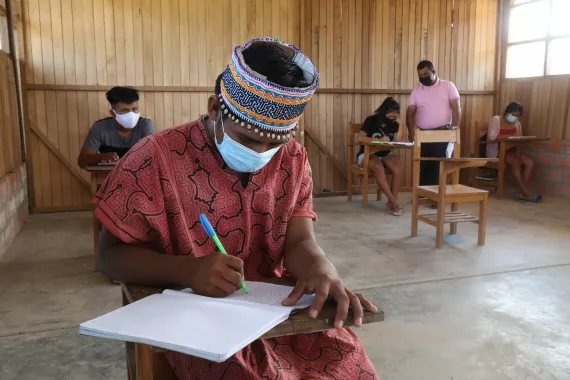
Since exclusion and inequality exacerbate disparities in already marginalized populations, the effects of the pandemic in secondary school will fall hardest on the most vulnerable adolescents due to the following reasons:
- As a result of school closures, adolescents will be deprived of other critical services, such as food, health, protection and psychosocial support. This has also increased the risks of teenage pregnancy, early marriage, sexual abuse, labor exploitation and exposure to violence.
- Loss of family income forces adolescents to seek alternatives to help their families. This increases learning losses and the risk of dropping out of school.
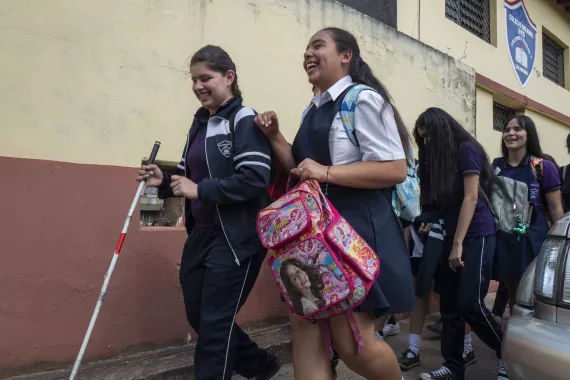
- Adolescents with disabilities have traditionally remained invisible in policies and even more so in emergencies such as pandemics. This makes it more difficult for them to catch up with learning than their non-disabled peers.
- The historical and structural marginalization of indigenous, Afro-descendant, migrant and LGBTIQ+ adolescents could add a new layer of vulnerability to their significant learning deficit, thereby aggravating their current situation.
What is alternative education?
Alternative education is a set of flexible programs for adolescents with unfinished educational trajectories.
It encompasses on-demand programs that can be adapted in terms of schedule, location, enrollment process and delivery platform (remote, blended, online, independent learning). It mostly covers non-formal programs and can be offered within schools or in alternative educational settings, such as community centers.
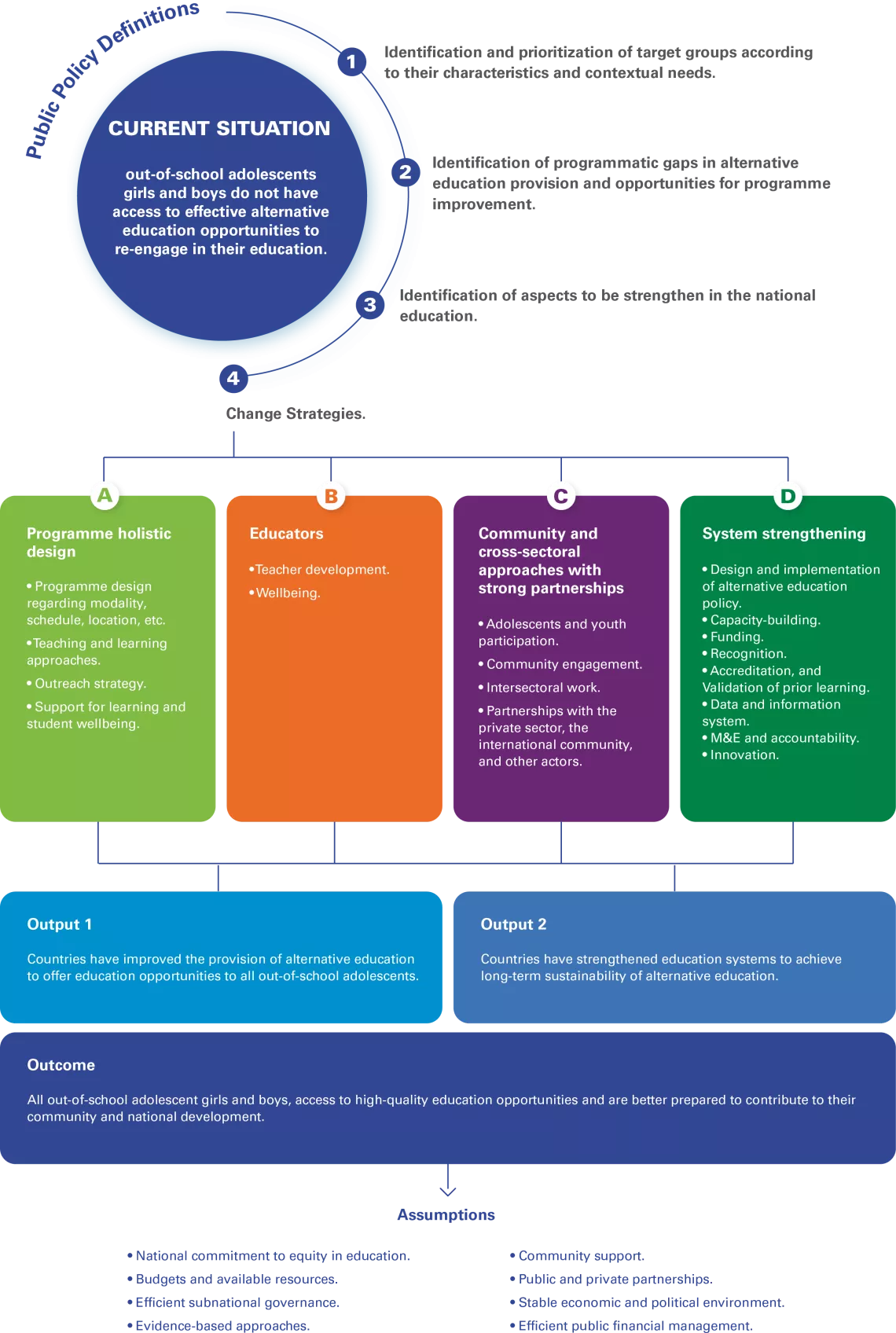
UNICEF's counseling proposal for countries is based on the following theory of change:
What are we doing?
UNICEF advises governments, particularly education authorities and providers, to help them:
To achieve these objectives, we provide technical assistance to:
- Identify the target population of adolescents with unfinished educational trajectories.
- Prioritize adolescents, according to three variables: their age and schooling level and how much time they have been out of school or learning at a low intensity.
- Assess existing evidence to identify aspects that education systems can strengthen to achieve the long-term sustainability of alternative programs.
- Identify gaps to achieve successful educational reintegration:
- Through remedial or catch-up educational programs and accelerated alternative education services.
- At the programmatic level, to establish opportunities for improvement in the current services offered.