Any profession is right for girls
UNICEF opens the way to help schoolgirls from rural areas into technology and engineering

At Yntymak School in Barpy village, Osh oblast, almost everyone knows ninth-grader Adelina Aibekova – teachers and students alike. She is an active girl who participates in school activities and quickly learns new things.
Like many schoolgirls, Adelina once thought of becoming a doctor. But she realised that she did not feel a genuine interest in that profession. Her mentor, Nurila Kulmatova, whom she met through UNICEF’s Girls in Science project, helped her make an informed decision about her future. Nurila, an engineer by profession and a technology teacher, guided Adelina throughout the programme.

“She always responded, gave advice, and explained everything. Every time I felt more confident,” says Adelina.
After these conversations, Adelina began exploring technology, reading more, and enrolling in courses on computer science and English.
“Now I want to study engineering at a local university, I will do my best because this truly interests me. And I want to go where there are few girls – because that is normal. Professions are not divided into male and female."

Not students, but initiative-driven partners
Nurila Kulmatova teaches robotics and artificial intelligence at school. At first, she was preparing for the usual role of a teacher – to explain, adjust and guide. But very quickly she realized that in front of her were not passive students, but initiative-taking teenagers who wanted to create something new, change the world, and not just follow someone else. That is why she decided to become a mentor for girls.
“Each meeting turned into an exchange of ideas. The girls asked questions, offered their solutions, debated and researched together. I had to be not only a mentor, but also a source of support,” she said.
For Nurila, it is important to show that there is a place for girls in engineering. Their success is determined not by stereotypes, but by the support they receive. Adelina’s example is very telling.
“And the statistics begin to change: when one girl chooses engineering, others follow,” concludes Nurila.

A profession is chosen where opportunity arises
In Central Asian countries, many girls grow up in an environment where career paths seem pre-determined. They are often directed towards medicine, teaching, or the humanities, while technical fields are traditionally perceived as ‘not for girls’.
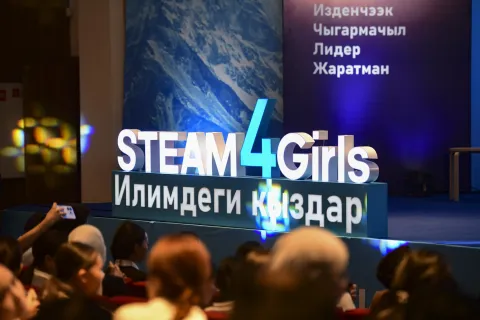
The Girls in Science project supports girls who want to succeed in science, technology, engineering and mathematics. Since its launch, more than 3,000 girls have completed a mentoring programme with the participation of 217 mentors.
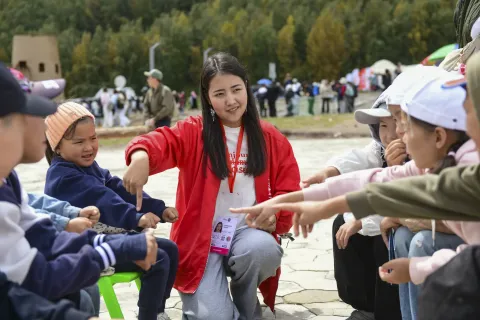
But this project goes beyond the school curriculum. It broadens perspectives on possible life paths, connects schoolgirls with women professionals from different regions, creates a safe space for questions, and builds confidence that helps them make informed choices.
Such changes become possible when there is an example to follow, support to rely on, and space to grow.
Today, Adelina is confident that technology is her path. Teachers note her growing independence and self-assurance. Mentors emphasise that girls’ potential is often far greater than society assumes.