UNICEF and Osh City Municipality Presented the Climate-Resilient Demonstration Model at Kindergarten No. 76
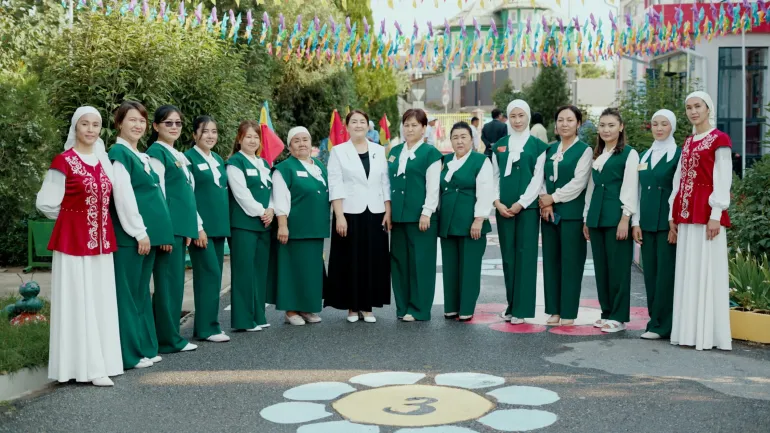
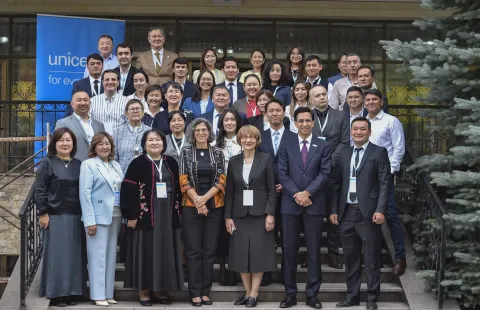
Osh, 30 June 2026 – Today in the State Kindergarten No. 76 in Osh the climate-resistant demonstration model was presented following a comprehensive renovation to improve energy efficiency, indoor air quality, and overall conditions for early childhood development. The ceremony brought together representatives of the Osh City Municipality, Ministries of Education, Construction and Natural Resources, UNICEF, and local stakeholders.
The renovation was implemented under UNICEF’s Climate Business Model Initiative, a regional programme supporting climate-resilient infrastructure for children across Central Asia. In Osh, the initiative was carried out in close partnership with the Osh City Municipality. Similar energy efficiency and ventilation upgrades were also implemented in Kindergarten No. 75 as part of the same intervention.
Welcoming the ceremony participants, Osh Deputy Mayor Masuda Aidarbekova emphasized the importance of investing in modern, child-friendly infrastructure for the well-being of future generations.
“This renovation reflects our commitment to creating a safe and comfortable learning environment for every child in Osh. I thank all our partners for their close collaboration and congratulate the parents and teachers on the renovation of the kindergarten!” noted Masuda Aidarbekova, Deputy Mayor of Osh, in her welcoming speech.
UNICEF emphasized the importance of linking climate action with child health and education outcomes. “Every child deserves to grow, learn, and thrive in a safe and healthy environment. This project is a practical example of how climate investments can improve children’s lives today and build resilience for tomorrow.” noted Samman Jung Thapa, UNICEF Representative to the Kyrgyz Republic.
The project introduced integrated, energy-efficient solutions across 1,152 square meters, covering 28 rooms in the two facilities. Improvements included the installation of heat pump systems to reduce reliance on coal-based heating, fan coil units for temperature regulation, and recuperators to provide continuous ventilation with heat recovery. Energy-efficient windows were installed, and insulation and renovation works were completed with municipal co-financing. These measures improve thermal comfort, reduce energy consumption, and ensure stable indoor conditions year-round.
The intervention directly addresses the impact of air pollution on children’s health. In urban areas of Kyrgyzstan, coal-based heating contributes to elevated levels of harmful pollutants, disproportionately affecting young children. By improving heating and ventilation systems, the project reduces emissions and ensures access to cleaner indoor air.
Improved indoor air quality and thermal comfort are essential for children’s health, development, and learning. Safer environments help reduce respiratory illnesses, support cognitive development, and contribute to better attendance and educational outcomes.
The presentation of the climate-resistant demonstration model of the modernized kindergarten No. 76 marks an important step toward building climate-resilient, child-friendly infrastructure in Kyrgyzstan. Scaling up such solutions will be critical to ensuring that all children benefit from safe, healthy, and sustainable learning environments.
Media contacts
About UNICEF
UNICEF promotes the rights and wellbeing of every child, in everything we do. Together with our partners, we work in 190 countries and territories to translate that commitment into practical action, focusing special effort on reaching the most vulnerable and excluded children, to the benefit of all children, everywhere.
For more information about UNICEF and its work for children, visit www.unicef.org.