Teaching Green Habits for a Sustainable Future
#ForEveryChild, Climate Action
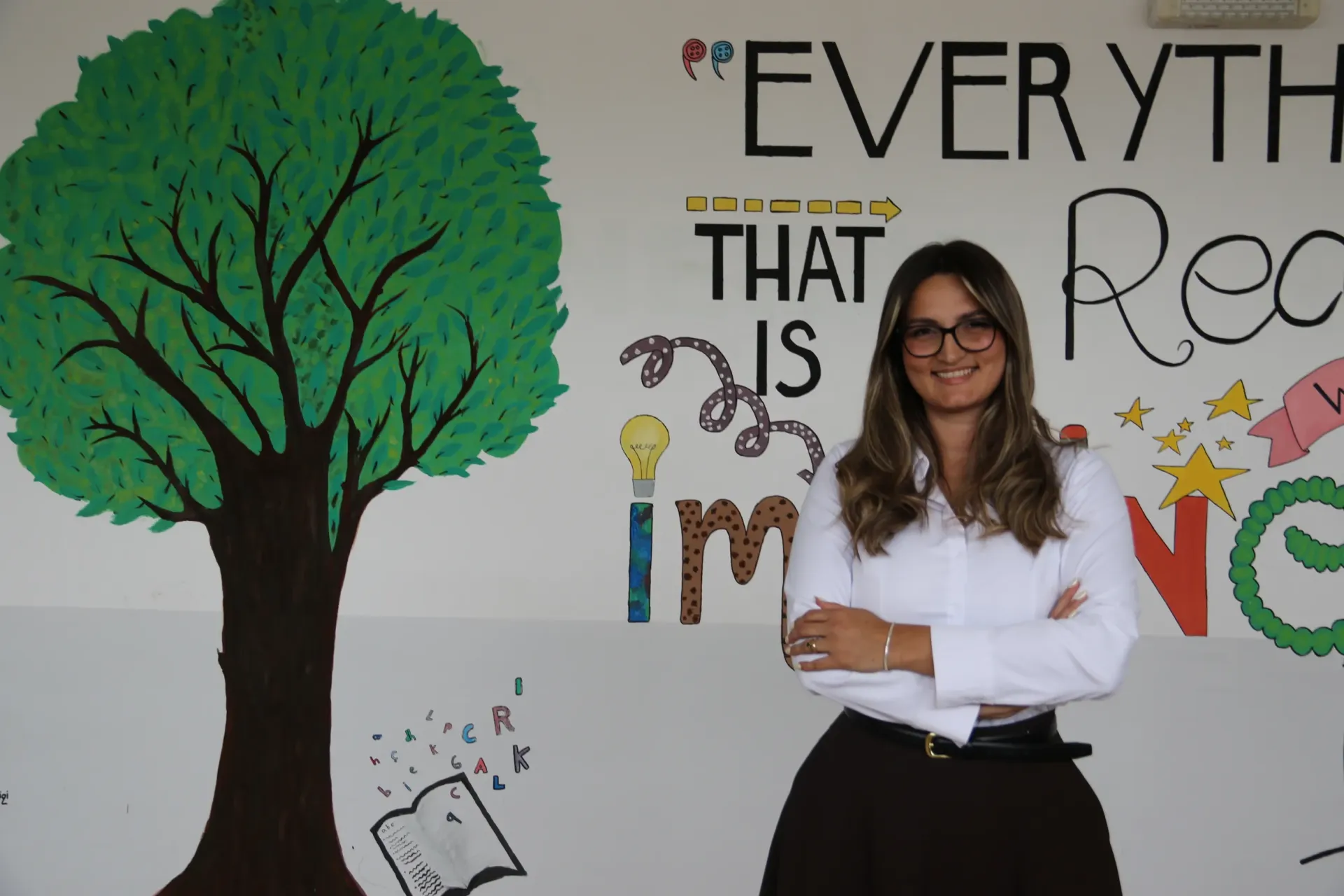
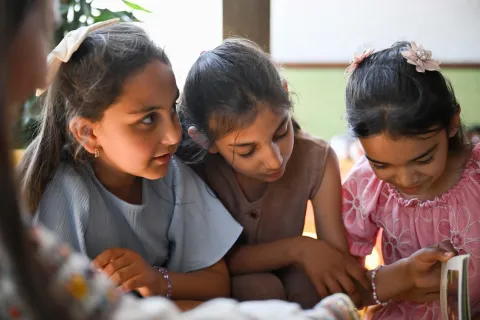
The sound of children’s voices fills the halls of the Green School in Prishtina, where the building is alive with energy. Inside, the school feels almost like a botanical garden, with green plants, messages about protecting nature, and classrooms that encourage environmental responsibility in everyday life.
At the center of it all is Drilona Behrami, the teacher behind the school’s ”Protection of the living environment” elective subject who warmly greets visitors and shares her passion for environmental education. For nearly nine years, she has helped students see how everyday habits at school, home, and in their communities can protect the planet. She believes every child should understand the world they are inheriting and help shape it.
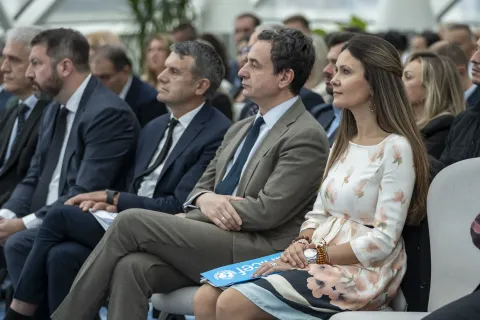
“In Kosovo, young people and children contribute the least to climate change but are among those most affected by air pollution and extreme heat. UNICEF with partners works to equip students with the knowledge and skills they need to protect their future,” - stated Head of the UNICEF Kosovo Office Mrs. Veronika Vashchenko.
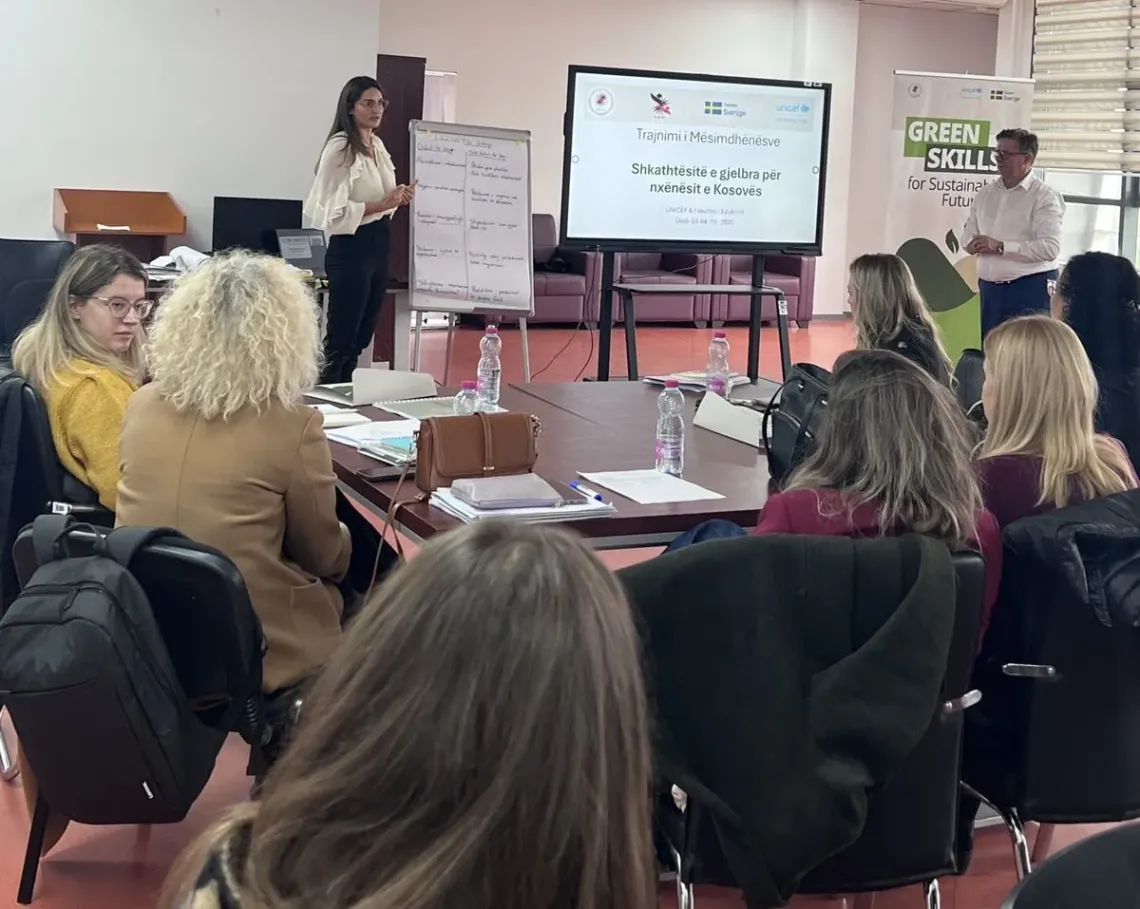
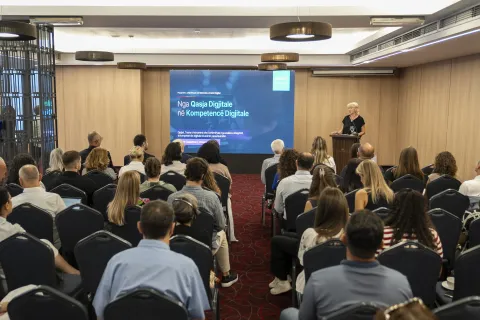
Drilona is among 300 teachers trained by the Faculty of Education through the Learn Green training guide, developed through UNICEF support and accredited by the Ministry of Education and Science. Implemented in partnership with the University of Prishtina, the Ministry of Environment and Spatial Planning, and with the generous support of the Government of Sweden through SIDA, the programme has already reached more than 8,000 students across Kosovo.
The initiative reflects a shared commitment to empowering children and young people with the tools to build a healthier and more sustainable future. Sweden’s longstanding support for children’s rights, quality education, climate action, and youth empowerment has helped create opportunities for young people to actively contribute to a greener and more resilient society.
The Swedish Ambassador to Kosovo, Mr. Jonas B. Westerlund, emphasized : “This inspiring initiative beautifully shows how empowering children with practical green habits today can spark a lifelong commitment to protecting our planet”.
That belief inspired one of Drilona’s simplest yet most effective initiatives: student “school inspectors.” At the end of every shift, selected students walk through classrooms and hallways carrying checklists. They observe what has changed, note what needs replacing, report damaged materials, and check whether classrooms have been left clean and organized.
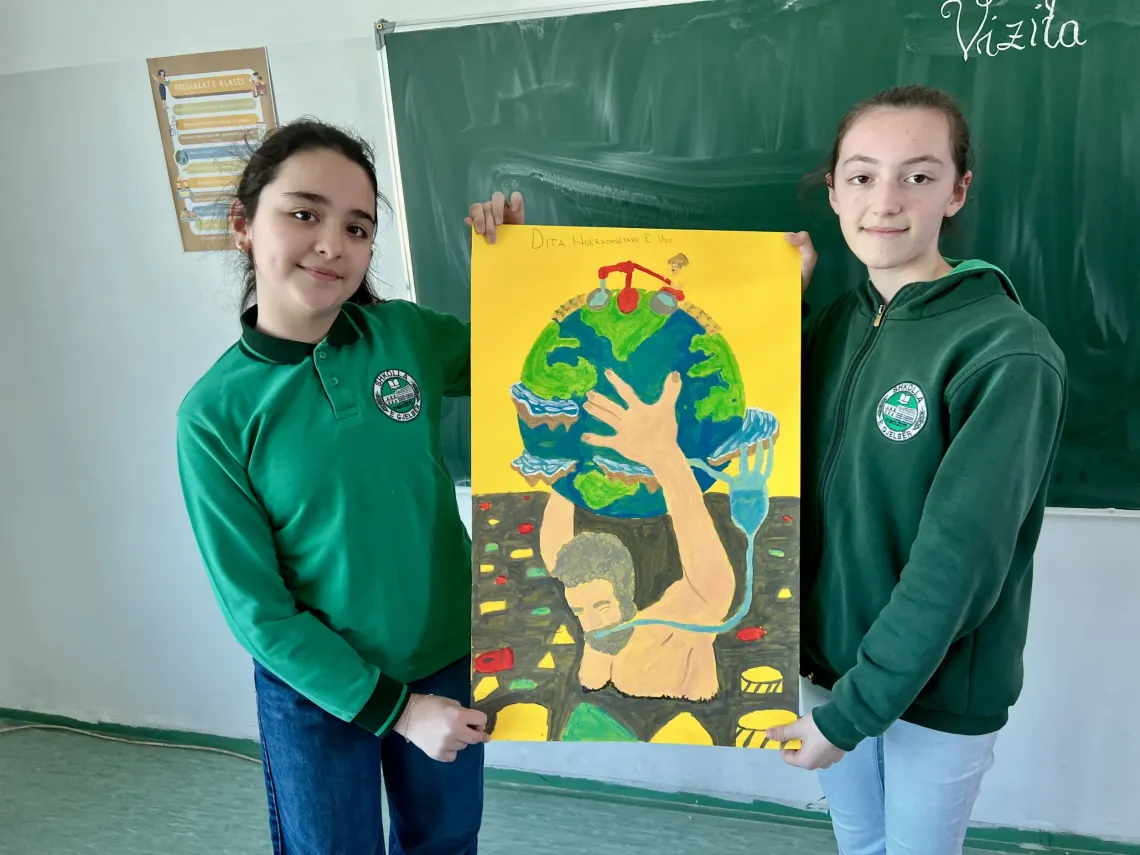
Rather than teaching sustainability only through theory, Drilona builds lessons around students’ everyday routines. This practical approach is one reason she values the Green Skills teachers’ guide so highly.
“The guide is very practical,” she says. “It includes dozens of examples that teachers can directly use in class, which makes it much easier to turn environmental concepts into everyday action.”
For World Water Day in March, she launched a simple but powerful classroom challenge.
Beginning in January, students placed timetables on the doors of their homes. For three months, family members tracked how many minutes they spent showering, encouraging students to reflect on how much water might be wasted through everyday habits.
When they returned to class in March, they compared results and discussed whether they had improved.
“When they can measure their own habits, the lesson becomes real,” she says.
The training also transformed Drilona’s own teaching approach. Lessons often involve experiments, group discussions, games, and projects connected directly to students’ neighborhoods and homes.
“That’s how we make the topics interesting. Children need to connect what they learn with their own reality,” she explains.
Still, she believes there is room to make the material even more engaging.
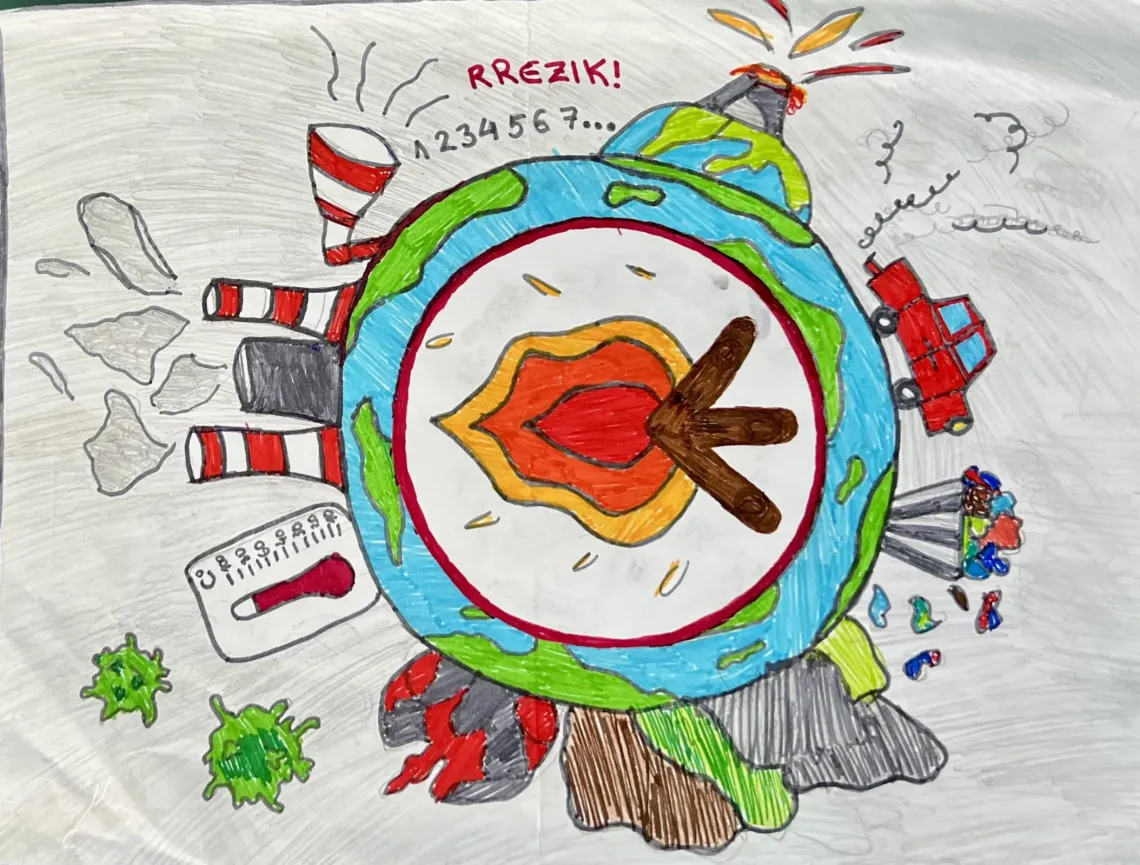
“I would also like to receive more videos and visual materials designed for children. Learning should be combined with different techniques and examples,” Drilona emphasizes. And the impact is already visible.
Students regularly return with stories about reminding family members to save water, switch off unnecessary lights, or think more carefully about waste.
For Drilona, that is exactly what education should do.
She believes this model should reach far beyond one school. Teachers, she says, are among the most powerful drivers of awareness and action. The values built in classrooms today will shape how future generations protect their communities, environment, and wellbeing.
“If we teach them early, these habits become part of who they are,” she concludes.
For Drilona, helping students understand these challenges means equipping them with the knowledge and skills to protect their future.