From a Small Garden to a Shared Future
When Sado talks about where his love for the environment began, he doesn’t start with policies or programmes. He starts with a garden.
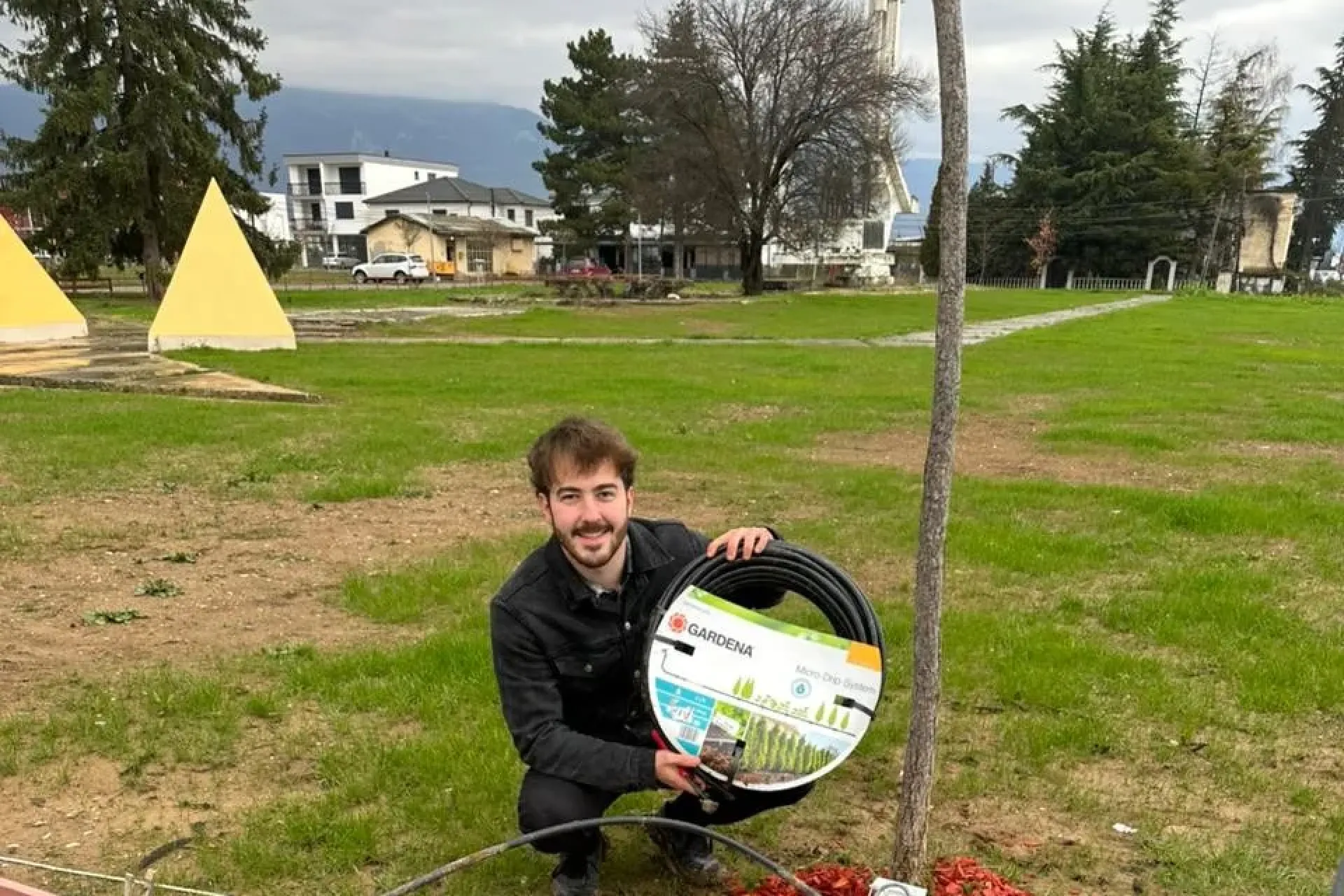
When Sado talks about where his love for the environment began, he doesn’t start with policies or programmes. He starts with a garden.
As a child growing up in Istog, Sado spent countless hours beside his father Sadrija, planting seeds, watering leaves, and caring for the small green space around their home. Those moments were simple, almost ordinary, but they quietly shaped the way he would come to see the world. Nature was not something distant or abstract; it was something you looked after every day. Something that, in return, allowed you to breathe.
That early connection stayed with him as he grew older. It became respect for nature, for the place he lives, and for the air everyone shares.
Sado Musić is 18 years old. He is from the Bosniak community, a graphic design student, a comic artist with an unmistakably warm smile. He’s the founder of Komikos, an art studio focused on making creative comics in Kosovo, but more than that, he is a young person who believes deeply in community action, no matter where that community is.
His journey found direction through Youth4CleanAir, a youth-led initiative with the support of Peer Educators Network (PEN), led by UNICEF Kosovo in partnership with the Embassy of Sweden. The initiative empowers young people from different backgrounds to work together on the green agenda, addressing air pollution, climate change, and environmental protection while strengthening youth leadership and inclusion.
Although Sado comes from Istog, he chose to invest his time and energy in Vitomirica, a small and often overlooked community not far from Peja. Home to a few hundred young people, Vitomirica had limited opportunities and few shared spaces where youth could simply belong without worrying about money, status, or whether they fit in.
“Young people need places where they can relax, feel important, and feel included,” Sado says. “Spaces where everyone belongs.”
Through Youth4CleanAir, Sado worked alongside Bosniak, Roma, Ashkali and Egyptian and Albanian youth, learning firsthand how environmental action can also be a bridge between communities. What began as participation soon turned into leadership. First as a team leader, and later as a mentor, he learned how to collaborate, take responsibility, and guide others, while sharing his knowledge openly.

One project, in particular, captures the spirit of his journey.
Together with other young people in Vitomirica, Sado helped transform a neglected park into a green, welcoming space for the whole community. The group didn’t just plant trees for decor, they planted them strategically along the road, to help reduce pollution from passing cars. It was young people identifying a problem that affected their daily lives and using newly gained green skills to design and implement a solution.
That sense of ownership sparked something bigger
When community members and local leaders saw what the youth were doing, they joined in, bringing trucks, tools, and support. What started as a youth initiative became a collective effort, showing how powerful it can be when young people are trusted as decision-makers, not just participants.
This approach reflects UNICEF’s broader work in Kosovo, where environmental challenges directly affect children’s health and well-being. According to A Climate Landscape Analysis for Children | UNICEF Kosovo Programme, air pollution and climate-related risks pose serious threats to children, particularly the most vulnerable making youth-led environmental action not just important, but urgent.

Beyond projects, Youth4CleanAir is part of UNICEF’s wider commitment to ensuring that children and young people are equipped, safeguarded, and supported to become active agents of change. Through the initiative, young people are empowered to demand that officials improve air quality and address climate change, while UNICEF ensures strong safeguarding and protection mechanisms for all children and youth involved.
UNICEF also supports youth engagement in climate action as part of its broader work on learning, skills development, and youth empowerment. In partnership with the Ministry of Environment, Spatial Planning and Infrastructure, UNICEF facilitated a dedicated youth consultation to ensure an inclusive Nationally Determined Contributions (NDCs) development process. Around 30 adolescents from diverse backgrounds took part, sharing their perspectives on climate mitigation, adaptation, environmental health, education, and social protection.
Their recommendations submitted through the Government Online Consultation Platform resulted in concrete additions to the final NDC, namely measures to strengthen climate and disaster preparedness education and awareness (including school and community activities, psychological support, and improved emergency response), and the launch of ongoing information campaigns and school-based Eco/Green Clubs to engage youth and the public in environmental action and climate mitigation and adaptation efforts. This process ensured that children’s rights and young people’s voices were meaningfully reflected in national climate policy.

Kosovo has also recently drafted its first National Climate Change Adaptation Strategy, now released for public consultation. A similar youth consultation process was launched, further demonstrating strong institutional commitment to child- and youth-responsive climate policies.
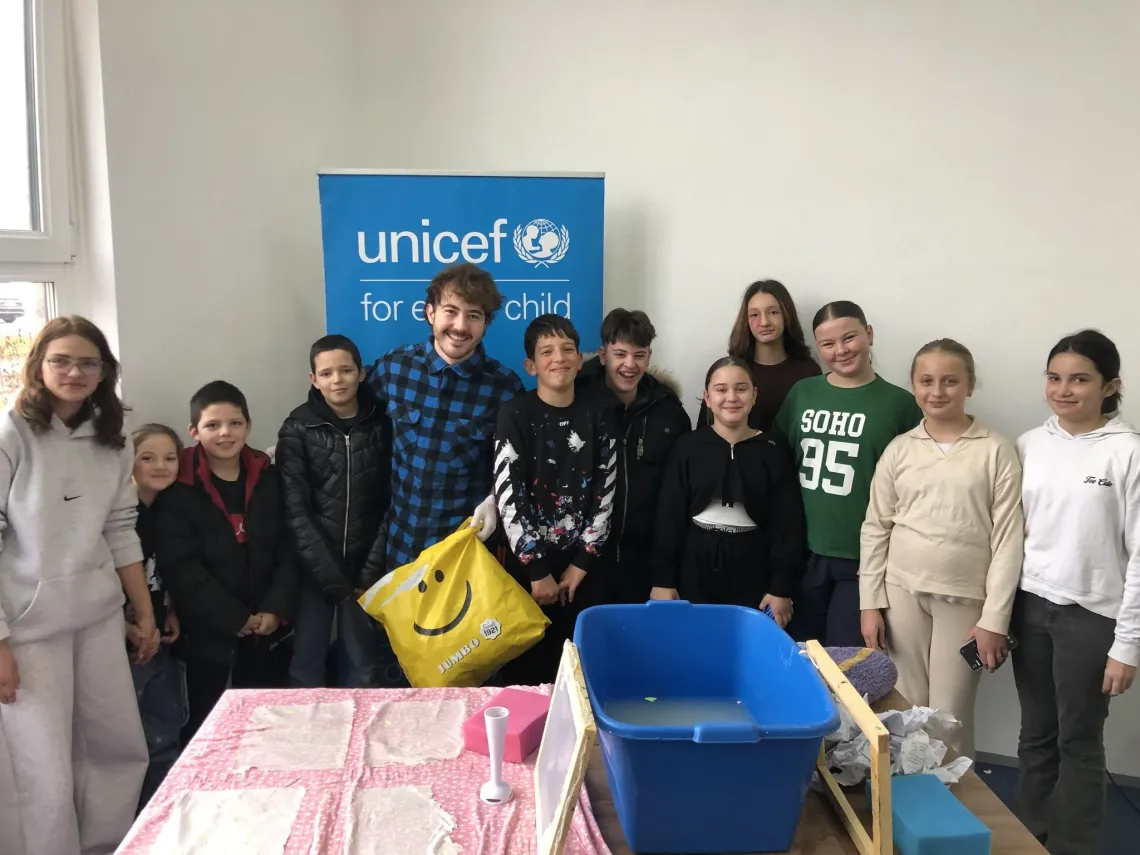
Creativity remains Sado’s personal entry point into change. As a designer and comic artist, he uses visual storytelling to make environmental topics accessible, especially for children. He has organized recycling workshops in schools, teaching younger students how to recycle paper through hands-on, creative methods.
“If you know something,” he says, “share it.”
Sado’s story sends a clear message to other young people: age is not a barrier to leadership. What matters is care, direction, and the courage to act. And when even one or two people join you, motivation grows, you realize you are not alone.
From a small childhood garden to a greener park in Vitomirica, Sado’s journey shows what happens when young people are given trust, space, and support. With the right opportunities, they don’t just imagine a better future, they begin building it.