Strengthening Prevention and Response to Violence Against Children in Kosovo
When children are forced into work on the streets, it is often a sign that families lack access to the support meant to protect them.

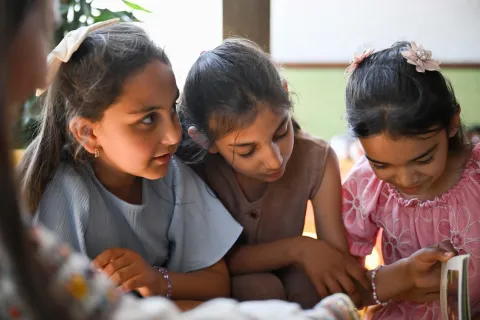
When children are forced into work on the streets, it is often a sign that families lack access to the support meant to protect them. This was the reality for [1]Ana, an eight-year-old girl from Prishtina who, together with her siblings, spent her days working on the streets to help her family survive. Her story, shared by UNICEF Kosovo, highlights how poverty and exclusion can push children into risky situations and how timely, coordinated social services can help turn lives around.
Ana’s experience is not unique. Across Kosovo, many children grow up facing overlapping risks linked to poverty, social exclusion, disability, or discrimination. While Kosovo has established a strong legal and policy framework for child protection including the Law on Child Protection and the Law on Social and Family Services, violence against children, neglect, exploitation, and harmful practices remain widespread and often underreported.
Despite existing protection mechanisms, challenges such as uneven municipal resources, limited specialized services, weak inter-sectoral coordination, and fragmented data systems continue to undermine timely and child-centered responses.
In 2025, with the support of Thematic Funding and other partners, UNICEF supported a comprehensive assessment examining how well Kosovo’s systems protect child victims and witnesses of violence in practice. The findings confirmed that, although Kosovo’s legal framework meets international standards, gaps in implementation remain. Delays in secondary legislation, limited professional capacity, insufficient specialized services, and weak inter-institutional coordination increase risks for children and hinder their recovery. The assessment called for stronger coordination, targeted capacity building, and full enforcement of existing laws to ensure child-sensitive protection.
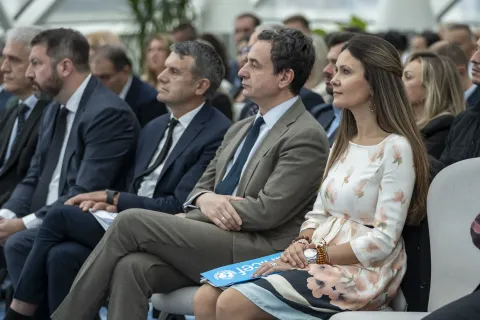
As a follow up, UNICEF convened a dissemination and action-oriented moment with key institutions, using the findings to agree on practical next steps such as improving inter-institutional coordination, prioritizing capacity building for frontline professionals, and accelerating implementation through enforcement of the existing legal framework with the objective of translating into concrete system improvements for children. The Minister of Justice attended as the keynote speaker and affirmed her commitment to implement the recommendations, especially those focused on system-level actions, including stronger coordination, targeted capacity building, and the full enforcement of existing laws.
This builds on UNICEF’s 2025 commitment to strengthening Kosovo’s child protection system through evidence, coordination, and service standardization, contributing to a more comprehensive, equitable, and child-centered approach to preventing and responding to violence, exploitation, and harm against children.
[1]Ana is a fictive name.