From every nine minutes to every child: why mental health cannot wait
Every nine minutes, somewhere in the world, an adolescent aged 15–19 dies by suicide[1]. Even with the limits of the data, the message is clear. Suicide is among the leading causes of death for older adolescents. 1 in 7 adolescents aged 10-19 lives with a mental health condition globally[2].
Behind every number is a family, a classroom and a community asking what could have been done. Suicide is rarely caused by one thing. Academic pressure, loneliness, family circumstances, violence, discrimination and poverty all play a part. That is also why it can be prevented, and why prevention belongs to all of us.
We know what works. Responsible media reporting, life skills for adolescents, and early support and follow-up for those at risk, school-based mental health programmes addressing anxiety and depression, among other measures. UNICEF estimates that US$387.2 billion in potential contribution to economies is lost each year due to mental health conditions that lead to disability or death among young people[3].
Kosovo is part of this picture. With more than 423,000 children under 18 and one of the youngest populations in Europe, future depends on their wellbeing. In August this year, the Institute of Psychology at the University of Prishtina and UNICEF launched a mapping of mental health and psychosocial support services for children and adolescents. It finds growing anxiety, depression, trauma, bullying, substance use and risks in digital environments.
The most urgent finding concerns 15- and 16-year-old students: self-reported suicide attempts rose from 3.4 per cent in 2011 to 10.0 per cent in 2024. These are not abstract figures. They are children, siblings, students, neighbours.
Help exists, but it is hard to reach. Families experience services across health, education and social protection as fragmented. Specialized public services are lacking and many schools lack enough psychological support. Children with disabilities, children from vulnerable communities, and those living in poverty or rural areas face additional barriers.
Kosovo has real strengths to build on: a strong child rights framework, committed professionals, strong-willed decision-makers and active civil society. The report offers a clear roadmap: a national coordination mechanism, a funded child and adolescent mental health action plan, stronger referral pathways, more school-based services, mental health screening in primary healthcare, and better data.
Institutions cannot do this alone. Each of us can listen to a child without judgement, take a friend's or colleague's worry seriously, and speak about mental health without shame. Media can report with care, avoiding sensationalism and showing that help and recovery are possible. And young people, who know best what they need, must help shape the solutions.
Today, on World Mental Health Day, let us move from awareness to action. Every child has the right to the highest attainable standard of health, including mental health. Let us make that right real, for every child in Kosovo.
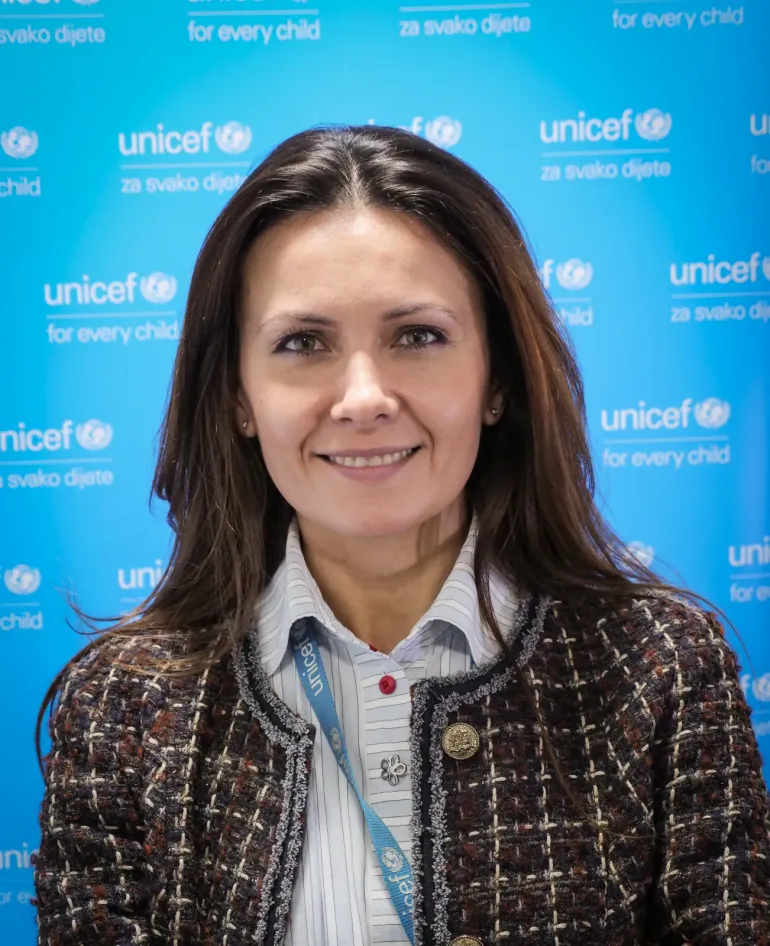
Veronika Vashchenko is Head of Office, UNICEF Kosovo.
[1] Number is based on UNICEF analysis of 2024 estimates from the UN Inter-agency Group for Child Mortality Estimation: 59,322 suicide deaths among adolescents aged 15–19 globally.
[2] UNICEF Data Adolescent mental health statistics 2019 estimates.
Media contacts
About UNICEF
UNICEF promotes the rights and wellbeing of every child, in everything we do. Together with our partners, we work in 190 countries and territories to translate that commitment into practical action, focusing special effort on reaching the most vulnerable and excluded children, to the benefit of all children, everywhere.
For more information about UNICEF and its work for children, visit www.unicef.org.