Safe water brings relief to families in Za’atari Refugee Camp
Meet Ayat and her family

- English
- العربية
Ayat can still clearly remember the day, over a decade ago, when her young family was forced to flee from their home in Syria across the border to Jordan’s Za’atari refugee camp to seek shelter.
“It was devastating leaving everything behind,” recalled the mother of two. “Then when I saw the camp, I wept for days.” The communal toilets and tap stands providing emergency water and sanitation at that time were particularly challenging for women like Ayat: “It was such hard work carrying the water that my hands still hurt to this day.”
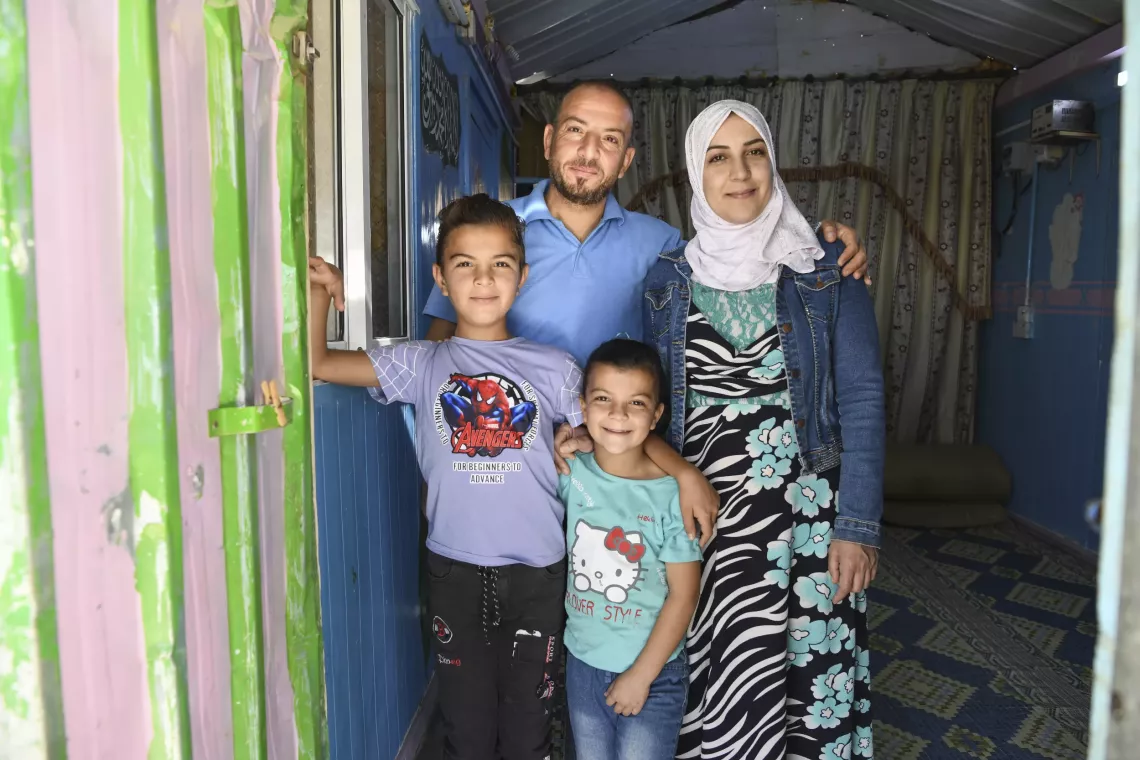
Today, her son Mohamad is almost a teenager, and has become a big brother to Rahaf, 7. The family has witnessed vast improvements in the services provided to people in the camp, including the establishment of a water and wastewater network which has brought these lifesaving services directly into their home.
“I can still remember how happy I felt when I turned on the tap in my kitchen and water came flowing out,” said Ayat.
“Clean water is the most important service to us here in this refugee camp,” she continued.
“We are very grateful that Jordan has hosted us here for over ten years now and that they also share such a precious resource as water. If we didn’t have water, we’d have no safe place to go.”
UNICEF supports the operation of the safe water and wastewater networks in Za’atari Camp for the refugee families who live there. On average, between 35 and 55 litres of water per person per day are distributed through household level connections, depending on the time of the year and demand. Households are also connected to a sanitation network which is connected to a wastewater treatment plant in the camp.
Access to these lifesaving and basic services has allowed Ayat to focus on the future and her children’s development and wellbeing.
“Now I have the time and energy to meet my children’s needs, it’s such a relief because I just want the best for them,” she explained. “To me water means health. When we have enough water to keep clean, we can protect our family from many illnesses. I hate the thought of my children getting sick from a preventable illness.”
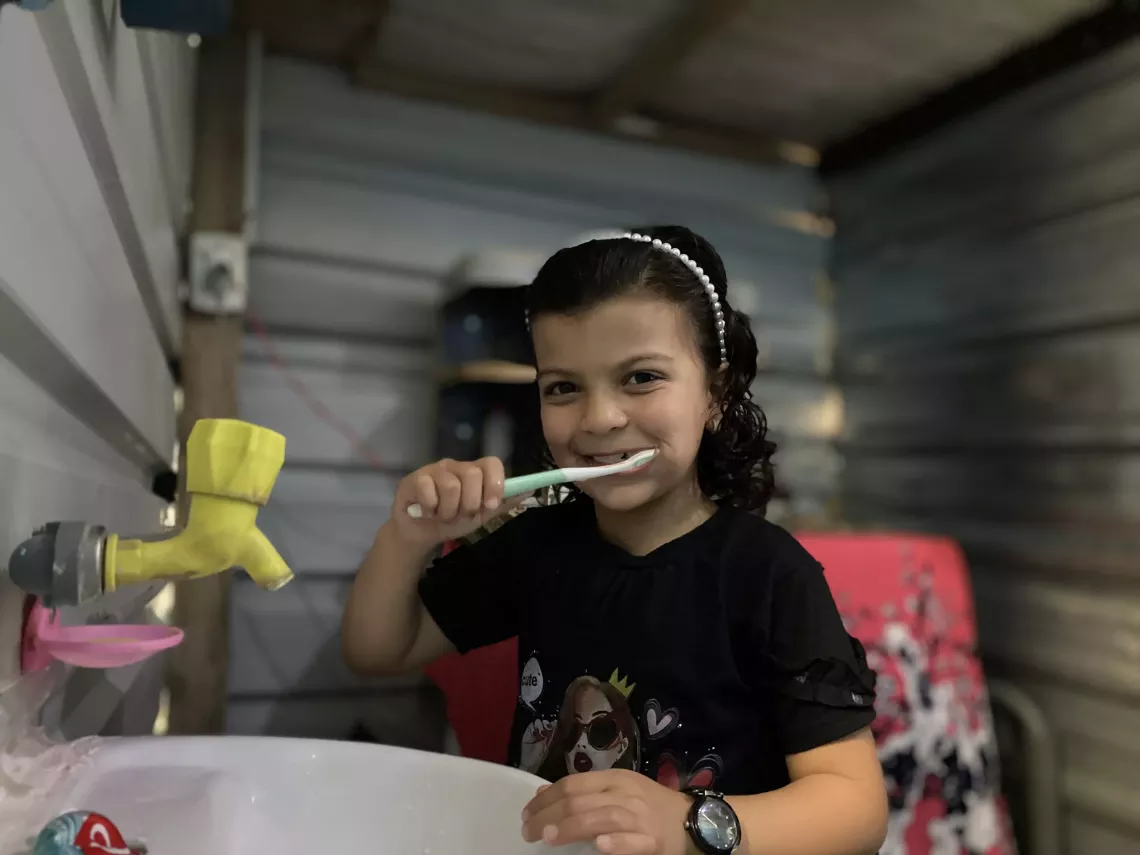
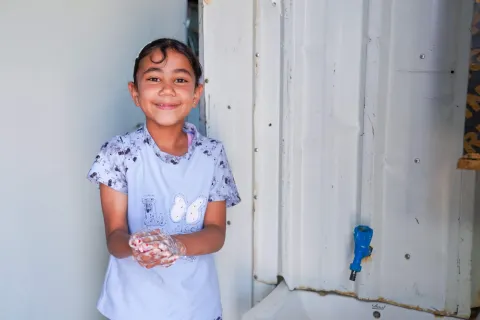
7-year-old Rahaf, wants to be a dentist when she grows up. “Water is important so we can stay healthy,” said Rahaf who always turns the tap off while brushing her teeth.
“I know that many people in the world do not think much about climate change and water scarcity as they have as much water as they like,” reflected Ayat. “I cannot help but think that if they did not have such easy access to water, they would have a lot more consideration for how they use it.”
The provision of water and sanitation services in the camp is constrained by both financial and natural resources. UNICEF is exploring options that can secure the availability of water in the Za’atari area, covering potential needs of both camps and surrounding community. UNICEF is also appealing to the international community to fund the continuous provision of these critical services.
“If one day the water we are given is reduced, we will suffer because we are already at the limit of how much we can conserve the water we use,” added a concerned Ayat.
UNICEF’s WASH services in Za’atari refugee camp are generously supported by the Government of Canada, the European Union and the United States Government.