Restoring Safe Water, Restoring Confidence
With support from the United States Government, UNICEF and partners are helping families in Jordan's Palestinian refugee camps access safer and more reliable water and sanitation services.

For years, Ameer and his family in Jerash refugee camp could not trust the water flowing from their taps. Discoloured by aging iron pipes and delivered only every 20 to 25 days, the water forced the family to rely on costly private water deliveries and carefully ration every drop.
“We had to be very careful with every drop,” he says, “constantly reminding the children to use the water very carefully so we wouldn't run out.”
His six-year-old son, Muhammad, grew up not trusting the tap. “I didn't like the water,” he remembers. “I didn't want to drink it or even wash with it.”
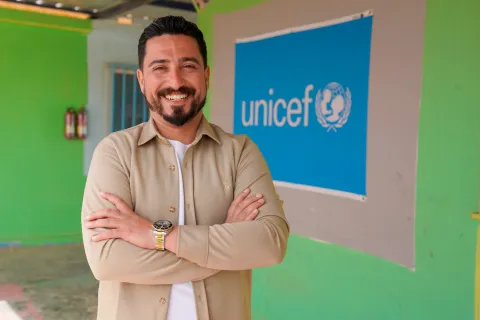
The discoloration wasn't just cosmetic, but rather a symptom of an old network, buckling under decades of iron buildup and sediment. Fixing it meant going underground. “We rehabilitated sewage lines and manholes, and extended transmission lines across both camps,” says Engineer Mohammed Al Otoum of Yarmouk Water Company, who led the work in Jerash and Souf camps.
"Since 2024, we've been working to improve water and sanitation services across 13 Palestinian refugee camps in Jordan, reaching nearly 100,000 people," says Dania Al Thuneibat, UNICEF WASH Officer.
With support from the United States Government, UNICEF, Jordan's Department of Palestinian Affairs, and local water authorities have been upgrading critical water and sanitation infrastructure across Palestinian refugee camps in Jordan, helping families like Ameer's access safer and more reliable services.

“Here in Jerash camp, we've upgraded water and wastewater networks, connected more homes, and improved the pumping stations that keep water flowing,” explains Dania.
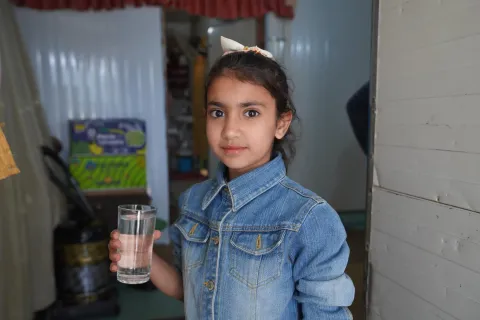
For Ameer, the change is measured simplest at the tap. “The most significant change has been the return of trust,” he says. “Once the water started to flow clear, I cleaned our household tanks and now, for the first time, we can drink it straight from the tap.”
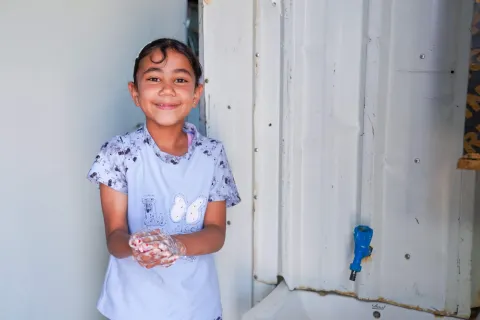
During this summer break, Muhammad, for his part, likes to spends his afternoons playing football with his friends and comes home without hesitation to wash up. “If you don't wash, you get dirty and get diseases,” he says.

For families in Jerash and other Palestinian refugee camps, improvements to water and sanitation infrastructure mean more than upgraded pipes and pumping stations. They mean safer water to drink, healthier environments for children to grow up in, and greater confidence that essential services will continue when families need them most.
With generous funding from the United States Government, UNICEF is working with Jordan's Department of Palestinian Affairs and local water authorities to improve safe water and sanitation services in Palestinian refugee camp in Jordan.