A Renewal of Hope in Jordan’s Jerash Camp
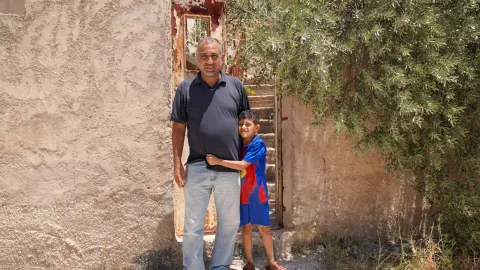
The story of Jaber and his family

- English
- العربية
It’s a school day and Jaber’s home buzzes with the cheerful energy that comes with having three children playing at home after school. The house looks fresh and well cared for, with a new roof tank and an updated kitchen and bathroom that has access to water.
But this sense of normalcy was long missing for the family of five.
For years, access to safe water and sanitation was one of the biggest daily challenges for Jaber and his family in Jerash Camp, which hosts Palestinian refugees living in Jordan.
Leaking roofs, damaged pipes, and unsafe bathroom facilities meant the family struggled to meet even their most basic water and hygiene needs. “When it rained, water would seep into the house and mix with electricity wires,” Jaber recalls. “We worried not just about the damage, but about safety and health of our children.”
For his 7-year-old daughter Rimas, water shortage and unsafe facilities affected daily routines most children take for granted. “I used to feel scared when the roof shook and when we didn’t have enough water,” she says. “Bathing was difficult, and sometimes we had to wait for the water to come to the house because it was delayed in coming. “Like many vulnerable families across Palestinian refugee camps in Jordan, Jaber’s household faced compounded challenges: unemployment due to illness, limited income, and aging infrastructure that made safe access to water unreliable.
“When a pipe leaked or the water tank failed, it wasn’t a small problem,” Jaber explains. “It disrupted everything - from hygiene and safety to our children’s daily lives.”
To address these urgent needs, UNICEF, with support from the Government of the United States and in partnership with the Department of Palestinian Affairs (DPA), is strengthening Water, Sanitation and Hygiene (WASH) services in Palestinian refugee camps. The intervention focuses on rehabilitating household WASH facilities, installing rooftop water tanks, and improving access to safe water and sanitation for the most vulnerable families.
Jaber’s home was among those selected as part of these rehabilitations of WASH facilities. The support included the installation of a rooftop water tank, rehabilitation of the bathroom and kitchen facilities, and improvements to ensure safer and more reliable water use inside the household.

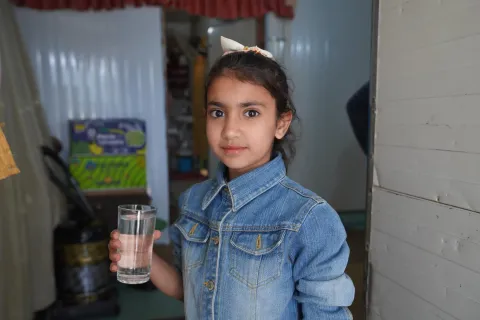
“Proper access to clean water has changed our lives,” Jaber says. “We no longer worry about running out of water or unsafe facilities.”

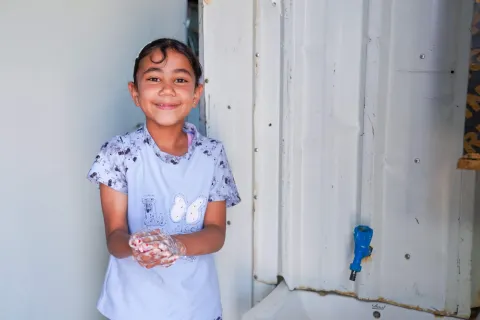
The impact was immediate. For children, reliable access to water meant better hygiene, dignity, and independence.
“I can shower all by myself now,” Rimas says proudly. “And my mom says she’s proud of me.”


Beyond the household level, these improvements contribute to safer living conditions and better health outcomes across the camp. UNICEF is also working with DPA and other stakeholders to strengthen understanding of WASH-specific needs, helping inform better resource allocation and longer-term improvements to water and wastewater systems in selected camps.
Today, Jaber feels a renewed sense of stability. “Now I worry less about water and safety, and more about my children’s education and future,” he says.

This year, with support from the Government of the United States, UNICEF is on track to reach more than 50,000 people across Palestinian refugee camps in Jordan, helping families access safe water, improved sanitation, and better hygiene services, and enabling them to live healthier lives with dignity.