Mal Al Sham's Journey of Recovery
Reclaiming her future: Mal Al Sham's story of resilience.

- English
- العربية
“UNICEF's support has been a lifeline, helping me navigate the darkest times and emerge stronger,” says Mal Al Sham, a 17-year-old resident of the Za’atari camp in Jordan. Mal Al Sham's journey from Daraa, Syria, to the camp in 2013 was filled with challenges.
Living in the caravan, Mal Al Sham felt suffocated and lacked privacy. With many siblings, she craved space and a sense of normalcy. These challenges led her to drop out of school in middle school.
At that point, Mal Al Sham saw many of her friends getting married and yearned for the happiness she believed marriage would bring. "I loved attending weddings and watching my friends transform into brides. It filled my heart with longing for the happiness they all seemed to have," she recalls. "I started thinking that marriage would be the answer to my challenges, bringing me love, support, happiness, space, and freedom."
When a woman from her friend’s circle approached Mal Al Sham's family about marrying her son, she was initially hesitant but agreed to meet him. At 16, she found herself engaged to a man nine years her senior.

When they got married, Mal Al Sham said, “Our honeymoon plans turned out to be empty promises. He changed straight away, forbidding me from leaving the house. I felt more trapped than ever.” The reality of her marriage was far from her dreams, leading to isolation and deteriorating health.
The physical and emotional toll of her marriage was immense. she suffered from daily nosebleeds, severe allergic reactions, and the stress led to a miscarriage. After a cycle of fights and disagreements, and being sent to her family’s home as punishment, the relationship didn’t recover and ended in divorce.
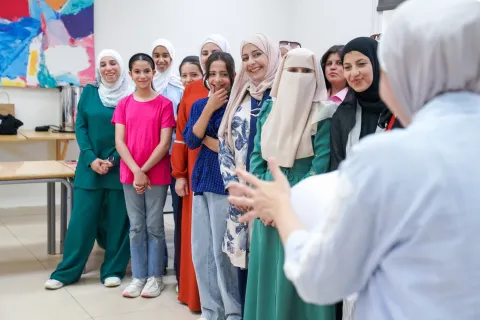
Throughout her journey, UNICEF played a crucial role. “Before I got married, I enjoyed attending their Makani centres supported by UNICEF,” Mal Al Sham shares. These centres provided a safe space for activities like football and learning support. During her divorce, UNICEF, through the Noor Al-Husain Foundation, offered psychological support, helping her regain her confidence and joy.
Talking to a case manager and engaging in activities at the Makani centre were vital in Mal Al Sham's recovery. “Playing football at the Makani centre made me feel alive again,” she says. With the support she received, Mal Al Sham started enjoying life again and now plans to pursue a career in cosmetics and makeup, aspiring to generate her own income and become independent.
UNICEF's programmes, providing safe spaces and psychological support, have been instrumental in Mal Al Sham's journey. “Education and self-awareness are key to avoiding pitfalls like the ones I experienced,” she concludes.
The impact of UNICEF's work is profound, and all girls should take advantage of it. Everything UNICEF does aims to provide girls with the tools they need to make informed decisions and build a better future. As Mal Al Sham looks forward, she is determined to achieve her dreams and hopes her story will help others avoid the hardships she faced.
Thanks to generous support from La Roca Village DO GOOD programme The Bicester Collection, UNICEF provides child protection case management services to children affected by or at risk of child marriage. In addition, children, adolescents, youth, parents, caregivers, and community members are engaged with different community-based programmes to improve their skills and knowledge on the prevention of violence against children, including child marriage.