A Healthy start: How nutrition teams transformed baby Ghalia's life
UNICEF helps Syrian refugee baby Ghalia thrive against all odds, thanks to dedicated nutrition teams in Jordan.

- English
- العربية
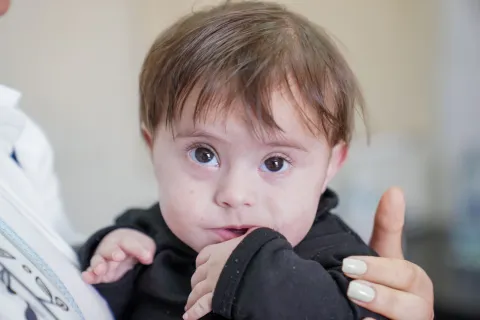
“I was afraid of losing my daughter. Thanks to UNICEF and International Medical Corps, my baby girl is alive and healthy.” says Amaal, a 43-year-old Syrian refugee and mother of six.
Jordan is home to the world's second-highest number of refugees per capita, hosting over 720,000 in 2023, according to the UNHCR. Nearly 80,000 Syrians live in the Za’atari refugee camp, making it the fourth-largest city in Jordan, while many other Syrian refugees reside in Jordan’s towns and cities, where 93% live below the poverty line.
Ghalia was born in September 2023 in Za’atari Camp’s District 6. Amaal, already a devoted mother of five, took her newborn to the infant and young child feeding services at the International Medical Corps nutrition clinic, funded by UNICEF. At just one week old, Ghalia weighed only 2.3 kg.

A few weeks after Ghalia’s birth, Amaal grew concerned that her daughter needed more to eat than breast milk. Like many mothers in Jordan, she turned to sugary water to supplement breast milk, a common yet harmful practice. Although exclusive breastfeeding is recommended for the first six months of a baby’s life, data from The Jordan Times highlights that only 24% of two- to three-month-old babies in Jordan are exclusively breastfed, dropping to just 11% for four- to five-month-olds.
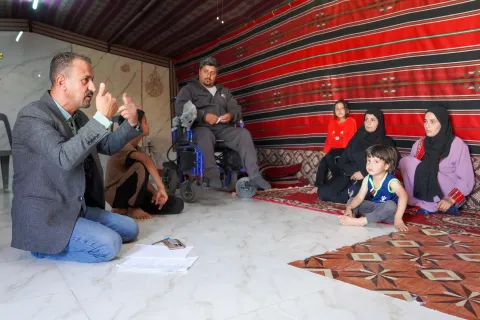
When the clinic's nutrition team learned Amaal was no longer exclusively breastfeeding Ghalia, they acted swiftly. A nutrition counselor explained the benefits of exclusive breastfeeding, highlighting its role in healthy growth. Despite this guidance, Ghalia’s weight remained alarmingly low, so the team decided to investigate further.
They evaluated Ghalia and found that she was suffering from anemia and urate crystals. Working alongside the clinic’s physicians, the team a treatment plan.
Further evaluations by the nutrition workers revealed Ghalia was suffering from anemia and urate crystals. The team, collaborating with clinic physicians, created a tailored treatment plan to help Ghalia. They prescribed her iron supplements and, later, infant milk formula to address her nutritional needs.
“The journey with Ghalia reaffirmed our commitment to providing holistic care to every beneficiary. Despite the challenges, witnessing her transformation fills us with hope and inspires us to continue our mission,” shared one of the nutrition counselors.
The team scheduled Amaal and Ghalia to visit the clinic frequently so they could monitor Ghalia’s progress and adjust her treatment as needed. The nutritionists also helped Amaal continue breastfeeding and gradually transition away from formula By the time Ghalia reached six months, her weight had increased to 5.6 kg, and she was thriving without signs of malnutrition.
UNICEF, in partnership with the International Medical Corps, provides critical nutrition services in Jordan’s Azraq and Za’atari camps through Infant and Young Child Feeding (IYCF) and Integrated Management of Acute Malnutrition (IMAM) programmes. These initiatives focus on promoting exclusive breastfeeding and the timely introduction of complementary feeding for children over six months old.