"We Will Answer Your Questions"
Community Health Volunteers Bridge the Gap in Remote Azraq
- English
- العربية
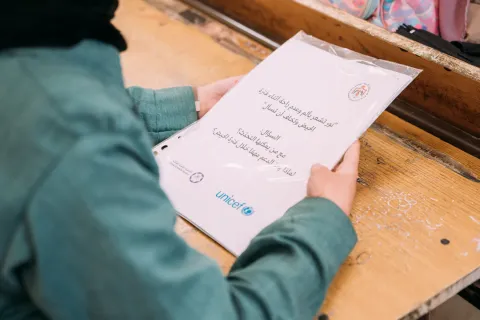
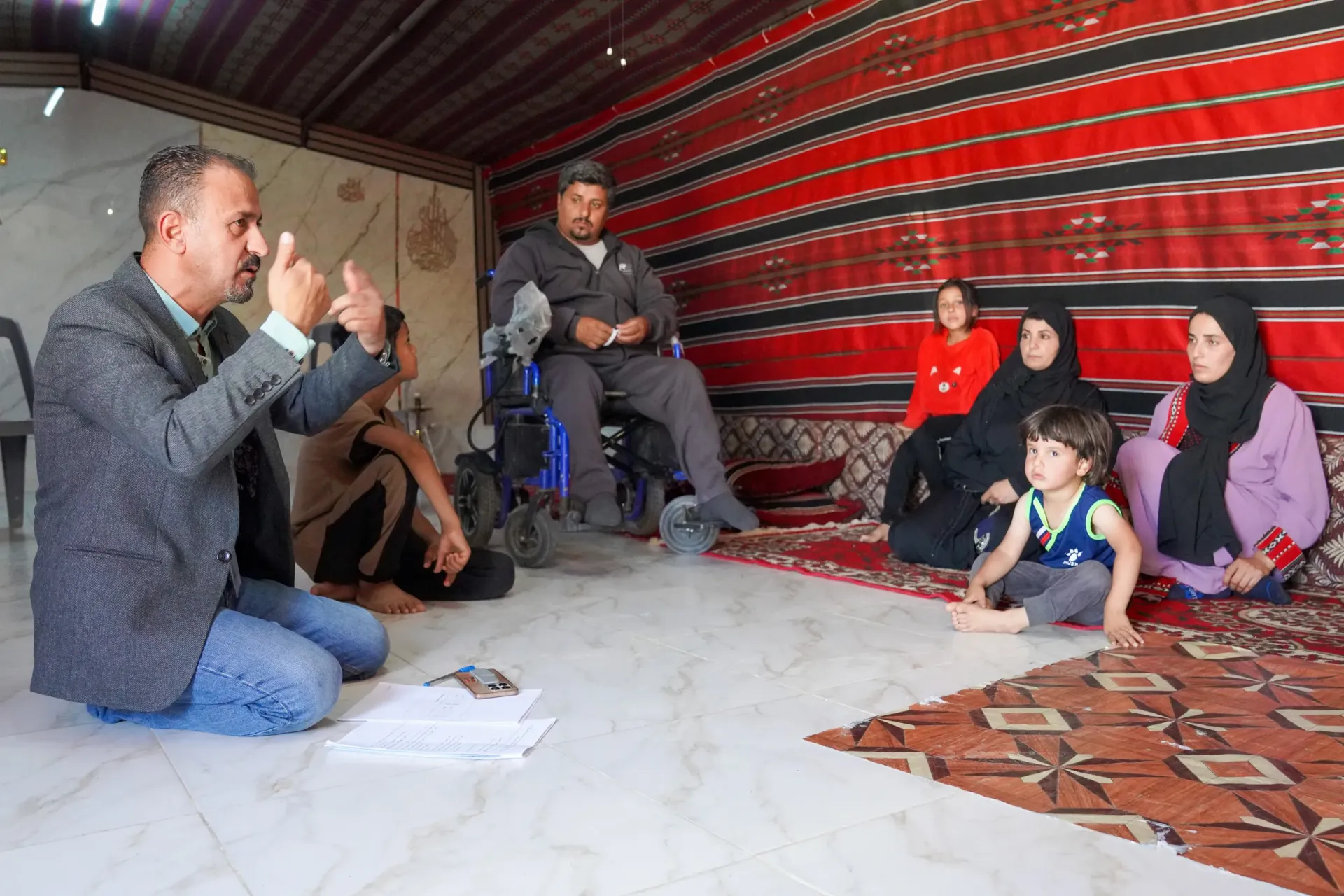
The summer heat is unrelenting as families gather inside a Bedouin tent on the outskirts of Azraq, in central eastern Jordan. Despite the sweltering conditions, a health session continues as planned, led by Alaa, a volunteer from the local Community Health Committee (CHC) from the Ministry of Health. Patiently, he takes the time to explain measles to the families, including how it spreads, its risks, and how we can protect ourselves and our children from it. “We want to make sure you’re aware of this information, and we will answer your questions,” he explains to them.
Alaa, whose primary job is as a manager of a local association, has made the journey out to this remote Bedouin community deliberately. "In coordination with the local health centre, we go out to remote communities specifically," he says, "because they deserve the same access to this life-saving information as anyone else."
For Khaled, a father of three young children seated nearby, the session arrives at the right moment. Rumours and misinformation about vaccines have been circulating in his community since the COVID-19 pandemic: stories of adverse reactions, illnesses wrongly attributed to the vaccine, fear passed between neighbours. "People spread fear among themselves," he says. "This session is a good refresher. Sometimes we forget about the diseases that exist out there."
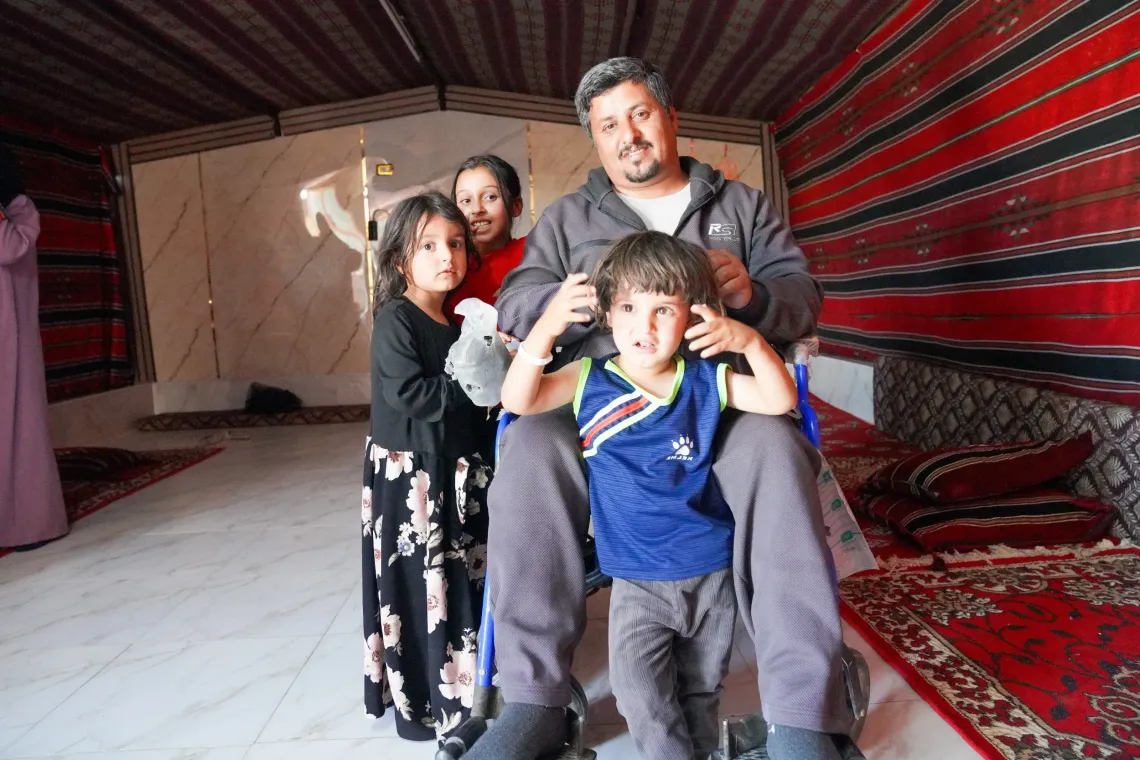
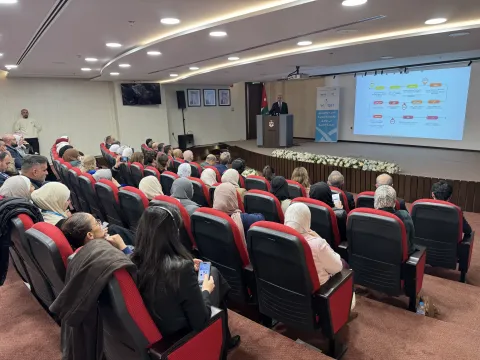
Alaa knows this hesitancy well. He and his fellow volunteers are trained specifically to meet it. Through a structured capacity-building pathway coordinated with Jordan's Ministry of Health, UNICEF and Gavi, the Vaccine Alliance, CHC members receive specialised training on immunisation, covering vaccine safety, disease prevention, and how to address community concerns. That knowledge is then brought directly to families who might otherwise never receive it.
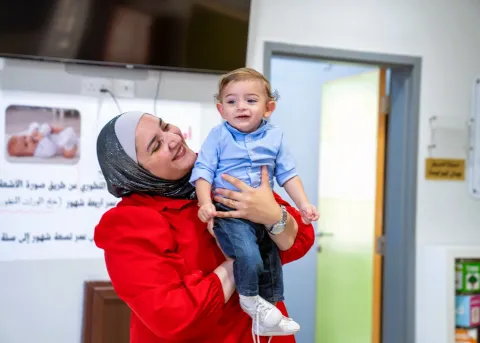
The results are tangible. Among those the committee has reached are families who had never vaccinated their children at all. Through patient, face-to-face dialogue, several have since chosen to vaccinate. "We're seeing real progress," Alaa says. "We're seeing success in helping people understand that vaccines are a disease prevention tool."
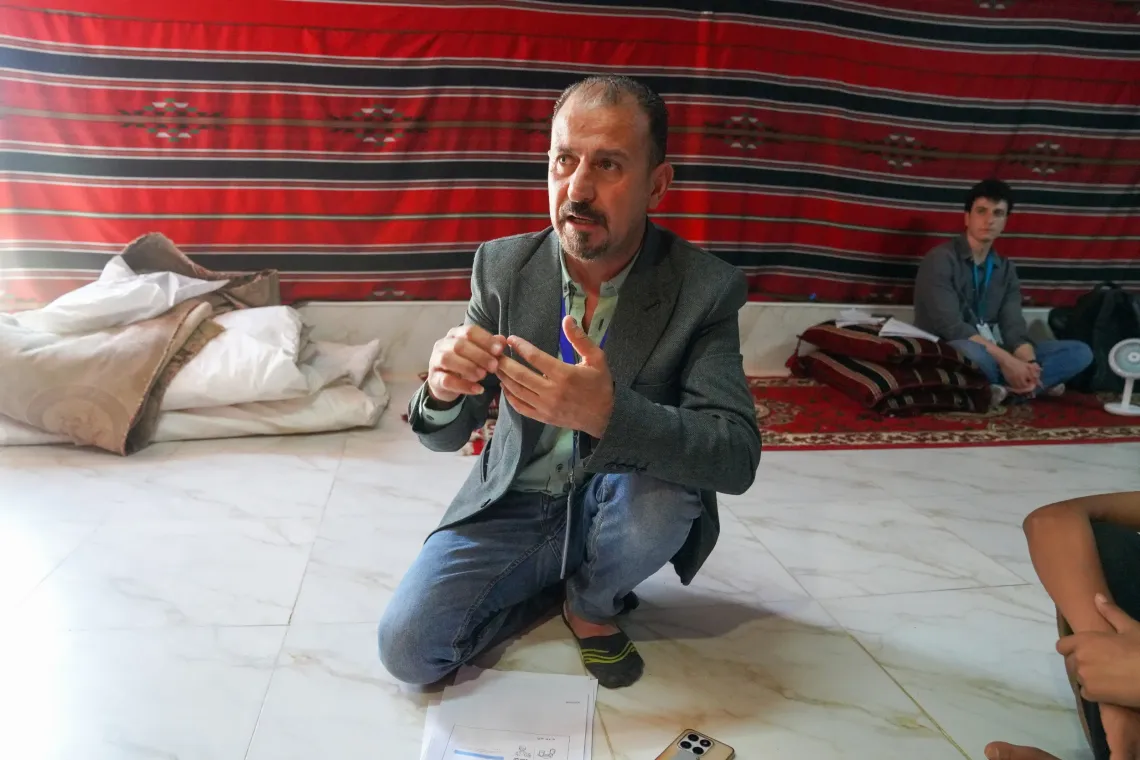
The CHCs also serve as a two-way channel, feeding community feedback back to the Ministry of Health to inform planning and messaging. This helps ensure that what reaches families is grounded in the concerns people actually have. And when the volunteers meet families unable to reach the nearest health centre, they inform the centre accordingly, which would then send its mobile immunization team to ensure that no child is left behind unprotected.
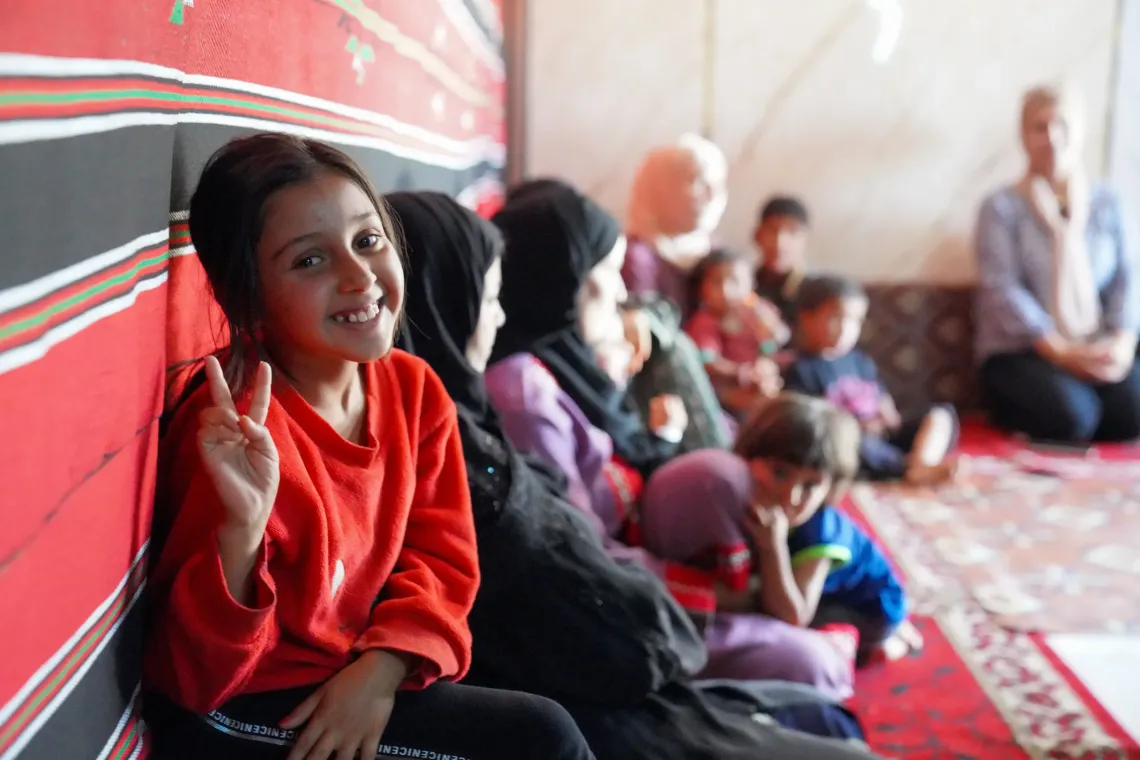
As the session wraps up in the stifling heat, Khaled's ten-year-old daughter Shmoukh offers cheerfully reflects on what she thinks of vaccines: "I'm not afraid of needles!”
If he were to emphasize on message to all parents out there, Alaa says the following: "Vaccines are your first line of defense. Seek credible information from trusted sources. That choice makes all the difference."
As of today, the Ministry of Health has established 225 Community Health Committees (CHCs) comprising approximately 4,000 volunteers across Jordan. These community-based groups strengthen the link between health facilities and local communities and typically include community leaders, local volunteers, women’s groups, youth representatives, and, in some locations, religious and municipal figures. CHCs play a key role in supporting health promotion, community engagement, and social mobilization efforts, particularly around public health priorities such as immunization, maternal and child health, disease prevention, and emergency preparedness and response.