Beyond the Infrastructure: improving daily lives in Jordan’s Palestinian refugee camps
From the crowded alleys of Hittin camp to the flood-prone streets of Jerash camp, the rehabilitation of water and sanitation systems in 10 Palestinian refugee camps is creating safer and healthier environments for thousands of families and children.

- English
- العربية
Like much of Jordan, Palestinian refugee camps face severe water scarcity. Supply is irregular, and households often wait long stretches between deliveries. The camps face extra problems on top of this: old pipes and networks, many people crowded into small spaces, buildings put up without planning or standards, a lot of water lost to leaks and illegal connections, and narrow streets that are hard to reach. These challenges make it especially difficult to deliver water and to maintain or repair water and sanitation systems - and life harder for families, affecting their daily routines, their health and hygiene, and the children’s learning environments.
That’s why since 2024, with the generous support of the United States Government, UNICEF has supported the rehabilitation of water and sanitation networks across Palestinian refugee camps in Jordan, in partnership with the Department of Palestinian Affairs and water utilities. These efforts have improved access to safe water and sanitation services for over 100,000 people.
How does it change lives on the ground? Here is the impact across four different camps.
In Hittin Camp, a rehabilitated network brings reliability to families
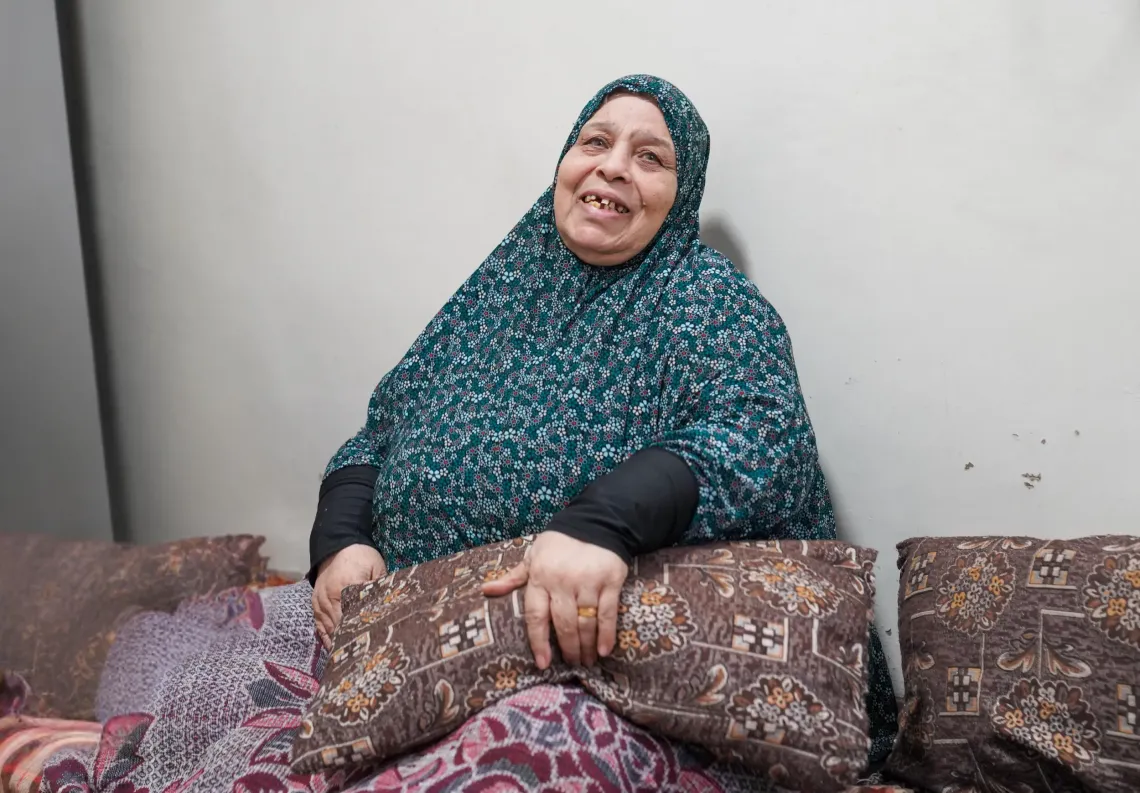
Umm Mohammed’s extended family, including her children and grandchildren, struggled for years with insufficient water and low water pressure at taps, as their home is located in one of the highest areas of the camp. The rehabilitation of the water network reduced water losses within the water supply system and increased water pressure at the households, helping ensure more reliable and adequate water access for her family.
“Often, I would turn on the tap, only to find a few drops of water coming out,” Umm Mohammed recalls. “It was an exhausting situation.”
“Often, I would turn on the tap, only to find a few drops of water coming out.”
Today, the aging pipes have been replaced with a modern system, and the reality in her home is transformed. "Thankfully, we now have enough clean water for me, my children, and my grandchildren," she says.
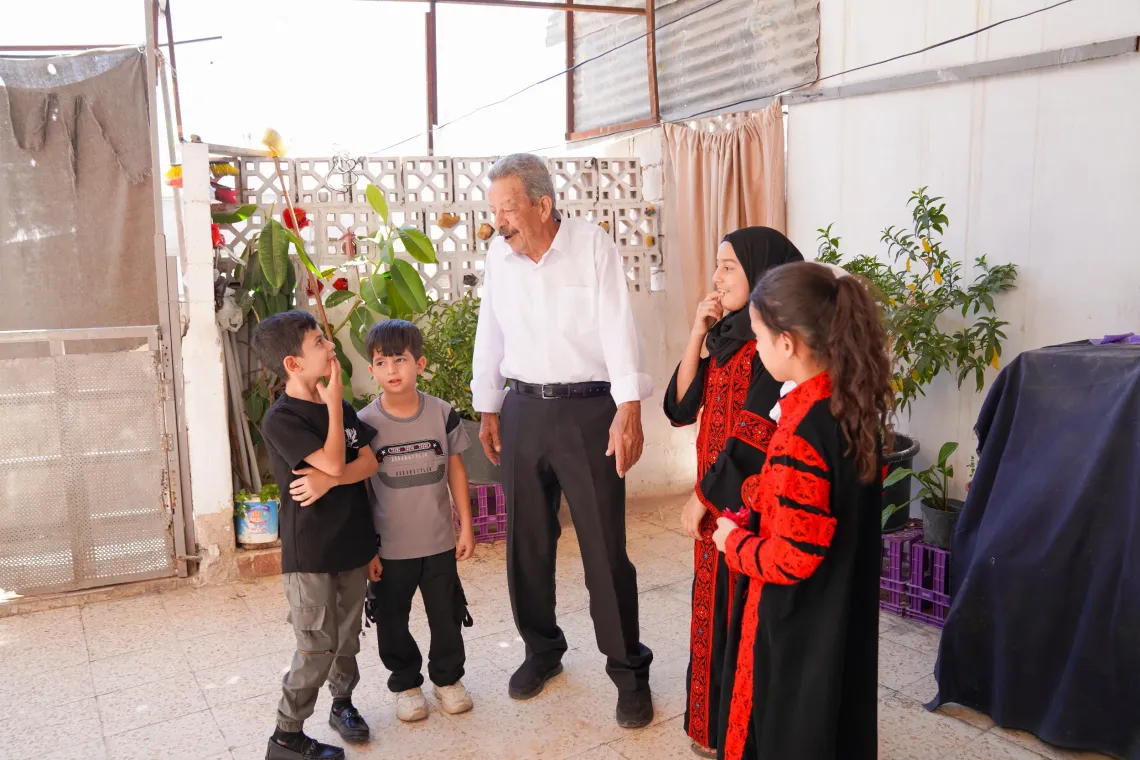
For another grandparent nearby, Ahmad, the improvement has brought greater peace of mind to his family . Before the rehabilitation, filling his family’s water tanks was a long and uncertain process that could take over ten hours—and often, the tanks would not fill at all. To meet their needs, the family had to spend 60 dinars a month on water purchased from trucks.
"I haven't bought a single gallon of water since the network was rehabilitated," Ahmad says. Now, the water arrives with enough pressure to fill the tanks in just two and a half hours.
Ahmad's 11-year-old granddaughter, Eileen, remembers her father carrying heavy containers up three flights of stairs to their home when water ran out. "It was so difficult," she says. "My father is relieved now. When he opens the tap, the water always comes."
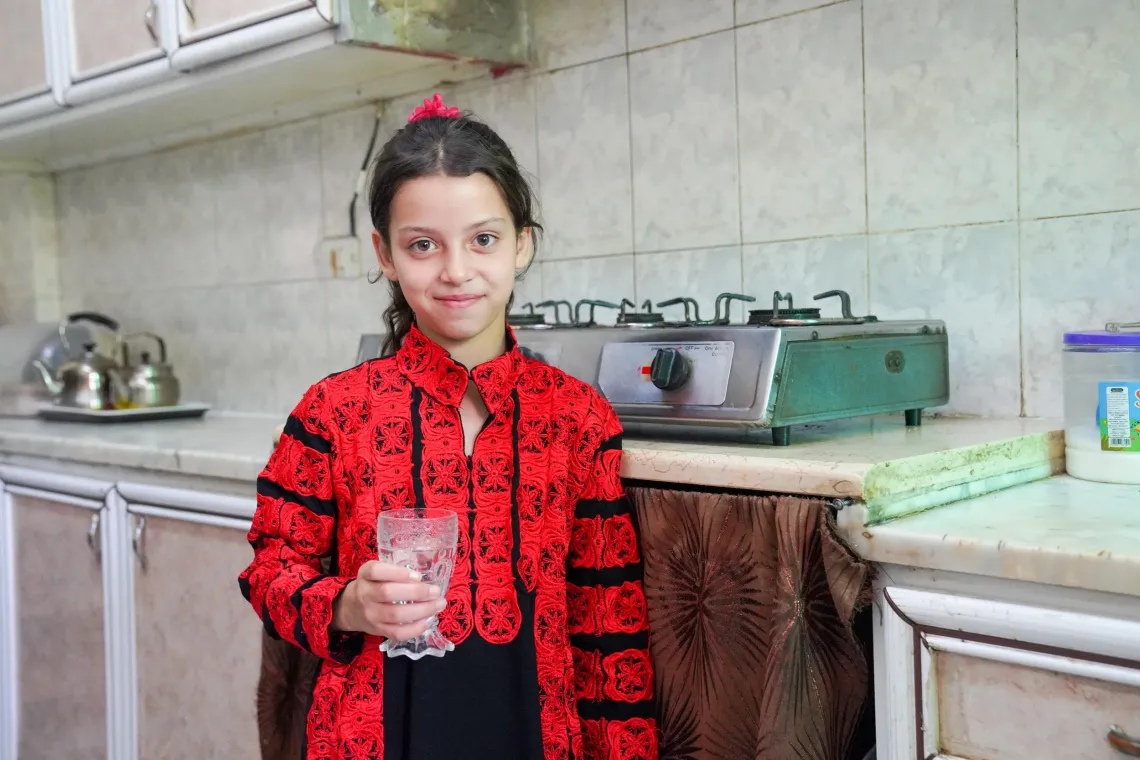
"May you live sweet, sweet lives," Umm Mohammad concludes with wishes for the younger generations. “Everyone deserves to live in dignity.”
In Madaba Camp, clean streets mean a safer journey for children
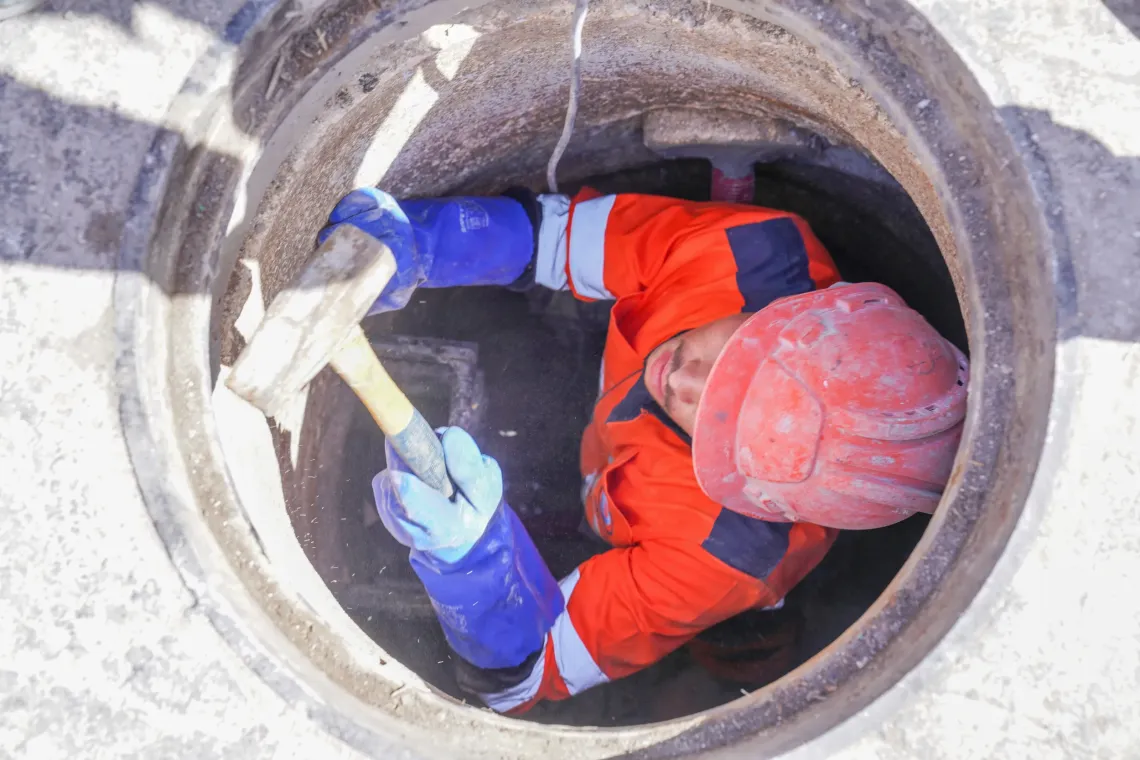
For years, the failing sanitation network in Madaba Camp made daily life a challenge. When the sewage lines were blocked, the narrow streets would flood with wastewater, creating a stagnant environment that residents say brought rodents and insects into their neighborhoods.
“The children get sick; you have to take them to the hospitals,” says Smeih, a father and lifelong resident of the camp. “The water used to overflow and come up into the houses.”
Now, the streets are transformed. Smeih’s daughter, who once took a long detour to avoid the sewage-flooded streets, can now take the short road to school.
In Jerash and Souf Camps, protecting the water and keeping homes dry
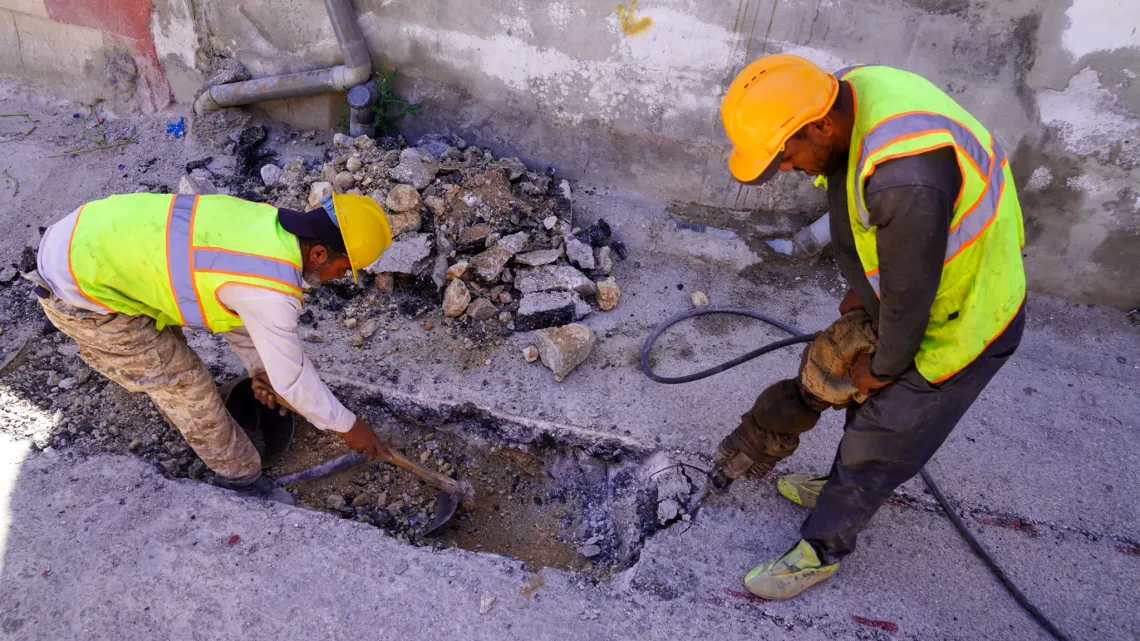
In Jerash and Souf camps, the rehabilitation effort focused on preventing flooding and protecting the water supply. For Osama, a resident of Jerash Camp, a targeted repair by the Yarmouk Water company cleared a deep blockage that had plagued his street for years. “For a year and a half now, there has been no flooding at all,” he says.
Following an analysis of climate risks affecting the water supply system for Jerash and Souf camps1, the need to protect the boreholes from contamination during storms and flooding was identified as critical to ensure the safety of water. With financial support from the United States, these protection works were implemented, reducing the impact of flooding on the continuity of water supply services in both camps.
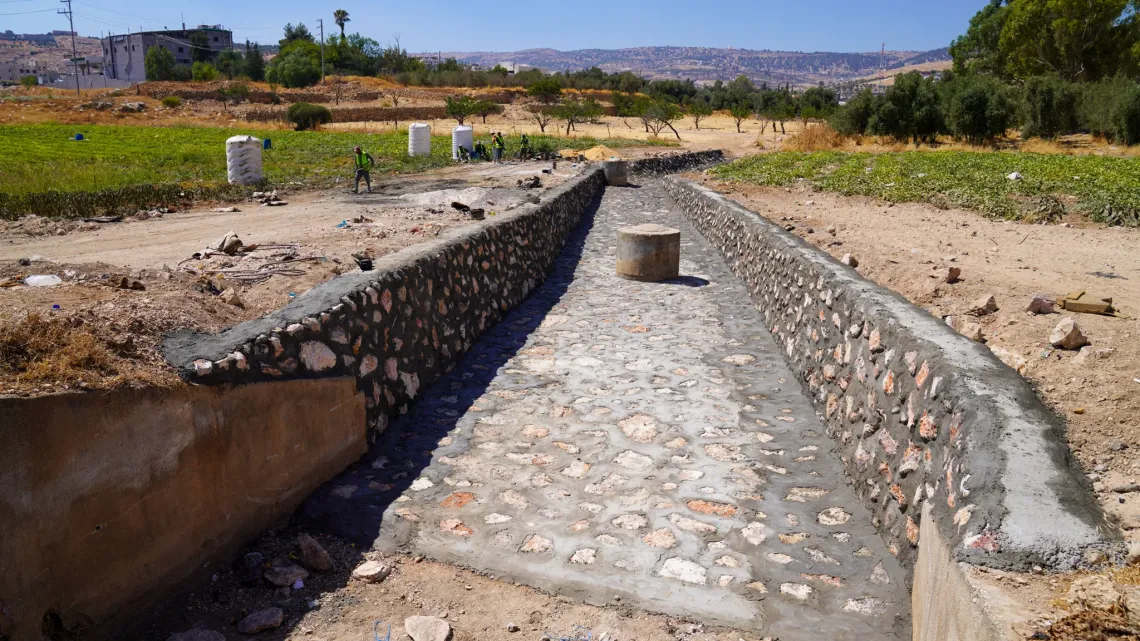
"We paved this channel to protect the water supply and reduce contamination," says Dania Thunibat, UNICEF WASH Officer. “The results are clear: Paving Wadi Souf has helped reduce contamination by preventing wastewater from mixing with rainwater, protecting groundwater sources, and reducing the risk of pollution. This has contributed to a safer and healthier environment for camp residents.”
For families in Jerash and Souf camps, the interval between water supply turns has been reduced from three weeks to two, explains Engineer Mohammad al-Atoum, Director of the Water Administration of Jerash Governorate. At the same time, rehabilitation works have helped reduce sewer blockages and the risk of wastewater flooding in streets and around homes, improving sanitation services and creating a safer, healthier environment for residents.
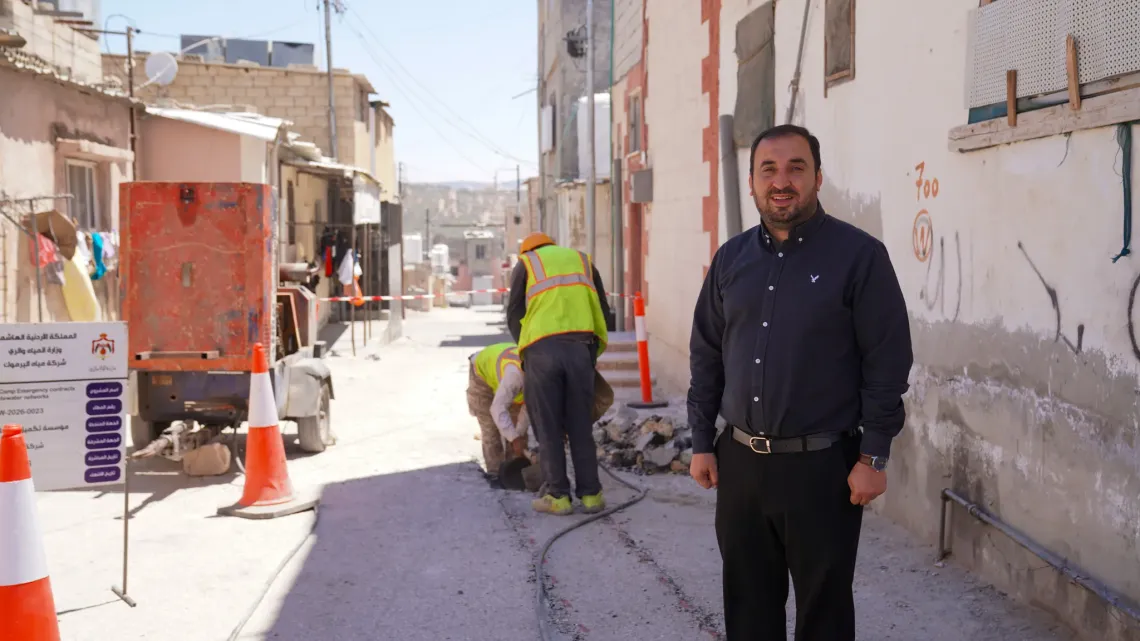
The rehabilitation of water and sanitation networks across Jordan’s Palestinian refugee camps is a partnership between the Department of Palestinian Affairs, UNICEF, and national water companies. Since 2024, the programme has improved water and sanitation services for more than 100,000 people. UNICEF is grateful for the generous support of the United States Government, which is enabling safer and healthier environments for vulnerable children and their families.
*The analysis of climate risks was done through the application of the Climate Resilient Water Safety Planning, supported by UNICEF under the Regional Water Scarcity Initiative, which helped inform critical interventions under USA support.