The Ministers of Youth and Environment launch the activities of the local youth conference on climate change
- English
- العربية
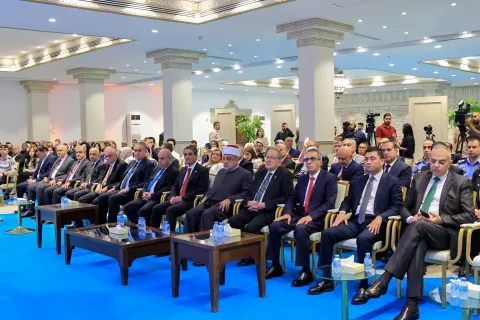
Amman, 1 November 2026 - The Minister of Youth, Dr. Raed Al-Adwan, and the Minister of Environment, Dr. Ayman Suleiman, inaugurated the Local Youth Conference on Climate Change Jordan 2026, which is organized by the Ministries of Youth and Environment, Generations For Peace, the United Nations Children’s Fund (UNICEF), and the Sanoubar Foundation for Environment and Development, at Al-Hussein Youth City.
Al-Adwan stressed that the ministry has developed an integrated perspective for dealing with environmental and climate issues through the National Youth Strategy 2026-2030, which includes the environment and climate as a field in its 5 axes, namely active citizenship, learning and readiness for the future, economic empowerment, health and well-being, and sports and physical activity, with the aim of enabling youth to face climate challenges and benefit from emerging economic opportunities.
He added that the ministry, through its centers in the governorates, is working to provide spaces and opportunities to enable young people to develop their ideas and turn them into practical initiatives, and to enhance their skills in planning, implementation and building partnerships, in cooperation with national institutions and the private sector.
He pointed out that the ministry allows young people to benefit from its centers, the National Guidance Directorate and its initiatives to embrace environmental and climate initiatives, in addition to benefiting from the King Hussein Bin Abdullah II Award for Voluntary Work, as a national tool to consolidate the culture of voluntary work and stimulate initiatives that contribute to protecting natural resources, rationalizing water consumption, reducing waste and recycling, and afforestation.
For his part, Suleiman explained the importance of investing in green skills and empowering young people to move from the stage of acquiring knowledge to creating applicable solutions and projects, reviewing the Kingdom’s efforts in developing skills related to the green economy, supporting entrepreneurship and environmental innovation, and creating new employment opportunities in sustainable sectors.
He noted that about 1700 people were trained in skills related to green business, including the installation and maintenance of photovoltaic systems, heat pumps, energy efficiency, maintenance of electric and hybrid vehicles, climate-smart agriculture, greywater treatment, environmental awareness and sustainability, with women making up 60 percent of the participants in these programs, while the percentage of young people reached 52 percent.
He explained that the green entrepreneurship programs included business incubators and accelerators, from which 278 participants benefited within the programs for incubating ideas and developing applicable prototypes, while 140 entrepreneurs received financial support, and 5 of them received awards in recognition of their efforts in the field of environmental sustainability.
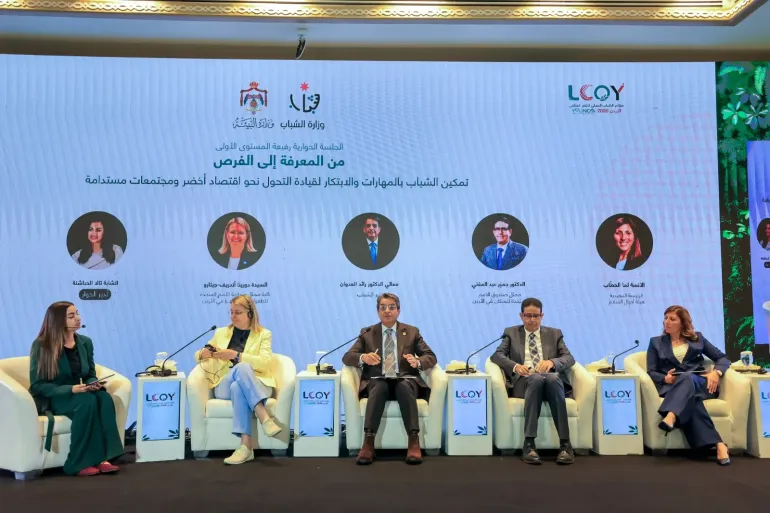
For her part, the Deputy Representative of the United Nations Children’s Fund (UNICEF) in Jordan, Dorina Andreev-jitaru, said that climate change affects the lives of children and young people, and their access to water, health services and education, which calls for ensuring their active participation in formulating solutions and decisions that affect their future.
She added that UNICEF is working with the Ministry of Youth and its partners to support young people with knowledge, skills and opportunities, turning their ideas into practical initiatives, and ensuring that their priorities are taken into account when working to address climate change.
For her part, the CEO of Generations For Peace, Lama Al-Hattab, affirmed that young people are key partners in finding climate solutions and leading change in their communities, noting that the organization works through the “Saoun” program to develop their skills in leadership, dialogue and teamwork, and to enable them to turn their ideas into initiatives that they lead themselves.
She explained that climate change extends beyond environmental aspects to include social cohesion and relationships between members of society, especially in light of the challenges associated with water scarcity and natural resources, and the importance of employing peacebuilding tools to promote dialogue, cooperation and finding common solutions.
For his part, the representative of the United Nations Population Fund in Jordan, Hameer Abdul-Mughni, highlighted the importance of moving youth participation in climate action from mere attendance and traditional participation to active and influential participation that translates into practical initiatives and tangible results, and the necessity of empowering them and providing them with opportunities to contribute to decision-making, and transforming their ideas and recommendations into actions that address climate challenges and enhance the resilience of communities.
The UNESCO representative in Jordan, Nuha Bawazir, emphasized that understanding climate change issues differs from knowing how to address them, necessitating a re-evaluation of what young people learn, the learning methods employed, and the environments in which they acquire knowledge. She explained that UNESCO supports the Ministry of Education and the Ministry of Human Resources Development in implementing a whole-school approach in six schools, enabling students to apply their knowledge to real-world challenges.
For her part, Malak Al-Amar, CEO of Sanoubar Foundation for Environment and Development, explained that the local youth conference on climate change provides a space to empower Jordanian youth to move from the stage of raising awareness of climate challenges to active participation in formulating national solutions and policies. She pointed out that confronting the challenges of water scarcity, food security and climate change requires involving them as partners in decision-making, and giving them the opportunity to present ideas and initiatives that respond to environmental and climate needs in Jordan.
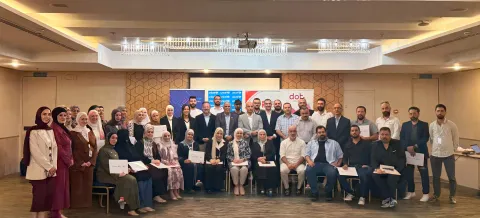
The opening was attended by the Secretary General of the Ministry of Youth, Dr. Mazen Abu Baqer, the Advisor to the Minister of Youth, Bassam Al-Khalaileh, the Director of Al-Hussein Youth City, Raed Mirza, the Deputy Head of the Australian Diplomatic Mission in Jordan, James Bryan, the Country Director of Plan International in Jordan, Hamida Jahama, and young men and women active in environmental and climate work from all governorates.
The two-day conference, held at Al Hussein Youth City, aims to promote youth participation in climate action, identify their environmental and climate priorities, formulate practical recommendations that align with national priorities and strategies, and contribute to the preparation of the Jordanian Youth National Climate Statement for 2026, in preparation for the 31st Conference of the Parties (COP31).
The conference program includes high-level dialogue sessions on the role of youth in national strategies, skills development and innovation to support the transition to a green economy, climate policy labs addressing water, agriculture, education, health, climate finance, climate justice and the role of youth in peacebuilding, as well as an interactive workshop for developing youth initiatives, the Jordanian Climate Village, and a simulation of the Conference of the Parties (COP31) negotiations to enhance youth skills in negotiation and decision-making, in parallel with the meetings of the national statement drafting team to prepare the conference outcomes.
The conference is being held in partnership with UNICEF, Generations For Peace, UNESCO, UNFPA, and Plan International, to support dialogue between youth and decision-makers on climate policies and solutions.
Media contacts
About UNICEF
UNICEF promotes the rights and wellbeing of every child, in everything we do. Together with our partners, we work in 190 countries and territories to translate that commitment into practical action, focusing special effort on reaching the most vulnerable and excluded children, to the benefit of all children, everywhere.
For more information about UNICEF and its work for children in Jordan, visit www.unicef.org/jordan.