

Why participation matters
The evidence for involving children and youth in policy and decision-making
The meaningful participation of children and young people in decisions that affect their lives is a widely recognized principle in international human rights and development frameworks. It is firmly grounded in Article 12 of the UN Convention on the Rights of the Child, which obliges all State Parties who are signatories to ensure that every child capable of forming their own views has the right to express those views freely, and that those views are given due weight in decision making. This right to be heard is not a stand-alone provision but a foundational principle underpinning the entire Convention.
While other frameworks – such as the World Programme of Action for Youth, the UN Youth Strategy, and various institutional commitments – do not have the status of international law, they reinforce and promote the importance of including young people in decision-making processes at all levels.
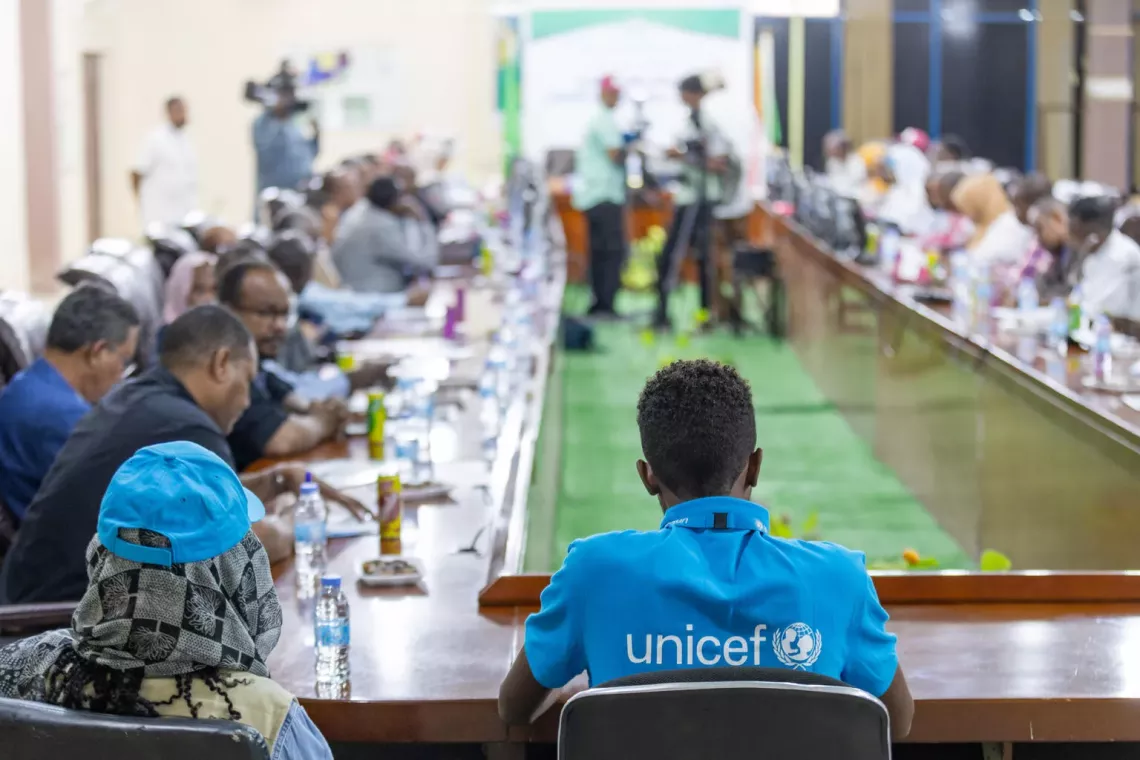
Realizing the right to be heard means engaging children and young people as partners in dialogue and decision-making alongside adults. Meaningful participation is grounded in mutual respect, shared power, and a reimagining of intergenerational relationships. It is a process of learning and empowerment – not performance.
However, there can be a discrepancy between the on-the-ground reality and well-intentioned rights initiatives. As Lansdown notes, Article 12 was a new and challenging concept in international law, one that many governments have struggled to interpret and implement. There has often been a lack of understanding, and at times reluctance, about what it truly means to listen to children in ways that influence outcomes.
Critiques of youth participation stem from multiple sources. Some academics argue that participatory processes risk replicating existing hierarchies, subtly coercing young people – particularly those from marginalised backgrounds – to conform with dominant norms. Meanwhile, broader public discourse often questions whether children and youth possess the rational judgment or experience needed to influence complex policy decisions. This scepticism reinforces the idea that young people must earn their right to participate by demonstrating ‘readiness,’ rather than being recognized as rights-holders from the outset.
In response to conservative critiques, youth development practitioners and scholars have long emphasized the need to build young people’s capacity for participation. They argue that authentic engagement requires time, support, and skill development – not just access to decision-making spaces. Many governments, international agencies, and intergovernmental bodies have and continue to develop toolkits and guidelines that emphasize the importance of building young people’s capacities and creating enabling environments for meaningful participation.
"Meaningful participation is grounded in mutual respect, shared power, and a reimagining of intergenerational relationships. It is a process of learning and empowerment – not performance."
It was back in 1992 that UNICEF Innocenti published Roger Hart’s seminal Ladder of Participation, illustrating eight levels of youth involvement in decision-making – from manipulation and tokenism to genuine, empowered participation. While foundational, the ladder has faced criticism for implying a linear hierarchy of participation, rather than recognizing the need for context-specific approaches. In response, newer models like Lundy’s (2007) Model of Participation and Lansdown’s (2011) Three-Lens Approach have shifted the focus toward enabling environments, influence, and power-sharing.
Despite considerable investment and progress, more than three decades later, tokenistic approaches persist, and children and youth remain largely excluded from the decision-making spaces. Research by UNICEF Innocenti with 80 young people age 15-28 who were included in multilateral international platforms between 2017 and 2023 found that participation opportunities can frequently be tokenistic, unsupported, unimpactful, or even exploitative.
Beyond asking whether children have the right to participate, we must ask: what happens when they do? What changes when their voices are genuinely included in decision-making processes? How does their participation influence their own development, the decisions being made, the systems they navigate, and the broader society?
While questions about the core definitions, boundaries, and assumptions underpinning youth participation as both a field of practice and an area of study persist, and considerable research gaps remain, this explainer offers some of the existing evidence demonstrating the transformative potential of youth participation. To address some of these knowledge gaps more comprehensively, as well as modeling novel approaches to meaningful youth participation that address barriers to inclusion in decision-making, UNICEF is undertaking a larger research project to systematically examine the impacts of youth participation on governance processes and societal outcomes.
"Despite considerable investment and progress, more than three decades later, tokenistic approaches persist, and children and youth remain largely excluded from the decision-making spaces."
Rather than engaging in broader debates, this piece will spotlight compelling case studies that illustrate some of what we already know about the benefits of including young voices in decision-making and development processes.
Participation transforms lives
For children and young people who do participate, it can build confidence, strengthen identity, foster a critical sense of agency, and provide them with critical experience and skills.
When young people are actively involved in shaping the world around them, they can begin to see themselves as capable agents of change. Research by Biggeri et al. shows that participation can promote responsible decision-making and nurture essential developmental competencies that support the transition to adulthood, even in situations characterized by conflict and violence.
This sense of agency has ripple effects: Saud notes that political participation helps young people cultivate civic identity, while Feinstein and O’Kane highlight how participation increases resilience, protects against exploitation, and bolsters children’s belief that they can shape their futures.
Similarly, in the Dominican Republic, youth trained through an Adaptation Fund project became "eco-promoters," disseminating climate knowledge in their communities and leading household-level behavior change. Through regular visits, they not only raised awareness about climate resilience but also built leadership skills and overcame previous barriers to civic participation, emerging as trusted community leaders in climate resilience efforts.
Through an analysis of a sample of high school students, Levy & Akiva found that active involvement in national issues helps youth develop awareness of societal challenges and cultivates their problem-solving abilities, ultimately leading to their empowerment. Fostering adolescents’ political participation, according to Levy & Akiva, demands supporting their political efficacy and interest.
Participation strengthens policies and services
From schools to municipalities, systems can become stronger and more effective when they include the voices of children and young people.
When young people are involved in co-designing policies, they better understand and embrace them — boosting legitimacy and ownership across communities. Moreover, participation supports better implementation. Public institutions face a range of multi-faceted complex challenges, making participation a key dimension of governance, as well as a pillar of sustainable development.
"When young people are actively involved in shaping the world around them, they can begin to see themselves as capable agents of change."
OECD research suggests that services shaped by children’s perspectives are more trusted and better aligned with their actual needs. Akinyetun’s research on political participation in Nigeria found a positive relationship between youth political participation, good governance and social inclusion.
A systematic review of 30 studies from around the world by Ataol, Ö., Krishnamurthy, S., Wesemael, P.J.V. revealed that when children actively participate in urban planning, the social, spatial, political and educational outcomes obtained through the process, including high levels of communication and collaboration, can contribute to creating and maintaining communities. Their involvement in planning could also have learning benefits for other actors such as city council members, teachers, and research team members, expanding institutional knowledge while children become more active and empowered.
Real-world policy impact is evident. In Scotland, child and youth engagement has influenced national decisions on police powers, led to the creation of a new government health improvement post, and co-designed new action research models where youth shaped the research agenda, ensuring “policy makers improved their ability to make changes that reflect children and young people's needs and priorities.”. These case studies show how children’s perspectives help tailor policies to real-world experiences, ensuring responsiveness and accountability.
In Tanzania, the existence of children’s councils has made policy-makers aware of the need for a children’s budget at local governance level, strengthened communication between children and officials, and led to better service delivery.
Participation builds more inclusive societies
When youth are engaged meaningfully, it lays the groundwork for societies that are more cohesive, democratic, and future-oriented.
“At the societal level, direct participation can help children create peaceful and democratic societies that uphold human rights” write Gottschalk and Borhan. When young people are involved in decision-making early in life, they are more likely to become politically active and civically engaged adults.
Participation is a building block of democratic culture. Saud highlights that inclusive politics begins by empowering youth. In Bhakkar District, Pakistan, youth participation went beyond voting to include organizing public discussions, distributing political materials, and engaging in peaceful protests. Peer networks were key drivers, helping young people build confidence, civic knowledge, and stronger political engagement. When youth are encouraged and supported to participate, they become catalysts for democratic renewal — strengthening political systems from the ground up.
Experiencing democratic participation since childhood is a priority area especially in those countries facing internal conflict and tensions that threaten democracy. This point is reinforced by Haider & Sara, who detail how young people in Bangladesh are redefining political participation beyond voting — engaging through digital activism, social movements, petitions, and community-led initiatives.
Children can also play an important role in social movements. Just as Fridays For Future demonstrated, youth-led climate strikes can reignite public debate and pressure governments worldwide to act. In Germany, for example, localized climate protests translated into increased Green Party votes.
Conclusion: Participation is smart policy
Participation can empower children and young people, improve services, and build civic trust. It can protect children’s rights, strengthen their capacities, and lead to policies that are more just, and relevant. Ultimately, it brings societies closer to futures shaped by the hopes, needs, and realities of the generations who will inherit them.
For these benefits to be realized, however, participation must be meaningful. As Checkoway reminds us, “The quality of participation is measured not only by its scope, such as the number of people who attend a number of activities, but also by its quality, such as when people have real effect on the process, influence a particular decision, or produce a favorable outcome.”
For participation to be meaningful, it must be intentional, well-resourced, based on principles, and grounded in a genuine sharing of power.
At UNICEF, we are working to make meaningful child and youth participation the norm, not the exception. Because the more we listen — truly listen — to children and young people, the better our world becomes. Not just for them. For everyone.
An earlier version of this article did not meet our editorial standards and was subsequently removed from our website. This version addresses those issues and replaces that original article.