What can we learn from the renaissance?
Liminality at UNICEF
When we come to work here at UNICEF Innocenti in Florence, we walk into a complex that has been described as “the first fully Renaissance building in history”.
Designed by the architect Filippo Brunelleschi in 1419, the buildings that house our office started out life as Europe’s first orphanage. Six centuries later, they are still serving the needs of children.
Similarly, the artistic and cultural revolution that produced these buildings – the Renaissance – continues to influence our world today, from how we approach scientific questions to how we think about the individual in society.
The Renaissance is one of history’s great liminal periods. It marks the transition between two distinct eras – the medieval and the modern. It transformed life at the ‘global’ level (at least in Europe), at the collective level and at the individual level.
Even today, the Renaissance offers powerful insights for understanding other periods of transition, such as the one we’re living through. It shows how crisis and uncertainty can lead to creativity and reinvention; how fusions of old and new thinking can produce new insights; and how seemingly mundane changes in how we live our lives can be powerfully transformative over time.
The Renaissance as a time of change
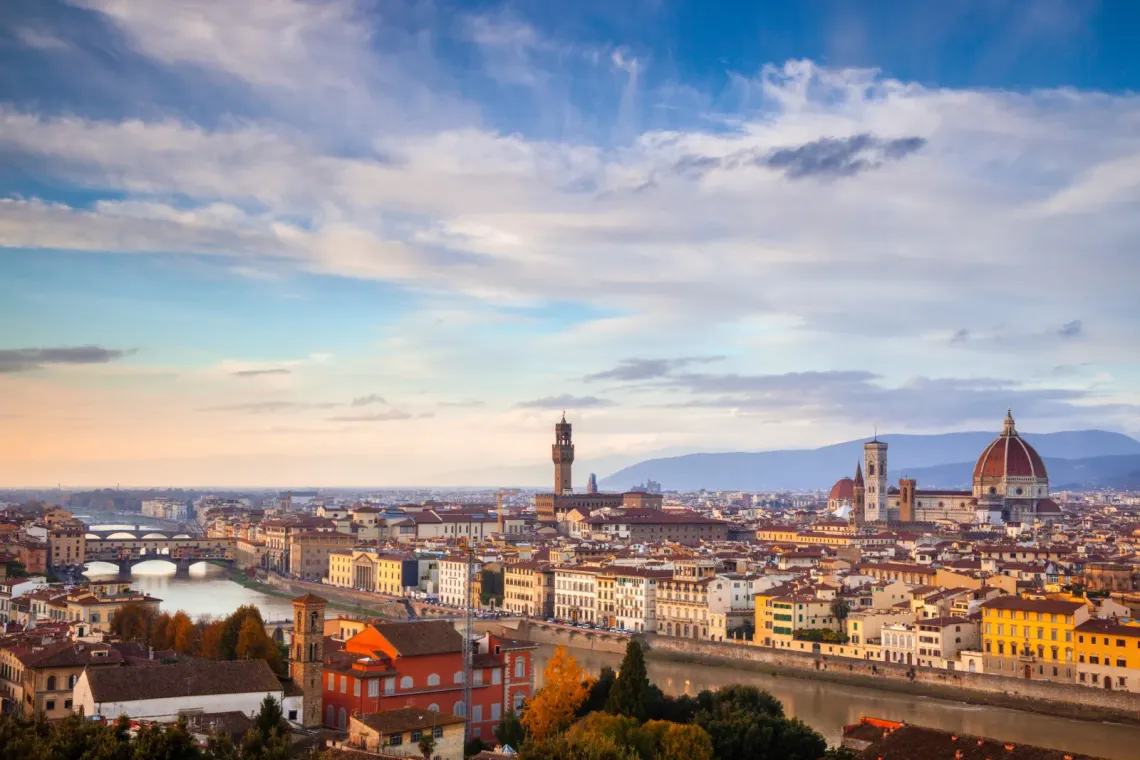
Florence was the epicentre of the Renaissance. Underpinned by powerful banking families like the Medici, this city’s wealth provided the financial support necessary for artists, architects and scholars to produce groundbreaking ideas and innovations.
The list of their achievements is impressive: Brunelleschi’s dome for Florence’s Cathedral revolutionized engineering, setting a new standard for architectural achievement. Artists like Masaccio developed linear perspective, changing the way space and depth were represented in painting and influencing generations to come. And scholars like Marsilio Ficino and Niccolò Machiavelli advanced humanist thinking to emphasize ideas like individual potential, secular governance and the revival of classical antiquity.
But these achievements were only the most visible signs of much more profound and overlapping shifts across society. Because of these, the Renaissance doesn’t fit neatly into one category; it embodies both continuity with the past and a breaking away toward modernity. This makes it a classic example of a liminal period, where different eras blur together in a transformative passage of history.
These seminal shifts included:
- From feudalism to early capitalism: The medieval economy was based on feudalism, with land-owning aristocrats dominating a largely agrarian society. That gave way to early capitalism, which was marked by private property and increasing roles for markets and entrepreneurship.
- From Latin to vernacular languages: Latin was still the language of scholarship, but writers like Dante, Petrarch and Boccaccio promoted literature in vernacular languages. This shift allowed a broader audience to engage with literature, philosophy and science, making knowledge more widely accessible.
- From static social roles to social mobility: In the Middle Ages, people were largely born into fixed social roles (nobility, clergy, peasantry). The Renaissance, with its emphasis on education and patronage, allowed for some increased social mobility, particularly for merchants, artists and scholars.
- From Old to New Worlds: The Renaissance coincided with the Age of Exploration and Colonization, as European powers entered the Americas, Africa and Asia in unprecedented ways. This drastically reshaped global trade, power structures and cultural exchange, although at the price of often catastrophic interactions with indigenous populations, the effects of which linger to this day.
How mundane things drove great change
While the Renaissance was fuelled by grand ideas, the reality is that mundane, everyday factors were crucial in bringing it about. In some cases, these factors had significant negative impacts on the existing population. Yet, over time, they would help to drive the enormous transformation that characterizes the period.
The list of factors is long. It includes the development of cheap paper and printing technologies, which increased literacy and spread new ideas; the expansion of trade routes, which brought new goods, ideas and even classical texts to Europe; and improvements in banking and accounting, which helped create a prosperous middle class.
As we think about transformative change, a few of these factors are worth exploring in greater detail:
- Plagues and labour shortages: By reducing the size of the population, the Black Death (1347–1351) made labour more valuable. This gave workers more bargaining power, increased wages and encouraged innovation in agriculture and manufacturing.
- Urbanization: More people moved to cities, where they had better access to education, employment and social mobility. These concentrated populations created hubs of intellectual and artistic exchange.
- Education: While education did not become free until several hundred years later, there were localized efforts to support free education. There was an overall increase in educational opportunities for children and in higher education, often managed by, or closely linked to, religious institutions and other semi-systemic approaches. The language shifts mentioned above also lent themselves towards more acceptance and access to materials, thereby facilitating a more scaled approach to developing capacities among the local population.
Why the Renaissance matters today
The Renaissance emerged from a period of crisis – plague, political instability and economic shifts – yet it became a time of extraordinary creativity and reinvention.
One key lesson from this liminal era is that uncertainty and disruption can catalyse new ways of thinking. The Renaissance thrived on the fusion of old and new: classical knowledge was rediscovered and transformed through fresh perspectives, fuelled by humanism and technological advancements.
Reflection questions
- What shifts do you recognize from the Renaissance that can influence our approach today to shaping the future?
- What different developments are we facing today that can help shape the future, both from the perspective of ‘must leverage for children’, and ‘must manage with children’ so that the developments do not bring about harm?
- How will digital and AI affect the ‘mundane’ around the world?
- What might be some of the important social innovations from the Renaissance era that could spark ideas required to eradicate, say, extreme child poverty?
- What are the challenges and opportunities around linguistic shifts in the world at the moment, for instance, in education?