

Should children vote?
Understanding the debate
Debates about lowering the voting age have been gaining traction in recent years.1 Advocates argue that lowering the voting age fulfills children’s political and civil rights, while opponents express concerns about the maturity of younger individuals to make informed political decisions.2
Voting age around the world
In most countries and territories (around 90 per cent), the voting age is 18 or above. In the 20th century, ages for voting and political participation were progressively lowered as the franchise was extended to women, the illiterate, and other groups. A first wave of countries lowered the voting age to 16 in the second half of that century in Latin America, and a second wave started in the early 2000s, mainly in European countries.
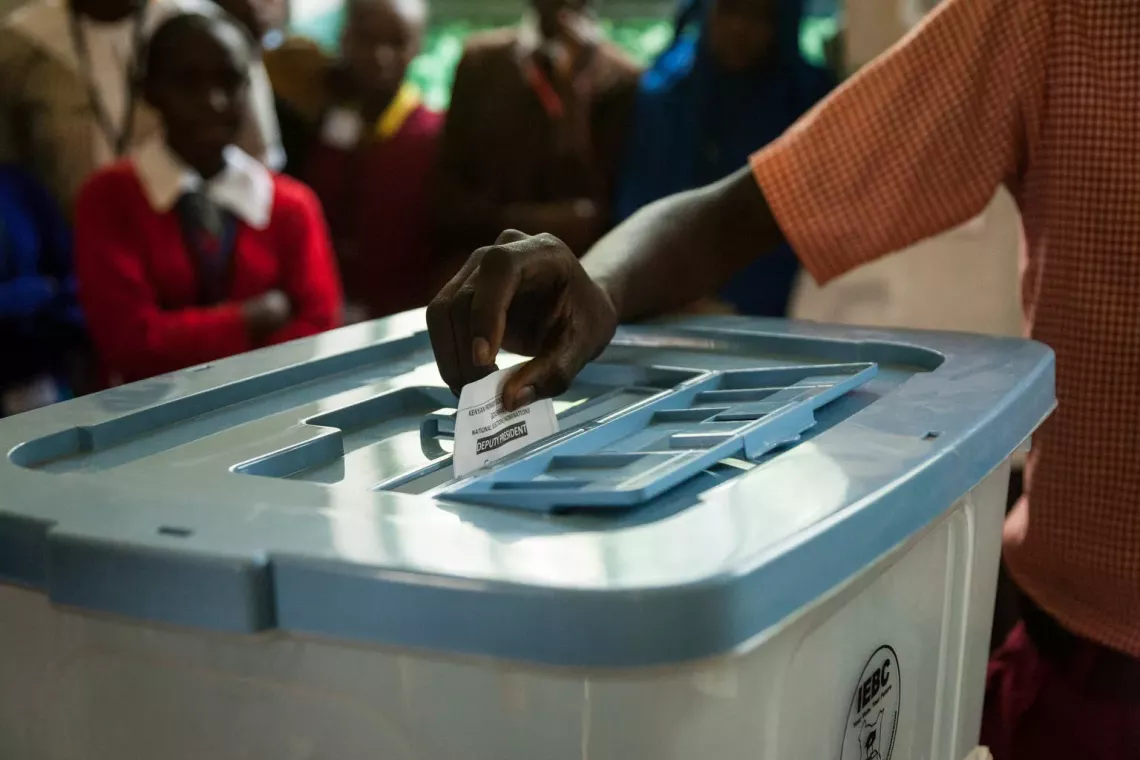
Today, countries and territories where children aged 16 and/or 17 are allowed to vote in all elections include Argentina, Austria, Brazil, Cuba, Ecuador, Guernsey, Greece, Indonesia, Isle of Man, Jersey, Nicaragua, North Korea, and Timor-Leste. Some countries and territories allow 16- or 17-year-olds to vote in at least some elections, such as local or state elections, as in Estonia, Germany, Israel, Puerto Rico, Scotland and Wales. Children aged 16 in Belgium, Austria, Germany and Malta, and those aged 17 in Greece are allowed to vote in European elections. In the U.S. 17-year-olds can vote in the presidential or congressional primaries or party caucuses in some states if they turn 18 before the general election.
Since the early 2000s, some countries around the world have seen legal initiatives and campaigns to lower the voting age, including Chile, France, Germany, and Spain; most were unsuccessful.
Arguments for and against lowering the voting age
Voting is a fundamental way through which citizens shape governments that serve them. Major human rights treaties guarantee voting rights through “universal and equal” suffrage (that is, amongst the governed, one person-one vote), notably the International Covenant on Civil and Political Rights, Article. 25. Human rights instruments do not set age cut-offs for voting and the rights must be fulfilled “without distinction of any kind” based on personal characteristics or status, including age. Differential treatment, to not amount to discrimination, must have a “reasonable and objective” basis, according to international law; if the evolved capacities of a child match those of an adult, the franchise exclusion may be questioned.
While not specifically mentioning the right to vote, the Convention on the Rights of the Child (CRC) recognizes the child’s right to express his or her views freely in “all matters affecting the child”, adding that those views be given due weight, in accordance with their age and maturity (article 12). The Convention also enshrines a number of civil and political rights, which should supplement and not replace rights embodied in earlier agreements.
Today only one fifth of adolescents are eligible to vote in most countries (those 18 and 19) and yet they make up 16 per cent of the global population. This effectively denies a large share of adolescents the right to participate in political and public life. Giving at least older children the right to vote signals that societies are committed to realizing the convention, listening to their views and valuing their aspirations.
A considerable number of experts also assert that a 16-year-old has sufficient cognitive and critical thinking capacities to make political decisions independently.
The most common arguments against lowering the voting age revolve around adolescents’ capacities. Some claim that they lack the cognitive ability to vote, are not sufficiently informed or politically engaged to warrant a vote, or are too vulnerable to manipulation. Yet recent research, notably in the fields of neuroscience and psychology, are redefining the understanding of ‘the evolving capacities of the child’. 3, 4
While there is debate about the relationship between adolescent development and capacity to make decisions in certain environments (such as in high pressure or emotionally charged conditions), a significant proportion of scientists in the neurodevelopmental field have argued that lowering the voting age is in line with current evidence around adolescent brain development5. A considerable number of experts also assert that a 16-year-old has sufficient cognitive and critical thinking capacities to make political decisions independently.
Others point to adolescents’ susceptibility to external influence and manipulation in the context of voting, but more research is required to assess this vulnerability compared with adults. This also applies to vulnerability to mis/disinformation, where the evidence is mixed. Some sources suggest older voters are more likely to share fake news domains compared with younger voters. At the same time, UNICEF research showed that children reported feeling unable to judge the veracity of the information they encounter online.
Extensive research in social science indicates that voters of all groups, ages and education levels often base their political decisions on loyalties, identities, and peer influences, rather than purely political interests or the objective consideration of policy platforms. In voting, adolescents are influenced by a range of factors, but so are adults.
Some studies have shown that mid-adolescents have similar levels of political knowledge as younger adults. In Brazil, where 16-year-olds are eligible to vote but compulsory voting is limited to those over 18, levels of political knowledge and media consumption are indistinguishable for those above and below 18. Similarly, when the voting age was reduced from 18 to 16 in Austria in 2007, 16- and 17-year-olds were found to be as well informed as 18 to 21-year-olds.
In voting, adolescents are influenced by a range of factors, but so are adults.
Requirements on educational attainment and political knowledge do not currently constitute barriers to voting rights for adults in most countries in the world, and therefore should also not hinder access to voting for adolescents. At the same time, a well-informed electorate fosters a more vibrant democratic environment and affects the quality of political debates. As articulated by the Committee on the Rights of the Child, which has praised Nicaragua and Austria when these countries lowered the voting age, efforts to enfranchise children must be accompanied by investments in initiatives that empower adolescents to fulfil their responsibilities as active citizens, including through civic and human rights education.
Many also point to young people’s low levels of political engagement, but the evidence is nuanced. It is true that voter turnout has been declining over time and is lower among younger cohorts. However, there are significant differences across regions and many factors contribute to this trend, including the fact that young voters have less stable lives, lack familiarity with the voting process, face logistical challenges to vote, and may not identify candidates that represent their interests.
At the same time, young people are not apathetic. Many actively participate in civic life through informal mechanisms such as activism, protests and petitions. They are passionate about the critical challenges facing our societies and expect prompt and tangible responses which some countries have not been able to deliver.6
Indeed research has shown that expanding adolescent franchise has the potential to instill greater political interest as voting is a habitual behavior, with younger first-time voters more likely to vote again in subsequent elections. A study of the five Latin American countries that have lowered the voting age to 16 showed that enfranchisement had a significant impact on trust in political parliaments and parties.
In addition, enfranchising children could have consequential reasons as voting impacts laws, political priorities, and budget allocations. For instance, in the US, a study of preregistration (registering individuals before they are eligible to vote) found that it promoted higher youth turnout and politicians were more responsive to issues that matter for the young, such as higher education spending.
Research has shown that expanding adolescent franchise has the potential to instill greater political interest.
Finally, some say that children do not need the vote because they will eventually become adults and therefore voters, or that their parents already represent their interests. This argument, however, not only fails to recognize children as equal rights holders to adults but also speaks against the principle of intergenerational equity. While those under 18 are currently excluded in most countries, adults are allowed to vote without maximum age limits. This creates an inherent bias, that is, political systems that favor an older electorate and act against forward-looking policy-making. Yet it is children who have the longest to live with policies and laws. At a time when the main crises impacting the world require long-term thinking, setting a voting age of 16 would fulfil an ethical imperative of allowing some of the most impacted by government decisions – that is, those with the longest life expectancy – to have a say in decision-making.
Opportunities and risks
Lowering the voting age to 16 would offer opportunities to advance the civil and political rights of children. It would present voting as a right in itself and a means to bolster democratic institutions, improve policies for children and promote intergenerational equity.
But there are also risks involved in defending a lower voting age.
Promoting 16 as the minimum voting age could trigger a debate about a reduction in child protection thresholds. Countries impose different age thresholds to distinguish the rights and responsibilities of children from adults: for criminal responsibility, the right to drive, drink alcohol, smoke, get married, serve in the military, etc. These inconsistencies are hard to correct and do not reflect human rights law or scientific evidence. It would be important to ensure that lowering the voting age is not equated to a justification to lower other thresholds. Enfranchising adolescents does not mean denying children’s potential vulnerabilities in other instances. Therefore, any advocacy for adolescent suffrage would need to clarify protection concerns and invest in an evidence-based debate.
Some argue that introducing a significant number of younger voters into the electorate could potentially disrupt electoral dynamics, favoring one political party or another. But confirming this concern requires further research. Typically, arguments that frame the debate on voting age cut-offs or enfranchisement of new groups as a political issue are anti-democratic: They premise voting on political calculations rather than on its value as a human right. In addition, adolescents as a group do not often get polled so it is not possible to know what they think about political matters or to anticipate how right or left leaning their vote might be. It is also not clear the extent to which adolescents’ informal political participation already shapes policy choices.
Finally, changing the voting age requires legal action which can result in a lengthy and contentious process. Organizations pursuing advocacy on this topic could also be perceived as politically motivated. Yet, global campaigning driven from the bottom-up, led by youth or child rights organizations, may be seen as more legitimate and non-partisan.7
Conclusion
The Convention on the Rights of the Child recognizes that children have civil and political rights. In addition, the Committee on the Rights of the Child has repeatedly stated that, as their capacities evolve, children are entitled to higher levels of responsibility, agency, and autonomy in the exercise of their rights. The Committee has also recognized that to empower children to participate in political life, they should be supported by measures to ensure that they are well-informed and prepared to cast their vote.
It remains key that any advocacy for adolescent suffrage is based in evidence, and includes meaningful adolescent participation. Further evidence is also needed in a number of the areas discussed earlier, including in how the question around voting age interrelates to other issues of empowerment, such as access to relevant information and vulnerability to manipulation, questions around evolving capacities of the child, as well as children’s access to play a role in the political realm as a matter of their human rights.
1. The Department of Political and Peacebuilding Affairs – Electoral Assistance Division (EAD) as the focal point on elections in the UN system takes the view that there is no obligation on member states under international law to set age requirements for voting or for candidacy to a specific age. Reports of the UN Secretary-General that address the matter, including more recently the Secretary-General’s Our Common Agenda, do not, therefore, make recommendations to member states to lower such age requirements in specific terms. Rather, these reports speak of aligning the minimum voting age with that of standing for elections, which is sometimes higher than the voting age. Similarly, the United Nations Secretary-General’s Envoy on Youth and the Office of the High Commissioner for Human Rights have called on states to bridge the gap between the minimum voting age and the “candidacy” age, to ensure that young people who are allowed to vote can also run for office and be elected, thus increasing youth representation in politics. These reports do not address situations in which children can vote. But given the position on specific age requirements, an EAD representative has explained, it is highly unlikely that the Secretariat would apply the recommendation on age alignment to situations where children (16+) can vote. Running for office also raises a number of protection concerns for children that are not involved in voting. Therefore, the age of eligibility to run for office is not covered in this note.
2. This paper refers to “children” as individuals below the age of 18; “adolescents” as those aged 10–19 – though we often focus on 16- and 17-year olds; and “youth” or “young people” as persons aged 15–24.
3. UNICEF Innocenti is leading a group of experts in updating a paper published by Innocenti in 2005 about how to understand and apply this concept.
4. it is important to note that neuropsychology does not support the idea of arbitrary age thresholds, and calls for more individualized assessments of age-related abilities depending on the specific requirements of a particular right or responsibility.
5. A 2019 study with more than 5,000 adolescents from 11 countries around the world confirmed these findings indicating that changes in the prefrontal cortex result in two independent neural pathways for decision making: One is related to digesting information and reasoning, the other operates when choices are made impulsively. Tasks such as voting and working are critically related to the first neural pathway, while criminal behavior or drinking relates to the second one.
6. UNICEF Adolescent Development and Participation (ADAP) teams around the world implement programmes to foster the civic engagement of young people in UNICEF initiatives as well as government-led processes. They map this work yearly. In 2023, ADAP teams engaged more than 21.8 million young people (52 percent girls) in 92 countries in UNICEF programmes and in civic initiatives such as school committees, youth-led campaigns or volunteering.
7. UNICEF has been involved in campaigning for the reduction of the voting age at the country level, including Argentina, Canada, Chile, Mexico, New Zealand/Aotearoa, Spain and Switzerland.