The Right to Breathe: Reducing Pneumonia in Children
While Indonesia has achieved major public health gains in recent years, reducing pneumonia in children is still a major challenge in Indonesia.
- English
- Bahasa Indonesia
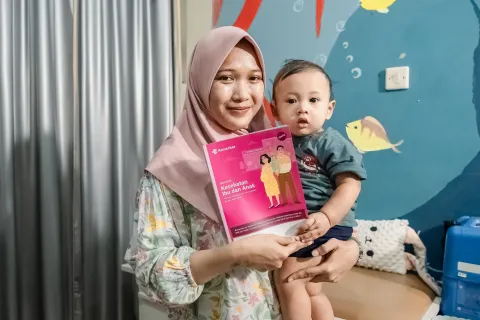
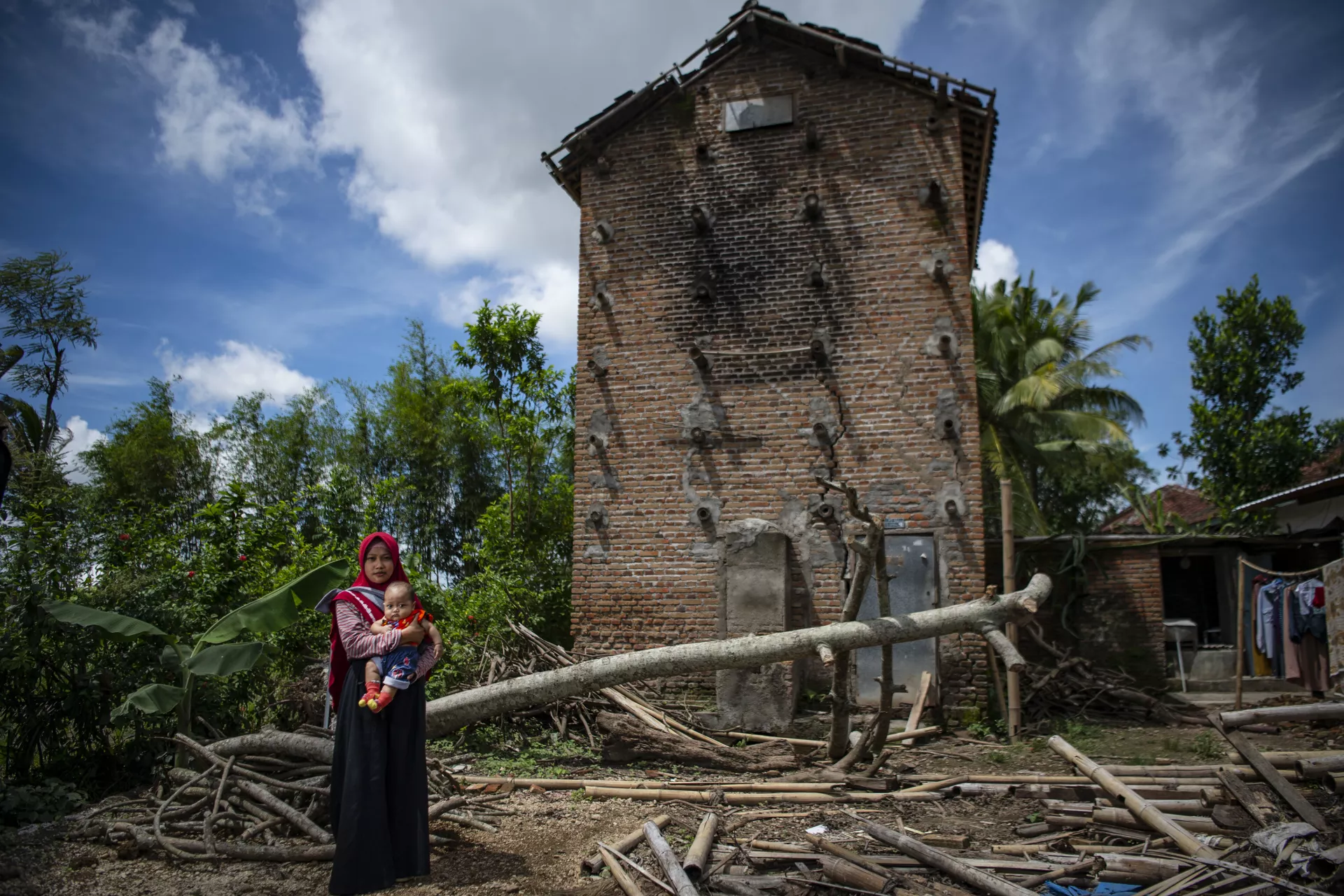
Looking at the sweet, chubby-cheeked boy nestling contentedly in the arms of his mother, you would never have guessed that he is not healthy.
“Septian has pneumonia,” says the boy’s mother, Baiq Yuliati. “He’s been admitted to the hospital three times, and the last time was so severe he had to stay for a few days,” says his mother, Baiq Yuliati.
Septian Alfaqih was born prematurely, with a low birth weight of 1,4kg. Now he weighs 5,9kg at seven months of age. “I’m afraid he will have another bout,” says Baiq.
Pneumonia: The Number One Killer of Children
In the last two decades, Indonesia has made significant public health gains, chiefly a steady reduction of children’s mortality and a vastly improved immunization programme. This includes the government’s most recent procurement, via UNICEF, of the first 1.6 million doses of pneumococcal conjugate vaccine (PCV). The doses are part of a multi-year vaccine rollout plan to prevent 500,000 childhood pneumonia cases, 30,000 hospitalizations and 10,000 deaths in the country each year.
This achievement is all the more significant given that Indonesia has the fourth highest numbers of children not yet immunized.
Yet almost one of every 30 children die from preventable diseases before reaching primary school age, out of which are an estimated 91,000 newborn babies.
Out of those preventable diseases, pneumonia kills more children than any other infectious diseases. The UN calls it a disease of poverty, and it strikes hardest in the world’s poorest countries.
In Septian’s area alone, more than thirty children have died of pneumonia in the past few years, out of almost 2,000 recorded cases.
Toxic environment
A common thread running through most of the pneumonia cases found by UNICEF is the toxic environment in which the children live.
Septian’s house, recently rebuilt with government assistance after the Lombok earthquake, is flanked by two tobacco-curing facilities where Septian’s father, a tobacco farmer, labors 24 hours a day, 7 days a week, during the dry season.
During this time, Septian’s father would hang the fire-cured tobacco in the house or in a cow shed behind the house where fires of hardwoods are kept on continuous low smoulder for up to three to four months. Both spaces have very poor ventilation, which increases the toxicity of the smoke when people come into contact with it.
Like Septian, one-and-a-half-year-old Nabila also lives in toxic surrounds—near a landfill where her mother, Mubai, collects garbage for a living. Mubai used to take Nabila along with her to work, as there was no one to look after the girl during the day. At the landfill, there were no facilities for children, no masks provided. At such a young and vulnerable age, Nabila was constantly exposed to the air pollutants emitted by the waste treatment plants.
“He’s seven months old now. He’s been admitted three times for pneumonia. The last time was a few weeks ago,” said Baiq Yuliati. Her son, Septian Alfaqih looked content in her arm, a smile between his chubby cheeks.
Septian was born prematurely, with a low birth weight of 1,4kg. He now weighs 5,9kg. Looking at him, you wouldn’t guess he’s been battling multiple bouts of pneumonia. We met him at a Health Centre in East Lombok, West Nusa Tenggara. The last time he had pneumonia, he had to stay at the health centre for 3 days.
Lombok is one of Indonesia’s most beautiful islands. Surrounded by white sandy beaches, mountain ranges, and bright blue sky from anywhere you stand. It looks like a slice of heaven.
But when we visited Septian at his house, his surrounding environment is far from the Lombok of postcards. His house, recently rebuilt after the 2018 earthquake, is sandwiched between two tobacco curing facilities, with a cow shed at the back. These facilities only operate three to four months a year, during the dry season. When operating, they’re on for 24 hours a day, 7 days a week. Even adults are heavily affected by the smoke coming out of these facilities.
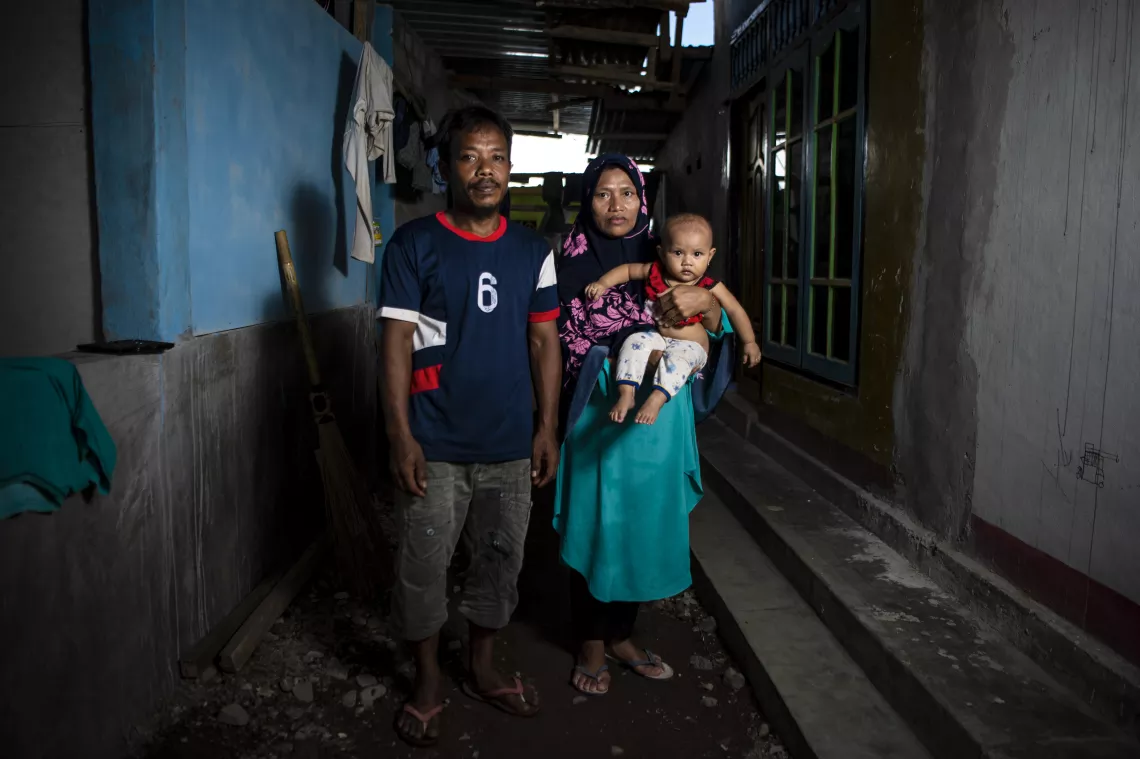
Hydrogen Sulphide (used as a substitute for all pollutants co-emitted from the landfills) and deaths and hospitalizations for respiratory diseases such as pneumonia. These are associated with inhaling endotoxin, microorganisms, and aerosols from waste collection and land filling. The results are especially pronounced in children.
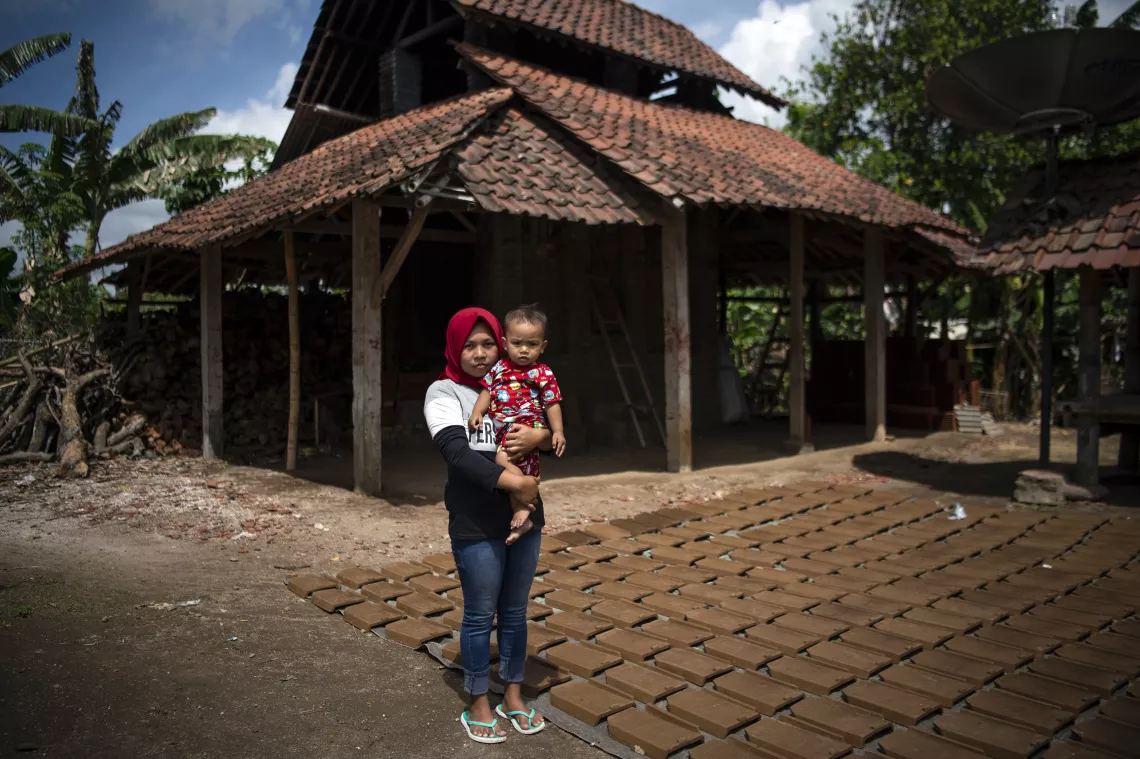
Meanwhile, 13-months-old Zahwa fares no better. Unlike Nabila, she might not have been exposed to air pollutants on a daily basis, but her house is located next to a brick-burning facility. When Zahwa had a coughing fit, her mother, Harna, took her to the local health care centre, where Zahwa was diagnosed with pneumonia.
Although worried, Harna tries to lighten up. “Oh, but that has become the norm around here,” she says. “Everybody in our neighbourhood coughs a lot.”
UNICEF-supported initiatives
Over the years, UNICEF has been assisting the provincial government in boosting public health services for children, especially in the aftermath of the Lombok earthquake. The effort is focused on immunization, nutrition, family monitoring of major childhood illnesses, and improving the biggest systemic problem—unequal distribution of health services.
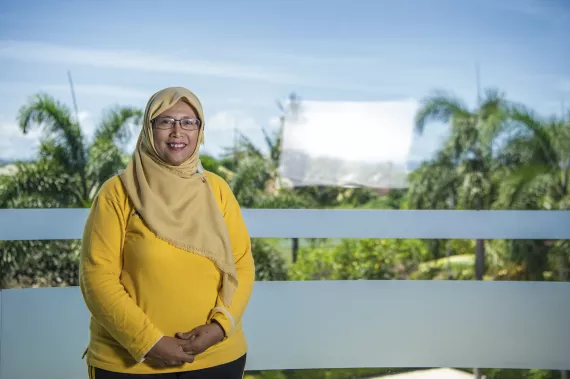
“Unequal access to public health services, especially in rural areas, remains a challenge.”
“We have been giving children in our area the pneumococcal vaccine since 2017,” says Nurhandini Eskadewi, a senior Ministry of Health official. “And there are certainly far fewer cases of pneumonia here compared to twenty years ago.”
However, she remains cautiously optimistic. “Let’s give it 5 to 10 years,” she says. “Only then will we know to what extent the vaccine has helped reduce pneumonia.”
How You Can Help
Thanks to the generous contributions of individual donors, UNICEF has been able to work with hospitals, health centres, health ministry officials and medical workers across Indonesia to help reduce children’s vulnerability to pneumonia and other preventable illnesses.
With increased capacity, we could have helped prevent children like Septian, Nabila and Zahwa from contracting pneumonia.
But the path to full nationwide immunization coverage necessarily takes time, and much still needs to be done to improve family awareness of childhood illnesses and access to adequate health care services across the country. For this we need your help.
If you want to help protect our children’s health and future by treating as many preventable illnesses as possible, please consider donating to UNICEF. We very much appreciate your contribution.