From Struggle to Strength: The Story of Binita Mallik, a Hero for Lodha Children
In 2019, UNICEF came forward with the aim of improving the nutritional status of children and women of Lodha tribe.

- English
- हिंदी
For 22-year-old Binata Mallik, mother of four young children, providing adequate care and nutrition for her children and taking care of her own nutritional needs has been an uphill battle.
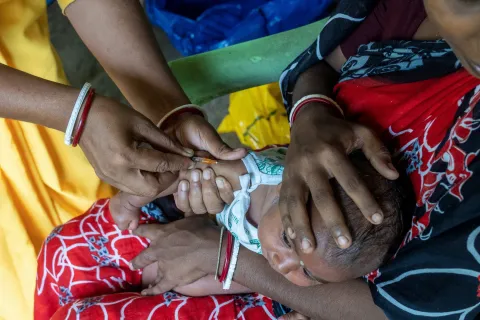
Married as a child at the tender age of 15, Binita was underweight during all her pregnancies, which is a potential concern for adverse maternal and foetal health outcomes. This had resulted in all her four children being underweight and the youngest child, just one-year-old, being severely wasted.
In addition to her parental responsibilities, she labours daily for her wages and forages for food, wood, and leaves in the forests of Odisha.
Test of trials
Binita Mallik belongs to the Lodha tribe, a Particularly Vulnerable Tribal Group (PVTG) from the Mayurbhanj district of Odisha, and her story is not an anomaly in the state's rural areas. Owing to the high prevalence of child marriage, early, unspaced, and frequent pregnancies, low income, and lack of adequate knowledge around nutrition among communities here, the nutrition status of many women of the Lodha tribe is poor and suboptimal.
For hundreds of women in this tribe, the poor status of their health and nutrition is often exacerbated by the burden of having to carry out physically strenuous livelihood practices like manual labour, foraging and the like.
In this context, it becomes very challenging for these women to provide adequate care and nutrition for their young children.
Fortunately for Binita, her children's admission to the state Nutrition Rehabilitation Centre (NRC) has saved their lives and improved their own health and nutrition.
UNICEF supported the establishment of the Nutrition Resource Centre (NRC), which was jointly started by the Odisha PVTG Empowerment and Livelihood Improvement Programme (OPELIP) and the Lodha Development Agency (LDA). The NRC seeks to improve nutrition among the Lodhas by promoting nutritional awareness and monitoring dietary activities to address lacunae.
Initially, Binita was hesitant to send her children to the NRC. However, the intervention of a Community Resource Person (CRP) from the village, along with the Social Mobiliser and Nutrition Officer of the LDA, Morada, played a crucial role in changing her mind. They visited her family, informed her about the children's nutrition deficiency, and stressed the importance of proper nourishment and care for their overall well-being.
After consistent efforts, Binata agreed to visit the NRC with her children, visit the centre regularly, and attend both the VHSND sessions and the mothers' group meetings.

At the NRC, Binita was provided counselling on healthy eating practices for her children, provided crèche services as a safe space with educational and play activities and provided information about nutrition, growth requirements of children, and good food and health practices for herself.
Empowered with the correct information and resources, Binita, along with the care providers at the centre, significantly improved the nutritional status of all her children and saved them from possible fatality. At present, her children have come out from the vicious cycle of malnutrition, with a body weight at par with the recommended body mass index (BMI).
Woman of the hour
Binita Malik’s heroic efforts and success as a mother have become an eye-opener for many other parents in the Lodha community. Her story is an exemplary living story of a tribal woman who mobilised herself to provide critical nutritional services to her children and possibly save their lives.
One woman’s actions have become a ripple in the ocean, encouraging several other Lodha women to become sensitised and inspired to act further—towards improved and continued good nutrition status of themselves and their babies.
Today, UNICEF is proud to support the NRC's activities where other Lodha women in Bonita’s village continue to visit and receive essential nutrition information and services for themselves and every child.