Extended Hours for Children’s Health: Surat’s Model Immunization Center
Learn how Surat is keeping immunization on track with flexible schedules and community-centred care
- English
- हिंदी
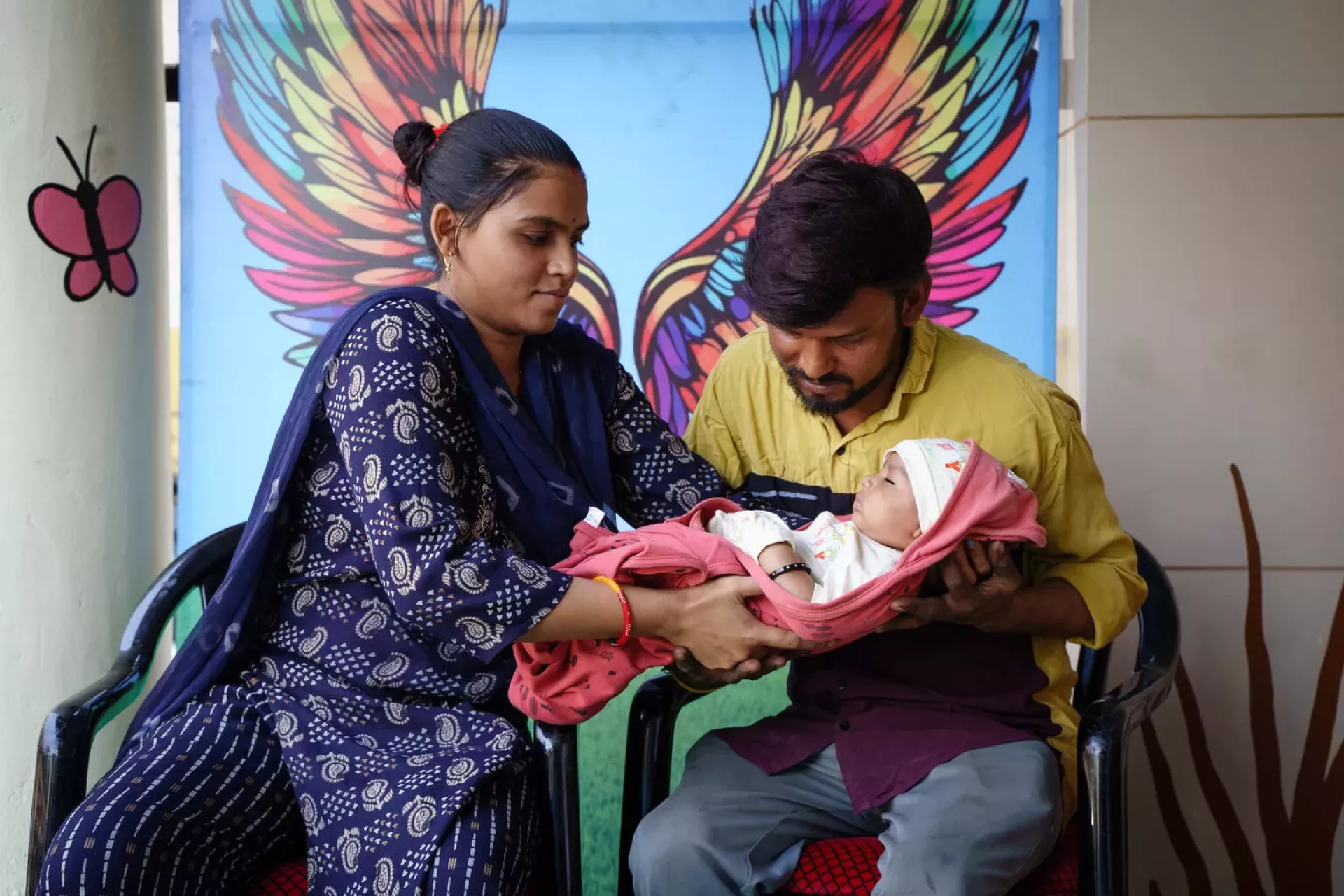
SURAT, GUJARAT: It’s a little past 7:00 p.m., but the Pal Urban Community Health Centre (U-CHC) in Surat is still buzzing with activity. Inside the immunization room, a young couple gently rock their two month-old son as the nurse prepares her next scheduled vaccines. For this family, where both parents work full-time, the late evening hours have made all the difference.
“Earlier, with my first child, we had to take leave or miss appointments,” says Khushboo Gupta. “Now we come after work. It’s convenient, Tejas, our son and daughter, haven't missed a single dose,” adds Sanjeev.
A Shift That Matters
This shift is no accident, but deliberate. In February 2024, the Surat Municipal Corporation launched a Model Immunization Centre (MIC) at Pal UCHC, part of a wider effort to accelerate Routine Immunization (RI) coverage in urban areas. “Earlier, vaccinations were available only twice a week,” says Dr Krina Ravi Patel, Medical Officer at the Pal UCHC.


Now, the centre operates six days a week, from 8 a.m. to 8 p.m. And we’ve seen the difference over the last year, from around 320 children a month, we now vaccinate between 700 and 800.
The centre serves a diverse population, including zero-dose children, families from lower-income groups, construction workers, and migrant labourers. Approximately 10 to 15 per cent of families are migrants, many of whom move frequently between districts or states.
Auxiliary Nurse Midwives (ANMs), urban Accredited Social Health Activists (ASHAs) and Anganwadi workers play a vital role in tracking families, counselling caregivers, and reminding them about upcoming vaccination schedules, ensuring no child is missed for 10 life-saving vaccines protecting against 11 diseases. Over time, community trust in the government immunization system has grown significantly.
A few years ago, only about 1 in 5 families came to government facilities for vaccinations. Today, nearly 7 in 10 families do. Even parents whose children are born in private hospitals are now choosing public health centres such as Pal UCHC for vaccinations.
At the heart of the daily work is Nancy Christian, the staff nurse who vaccinates every child who walks through the doors. “We receive periodic training and supportive supervision visits from the Surat Municipal Corporation,” says Nancy.
“If there’s any change in vaccines or a new one is added, we’re updated. In addition, we vaccinate pregnant women attending antenatal care and adolescents with the Td vaccine. We’re also trained to handle children with special needs; we consult the paediatrician and vaccinate them carefully. The government makes sure our skills, knowledge, and practice stay up to date.”
Trust in the centre stems not only from trained personnel but also from standardizes vaccine logistics management systems. Vaccines are stored in Ice-Lined Refrigerators (ILRs) and monitored using e-VIN and Vaccine Vial Monitors (VVMs). This centre is one of the eight model immunization centres introduced as a demonstration site in Surat Municipal Corporation, showcasing what’s possible when strong infrastructure meets accountability.
A System That Benefits All
The centre's success is evident in families like Khushbu Gupta's, whose two-month-old son, Tejas, was born in a private hospital but received his vaccines at Pal UCHC.
Earlier, I had to shut down my cycle repair shop or call someone to help me take my child for vaccination. Now, I close my shop by 6 p.m. and bring both my children here. The 8 a.m. to 8 p.m. timing really works, for other families and for me, I know who comes here too.
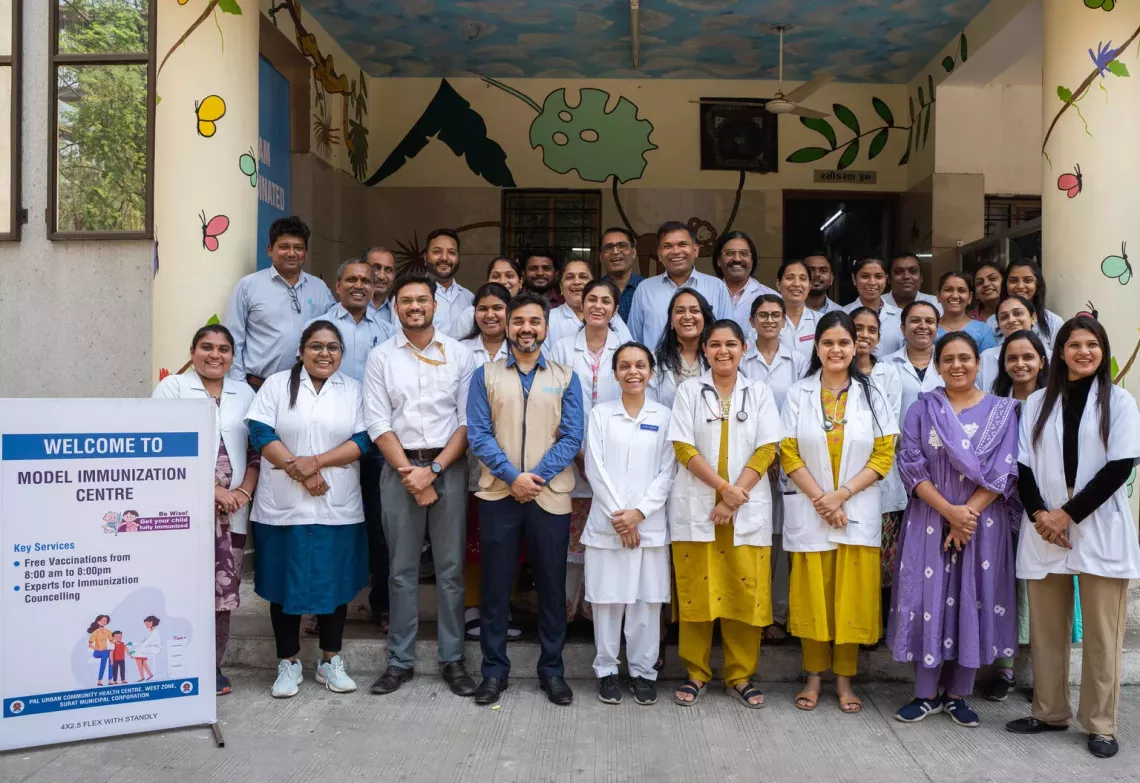
UNICEF advocated for the establishment of Model Immunization Centres as part of improving immunization coverage in urban areas. “As part of a larger strategy to strengthen urban RI systems across the state, UNICEF provides technical assistance, policy advocacy and knowledge-sharing,” says Dr Sravan Chenji, Health Officer, UNICEF.
“Innovative approaches and increasing investment in urban primary health care are critical for achieving universal health coverage goals”, says Dr Narayan Gaonkar Health Specialist UNICEF.
Partnership with Urban Local Bodies, Dept of Health & Family Welfare, Women & Child Welfare, private health sector & development partners like UNICEF is helping in designing people centric, partnership based, and data guided primary health care services making them accessible to every class of society.