Dastak: Mamta’s “Knock” on every door, For every child in Uttar Pradesh
How a village ASHA worker and a campaign transformed Gorakhpur from despair to hope
- English
- हिंदी
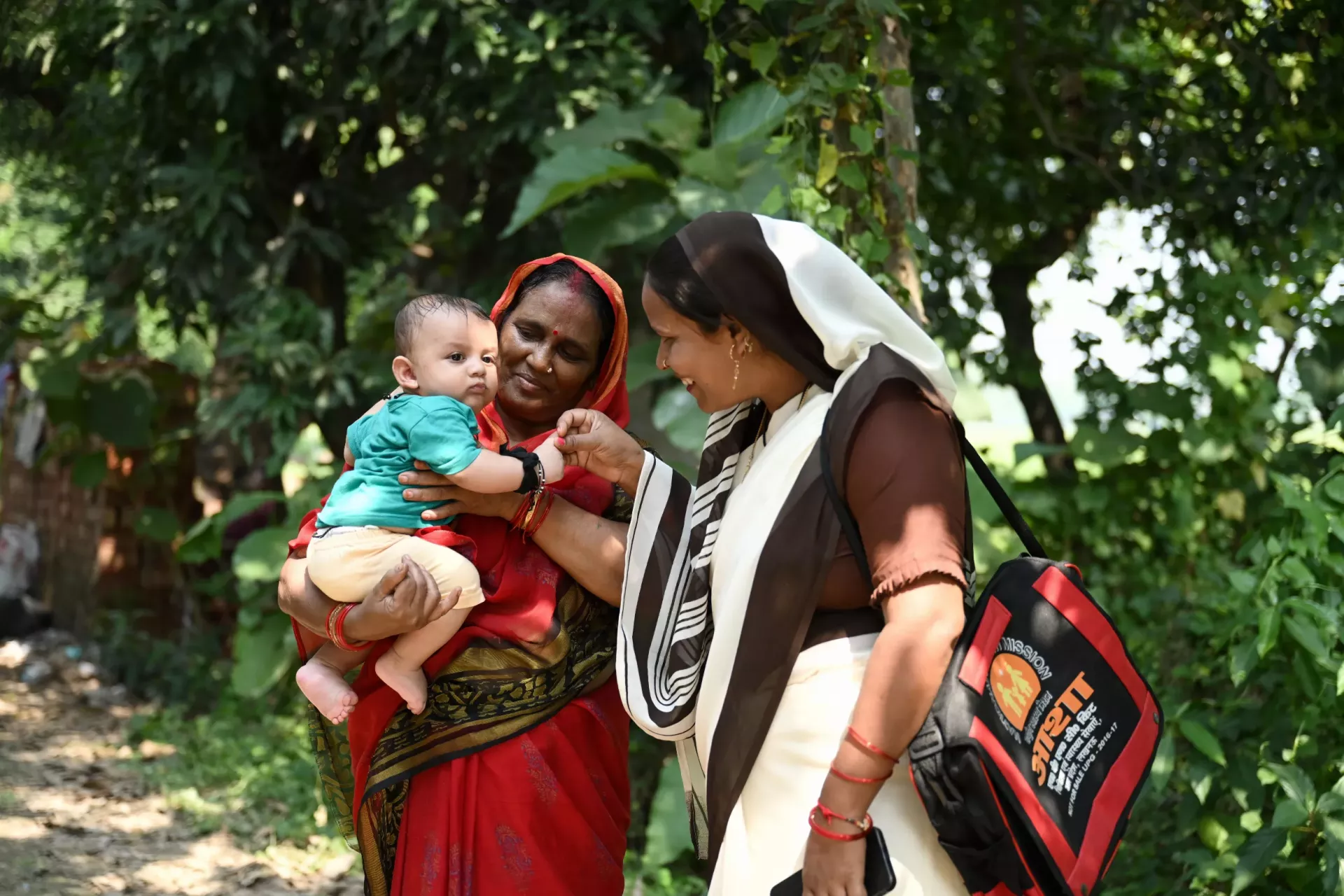
It's dawn in Jainpur village, Gorakhpur, Uttar Pradesh, India. The village wakes up to the usual sounds—birds chirping, children pedalling their bicycles to school, and women drawing water from the new overhead tank system. Amidst this morning routine, Mamta Devi, an ASHA (Accredited Social Health Activist) worker, gets ready for her day.
Her phone rings, breaking the calm.
“ASHA didi, my child has a high fever. I’ve called 108,” says a worried mother.
“You did the right thing,” Mamta replies, grabbing her health bag. “I’m coming. Wait for me.”
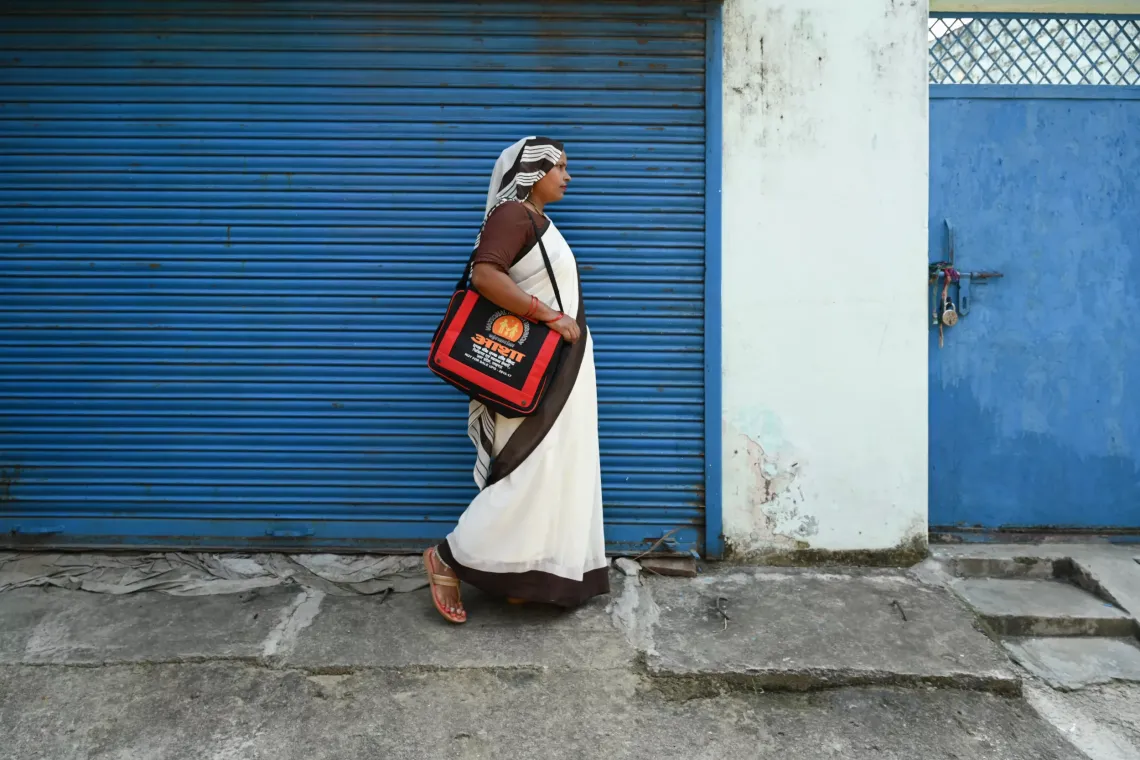
As she walks to the family's home and knocks on the door, she reflects, “This is what my work is about—being there for my community when they need me most.”
Mamta’s knock is more than just a gesture. It’s a lifeline, a promise of hope for families facing life-threatening illnesses.
Before 2018, Gorakhpur was gripped by a terrible epidemic. Acute Encephalitis Syndrome (AES) and Japanese Encephalitis (JE), mostly caused by mosquito bites, claimed the lives of hundreds of children every year, especially during the monsoon season.
“We didn’t know what was happening,” Mamta recalls. “Parents thought it was a curse. They turned to rituals instead of seeking medical help. By the time children were brought to hospitals, it was often too late.”
In 2018, the Dastak Abhiyan was launched by the Government of Uttar Pradesh, supported by UNICEF. It was an urgent response to the AES and JE crisis, aiming to tackle the diseases through a coordinated, multi-departmental approach.
Dastak means ‘knock,’ explains Dr. Ashutosh Kumar Dubey, Chief Medical Officer of Gorakhpur. “It symbolizes reaching every household and ensuring no child is left behind.”
The campaign’s goals were clear: to prevent, identify, and treat cases of AES and JE while addressing the underlying causes, such as poor sanitation, stagnant water, and low vaccination rates. The campaign focused on door-to-door awareness, vaccination drives, sanitation improvements, and early medical interventions.
Daya Shankar Singh, Social and Behaviour Change Officer at UNICEF India, adds, “This collaborative programme by UNICEF and the health department initially targeted seven districts.
A comprehensive communication plan targeted hotspots, promoting immediate medical care for fever and safe water practices. ASHA workers and Anganwadi staff were trained for effective community engagement and delivering key health messages.”
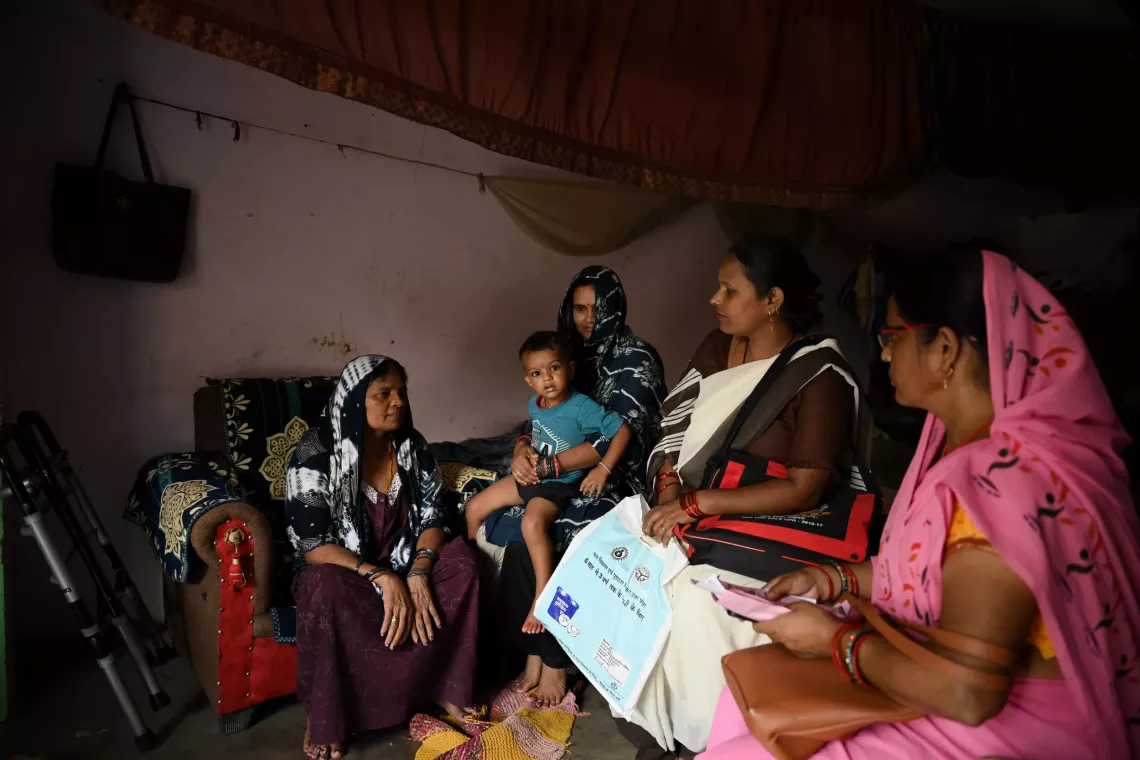
Mamta’s role as an ASHA worker transformed with Dastak. Equipped with training and tools, she began her mission to change how her community approached health.
“The first thing we learned was how to recognize early symptoms and counsel families,” Mamta explains. “We were also taught how to use tools like the eKavach portal to track cases and ensure follow-ups.”
eKavach portal helps healthcare workers and Community Health Officers (CHOs) to improve health services. It supports them in managing and tracking important health information for families, covering areas like maternal and child health, nutrition, and non-communicable diseases.
The app supports healthcare workers in their daily tasks by guiding them through processes and helping them refer people to the right services when needed.
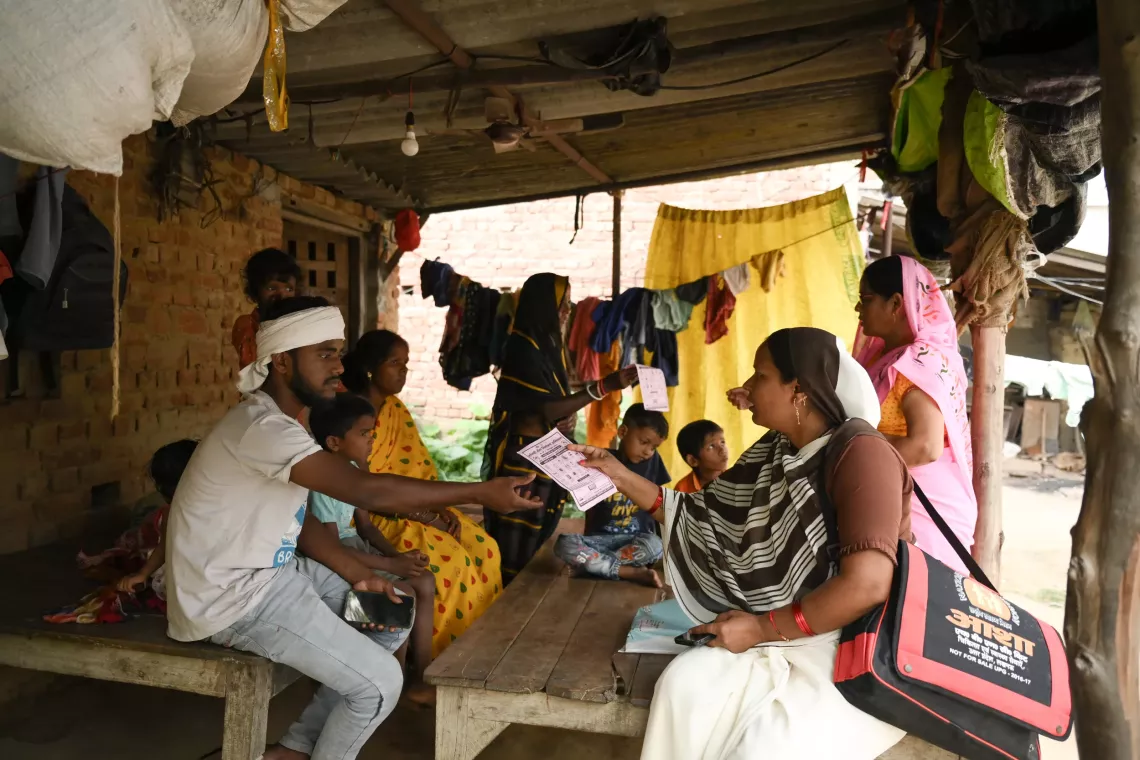
Every day, Mamta walks door-to-door, her health bag packed with leaflets and stickers. “It wasn’t easy at first. Families were hesitant about vaccinations. They thought injections would make their children sick. I started by vaccinating my own children in front of them to show that it was safe. Slowly, they began to trust me.”
For Mamta, Dastak was a turning point. The campaign brought her the training, tools, and support she needed to tackle the crisis head-on. “We learned to recognize early symptoms, counsel families, and act quickly to save lives,” she says. “For the first time, I felt equipped to make a real difference.”
The programme evolved into a statewide movement, boosting awareness and vaccination rates across all 75 districts. Increased trust in government health facilities led to fewer people seeking treatment from Registered Medical Practitioners (RMPs). Significant improvements in clean water, sanitation, and mosquito control were achieved, resulting in a dramatic reduction in AES and JE cases in Gorakhpur.
While Mamta is the face of Dastak in her village, the campaign’s strength lies in its collaboration. Sixteen government departments, including health, sanitation, and education, work together, with UNICEF providing technical guidance and resources.
Principal Secretary for Health, Partha Sarthi Sen Sharma, shares: “The success of Dastak lies in its multi-departmental collaboration. Health, sanitation, education, and local governance all come together to protect our children. This convergence has made Uttar Pradesh a model for tackling communicable diseases.”
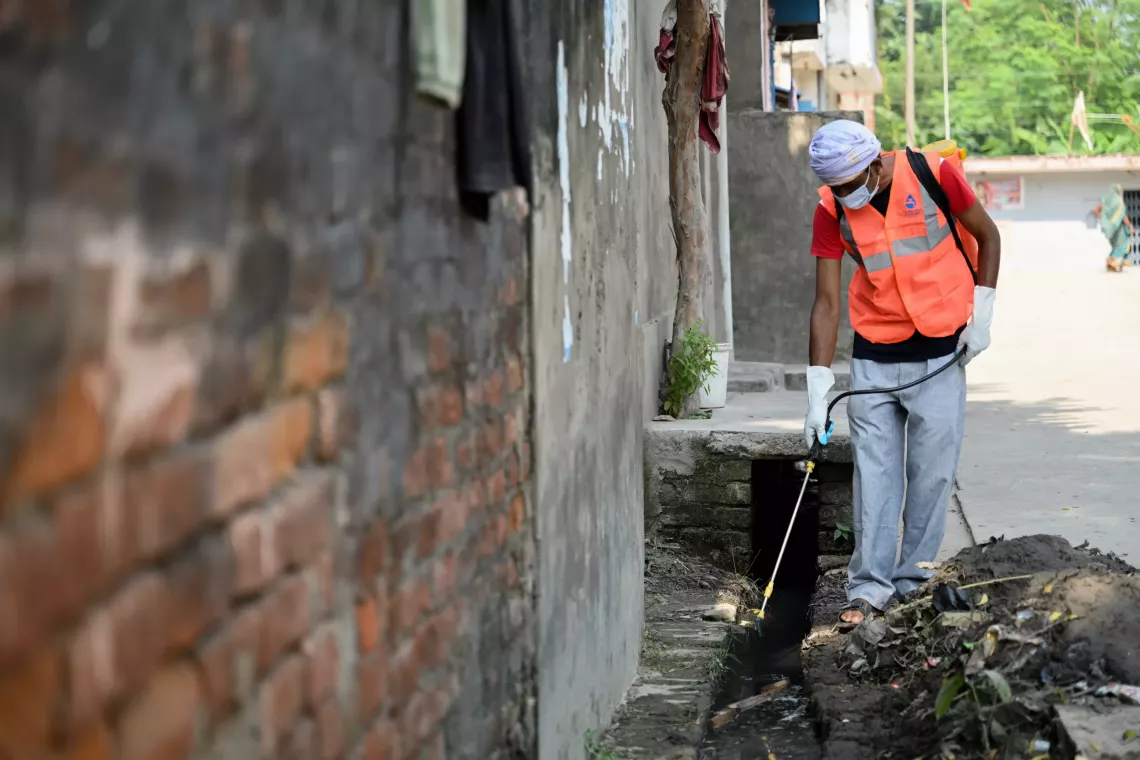
Local leaders like Gram Pradhan Raj Nishad play a critical role. “We make sure that stagnant water is cleared, garbage is collected, and mosquito breeding grounds are treated. Small steps like these save lives.”
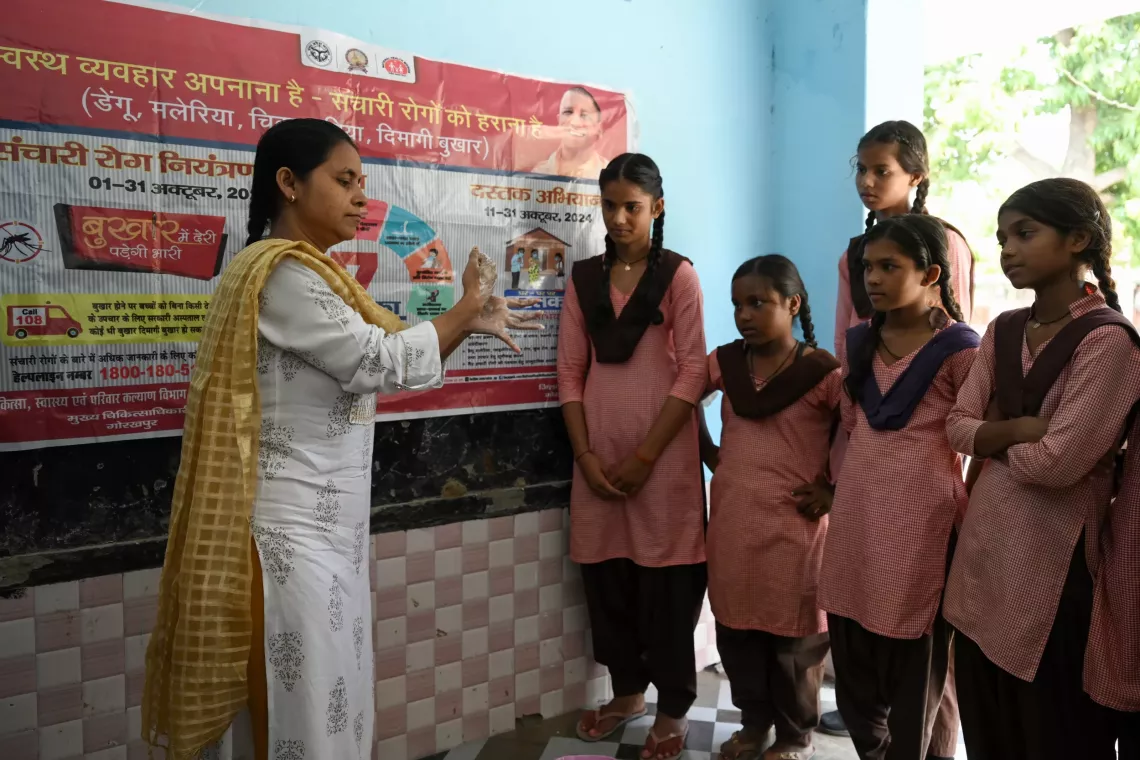
Teachers also contribute by educating children about hygiene. “The children learn handwashing and mosquito prevention here in school. They take these lessons home to their families.”
A key aspect of Dastak is early identification and treatment. Mamta recalls one case vividly. A young boy in her village developed a high fever during the monsoon season. His parents, initially hesitant, called Mamta.
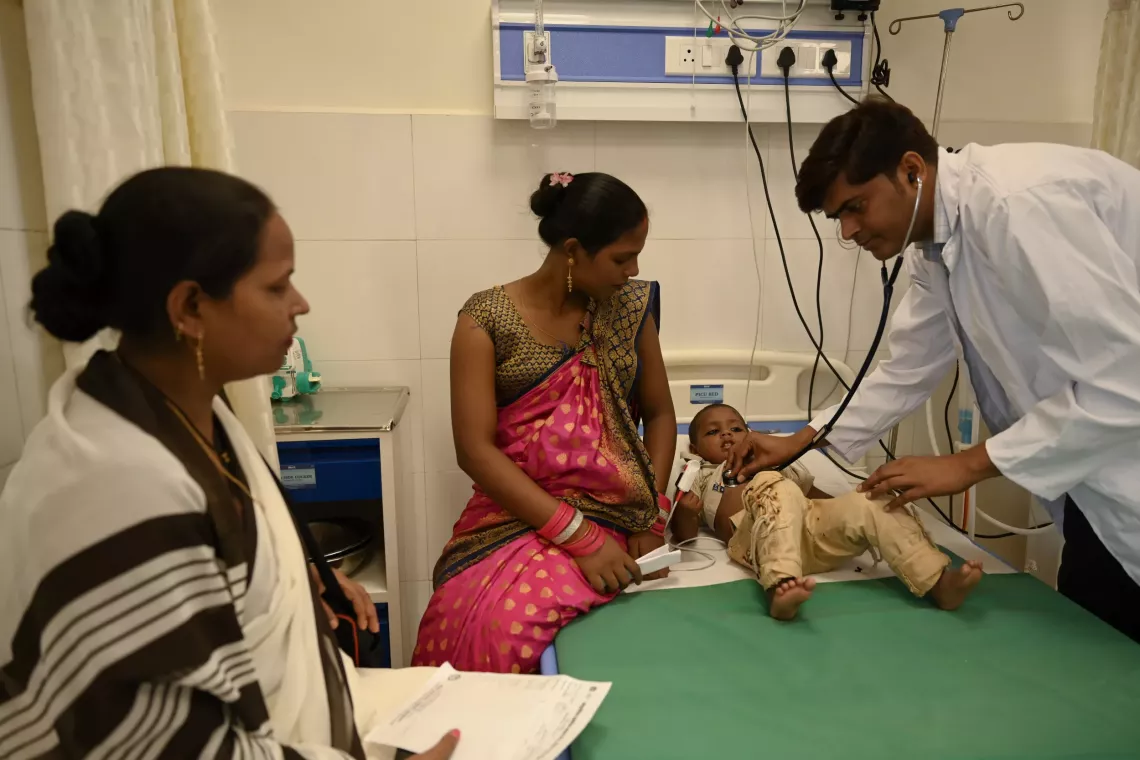
She immediately directed them to call 108 and accompanied them to the local health center. At the Pediatric Intensive Care Unit (PICU), the boy received life-saving treatment. “Before Dastak, such cases often ended in tragedy,” says Dr. Gyan Prakash Gupta, a pediatric specialist. “Now, thanks to PICUs and trained ASHA workers, we save many lives.”
Vaccination drives are at the heart of Dastak. Mamta organizes health camps where children receive their JE vaccines, while mothers listen to health talks. “Vaccines protect children from diseases that once devastated our community,” Mamta explains.
Neelu, a mother in the village, adds, “ASHA didi explained how vaccines work. Now, I make sure my children never miss a dose.”
Since its launch, Dastak has transformed health outcomes in Uttar Pradesh. Each year, over 35.91 million households know how to prevent AES and JE, and vaccination rates have soared.
Zakari Adam, UNICEF’s Chief Field Office in Uttar Pradesh, highlights the campaign’s success: “Dastak shows what’s possible when communities, governments, and organizations work together. By empowering ASHA workers and engaging families, we’ve created a movement that saves lives.”
The impact is undeniable. Gorakhpur, once the epicenter of AES and JE, hasn’t reported a JE-related death in three years.
As the sun sets over Jainpur, Mamta walks home, her day far from over. Tomorrow will bring more knocks, more conversations, and more lives to save. “Dastak isn’t just a campaign,” she says, her voice filled with quiet determination.
“When I knock on a door, it’s not just about health advice. It’s about hope, a promise—to knock on every door, reach every child, and never give up.”
Her work is proof of the power of persistence, collaboration, and care.
Through Dastak, Mamta has helped transform her community- from a place of fear and loss to one of health and resilience. And with every knock, she ensures a brighter future for the children of Uttar Pradesh.