Complementary Feeding practices for parents and caregivers
Poshan Maah Special

- English
- हिंदी
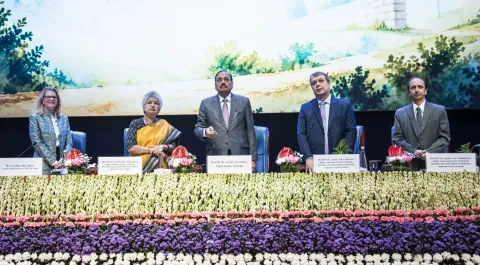
The POSHAN Abhiyaan was launched in March 2018 by the Prime Minister, as the Indian government’s flagship programme to improve nutritional outcomes for children, pregnant women and breastfeeding mothers aiming for Holistic Nutrition. Every September is marked as the ‘Poshan Maah’ in India. During this time, we see several communications and sensitization efforts on maternal health, nutrition, eliminating severe acute malnutrition and much more.
In 2021, along with fighting the COVID-19 outbreak in India, the work towards securing the nutrition of our children and women must continue. Anganwadi workers have played a crucial role as front-line community workers and especially in promoting child growth and development.

Nutrition is a crucial part of the development and health of children. Improved nutrition means improved infant, child, and maternal health. It also ensures robust immune systems, improved learning. For mothers it leads to a safer pregnancy and childbirth experience. It is one of the main contributors to lowering risk of non-communicable diseases and assures longevity.
Healthy children live and learn better. Individuals with optimum nutrition are more productive and can fully realise their potential. They go on to create opportunities for themselves, and their communities that, in turn, break the cycles of poverty and hunger.
In India, malnutrition presents a significant threat to child health. In India, almost 70% of all deaths among children below 5 years are attributable to undernutrition.[1]
Promoting infant and young child feeding can help in improving child survival rates. The first two years of a child’s life are the most important. Parents must conduct regular checks to assess if the child is growing well with the help of Anganwadi workers so that they can spot any faltering early on.

If adequate nutrition is provided during these initial months, it lowers morbidity and mortality, reduces the risk of chronic disease, and fosters better development overall. In this regard, early initiation of breastfeeding (within 1 hour of birth) protects the baby from infections and reduces mortality. Breastmilk is also a critical source of energy and nutrients.

But what happens after the first six months of exclusively breastfeeding a child? Is it enough?
The answer is no.
Around the age of six months, a baby is developed enough to receive and process other foods. The energy and nutrient needs of the young one is growing and cannot be met with breastmilk alone. Moreover, as the child grows and starts to explore the world around, the nutrition requirements continue to grow. Should the child be denied this nutrition or not given food appropriately, it can adversely affect growth and development.
Therefore, at the six month mark, it is critical to start complementary feeding so that one can ensure optimal development of the child.

Here is a quick guide to the basics of complementary feeding. With the help of these quick tips, mothers and caregivers can understand nutrition better and safeguard the health of their child.
When to start and why it’s critical

- At the six month mark, baby's body and brain is growing rapidly and requires more energy and nutrients than what breast milk alone can provide.
- This is the right time to introduce complementary feeding.
- Delay in introduction of complementary foods affects the child’s growth and increases the risk of malnutrition.
What to feed and what to avoid

- To support physical and brain development feed a variety of foods such as porridge, mashed pulses, fruits and vegetables.
- Do not add salt or sugar
- Non-vegetarian can include egg, fish, chicken etc.
- Do not feed child junk foods such as chips, packaged juice, biscuits, sweets, or savouries.
How to feed and sustain the habit of eating

- Practise good hygiene and proper food handling.
- The child should be fed from a separate bowl and all utensils used should be thoroughly washed
- Look into the eyes while feeding the child. Be patient, encouraging and loving.
- Do not force feed.
- Self-feeding must be encouraged early on
- Children have a small stomach, so make every bite count
A combination of continued breastfeeding for at least 2 years along with timely and adequate complementary feeding is the most reliable option to provide optimum nutrition to the child. As the child grows, increase the number of times that the child is fed: 2–3 meals per day for infants 6–8 months of age and 3–4 meals per day for infants 9–23 months of age, with 1–2 additional snacks as required; use fortified complementary foods or vitamin-mineral supplements as needed and gradually increase food consistency and variety. Over and above the nutritional benefits, complementary feeding can strengthen the bond between children and their parents.
[1] Swaminathan, S., Hemalatha, R., Pandey, A., Kassebaum, N. J., Laxmaiah, A., Longvah, T., ... & Dandona, L. (2019). The burden of child and maternal malnutrition and trends in its indicators in the states of India: the Global Burden of Disease Study 1990–2017. The Lancet Child & Adolescent Health, 3(12), 855-870.