COVID-19 reversals in childhood vaccinations in South Asia undo years of progress, new WHO, UNICEF data shows
Childhood vaccination rates in South Asia plummeted by 6 per cent points from 2019 to 2020, with 5.3 million children missing out on lifesaving vaccines through routine health services in South Asia in 2020, the highest number since 2014

KATHMANDU, 15 July: The COVID-19 pandemic has led to major reductions in childhood vaccinations in South Asia, with coverage of basic vaccination dropping by 6 per cent points from 2019 to 2020.
More than 5.3 million children in South Asia missed out on essential vaccines through routine immunization services in 2020 – nearly 1.9 million more than in 2019 - according to official data published today by WHO and UNICEF. This is the highest number of under-vaccinated children since 2014.
Between 2019 and 2020, the South Asia region experienced a sharp decline in children receiving three doses of the diphtheria-tetanus-pertussis (DTP3) vaccine, falling from 90% to 84%. The percentage of children covered by three doses of the diphtheria-tetanus-pertussis (DTP3) vaccine had increased steadily from 6 per cent in 1980 to a record high of 90 per cent in 2019 in South Asia.
“It is heartbreaking to see this reversal in child vaccinations due to COVID-19 in a region where tremendous progress was being made, thanks to political will and collective action,” said George Laryea-Adjei, UNICEF Regional Director for South Asia. “Nearly 4.4 million children are not even receiving a single dose of a vaccine that can protect them from deadly diseases, which is almost twice as many as the previous year. This is a huge setback for children in South Asia, as it puts their lives at risk, and leads to unspeakable suffering.”
The majority of countries in South Asia experienced drops in childhood vaccination rates. The rates for DTP3 reduced by 9 per cent points in Nepal; 7 per cent points in Pakistan; 6 per cent points in India; 3 per cent points in Sri Lanka and 2 per cent points in Bhutan and Afghanistan. However, robust recovery efforts mounted in many countries towards the end of the year helped to blunt the impacts of overall declines. In India, for example, vaccination drives in remote areas are helping to reach missed children.
Globally, the data shows that just 10 countries account for 62 per cent of all under- or unvaccinated children globally. India – particularly hard hit by the COVID-19 pandemic – had the highest number of unprotected children worldwide at 3.5 million, an increase of 1.4 million. Pakistan had 1.3 million unprotected children in 2020, an increase of 0.4 million.
Concerningly, most of these children did not receive a single vaccine during the year, an indication that the most vulnerable, hard-to-reach children are paying the steepest price for pandemic-related disruptions to vaccine access. At nearly 4.4 million, in 2020 South Asia recorded the highest number of children having failed to receive any routine vaccination in the past ten years. More than 3 million of these “zero-dose children” in 2020 lived in India.
Measles remains a concern, as well as outbreaks of diseases like diphtheria and yellow fever which can spread quickly where people are unvaccinated. In South Asia, coverage for the first dose of the measles vaccine fell from 92 per cent in 2019 to 88 per cent in 2020.
This is well below the 95 per cent recommended by WHO to protect against measles. South Asia has had lengthy school closures, which have had significant ramifications for several vaccines such as HPV, which is critical for the achievement of cervical cancer elimination, and which is offered to children and adolescents at school.
Prior to the COVID-19 pandemic, childhood vaccination rates against diphtheria-tetanus-pertussis, measles and polio had increased steadily for more than a decade in South Asia, as opposed to other regions in the world where coverage rates mostly stagnated.
However, with the outbreak of the COVID-19 pandemic, many health facilities and personnel were diverted to support the COVID-19 response. In some countries, health facilities have been closed or hours reduced, while some families may have delayed seeking healthcare because of safety fears.
As the health community attempts to recover lost ground due to COVID-19 related disruptions, UNICEF, WHO and partners are supporting government efforts to strengthen immunization systems in the region by:
- Restoring services so countries can safely deliver routine immunization services during the COVID-19 pandemic;
- Helping health workers communicate actively with caregivers to explain the importance of vaccinations;
- Rectifying coverage and immunity gaps, including identifying communities and people who have been missed during the pandemic.
Beyond disruptions to immunization, other essential healthcare services in South Asia also experienced severe disruptions in 2020. Research commissioned by UNICEF has estimated that in 2020, 228,000 children died due to disruptions to essential healthcare services in South Asia.
The main killers of children in South Asia are diseases such as pneumonia and diarrhea, which are both preventable and treatable when essential health services are operational, and families feel safe to use them.
“COVID-19 related disruptions are not just affecting vaccination efforts, but also other critical maternal and child health services. Today, the biggest health threat to children in South Asia is not from COVID-19, but from the childhood diseases which continue to kill children in the region,” added Laryea-Adjei. “UNICEF calls on governments to invest in essential maternal and child health services, to ensure the most vulnerable children don't succumb to preventable diseases while COVID-19 rages on.”
Note to Editors: India Para
The COVID-19 pandemic has impacted all essential health services in the country including the Universal Immunization Programme (UIP) for vaccination of children and pregnant women. However, India re-strategized the UIP early on, in May 2020, to conduct immunization sessions even while managing the COVID-19 pandemic.
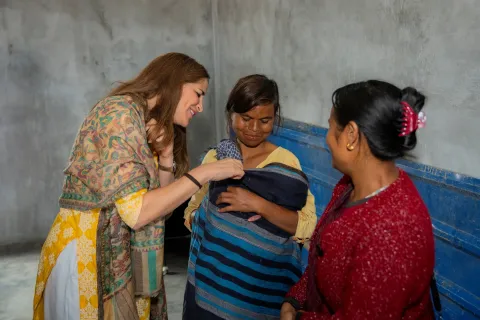
- New modalities of conducting sessions both at health facilities as well as outreach session (in villages and urban areas) were devised keeping in mind the COVID Appropriate Behaviours. Extensive communication and awareness generation supported building confidence among parents and caregivers to get their child vaccinated in a safe environment.
- The COVID-19 vaccination was first prioritized for healthcare workers which contributed in effective delivery of healthcare services like immunization in communities.
- A special round of Mission Indradhanush in February and March 2021 was held to vaccinate the missed children under which 9.6 lakh children and 2.2 lakh pregnant women were vaccinated. To ensure that COVID-19 vaccine drive does not impact Routine Immunization (RI), MoHFW guidelines categorically defined that ‘No COVID-19 vaccination will be done on RI days.’
- Cold chain space was reviewed and augmented to create additional cold chain space for COVID-19 vaccine without compromising the cold chain requirement of vaccines under routine immunization.
- UNICEF and WHO along with other partners also collaborated with the national and state governments to innovate strategies in identifying and reaching the missed children even during the pandemic. These include follow up by ASHAs and ANMs using mobile calls and WhatsApp reminders to parents, conducting outreach session in large community halls to maintain social distancing, involvement of Panchayat and local governance for crowd management.
Mr. Yasumasa Kimura, Officer-in-Charge and Deputy Representative programmes, UNICEF India said, “While the health systems are strained by the COVID-19 response, we must be cautious in our fight against the pandemic so as not to interfere with decades of gains against other preventable diseases. We cannot afford to lose out on routine immunization and letting vaccine-preventable diseases endanger children’s health.”
“UNICEF is partnering with the Government of India to support continuity of essential health and immunization services through planning, implementation, and monitoring of various strategies to identify and vaccinate missed children. We also support generating awareness and confidence among communities to vaccinate their children and strengthening the cold chain for routine immunization,” he said.
Additional resources


About UNICEF
UNICEF promotes the rights and wellbeing of every child, in everything we do. Together with our partners, we work in 190 countries and territories to translate that commitment into practical action, focusing special effort on reaching the most vulnerable and excluded children, to the benefit of all children, everywhere.
UNICEF India relies on the support and donations from businesses and individuals to sustain and expand health, nutrition, water and sanitation, education and child protection programmes for all girls and boys in India. Support us today to help every child survive and thrive!
For more information on UNICEF India and its work visit https://www.unicef.org/india/. Follow us on Twitter, Facebook, Instagram, Google+ and LinkedIn