We arrived a few days ago and I feel that we have received nice attention
Approximately 248,035 people have crossed irregularly through Honduras

- Español
- English
Interest Story
Approximately 248,035 people have crossed irregularly through HondurasInte between January and June 2024, coming from countries in South America and other continents.
During their passage through the migratory route, children, adolescents and their families are exposed to different protection risks such as human trafficking, violence by the different organized crime groups found throughout the countries they must travel through to reach their destination; health and hygiene risks; acute diseases; hunger, dehydration, factors that lead to rapid deterioration during their journey.
In addition, with migration, children and adolescents are forced to drop out of school and with it access to opportunities that guarantee their proper development and dignity.
Yoraima, traveling from Venezuela with her husband and four children, spent five days in Honduras at the Temporary Rest Center in El Paraíso. There, she and her family have received humanitarian attention provided free of charge by the LIFE Consortium in Honduras.
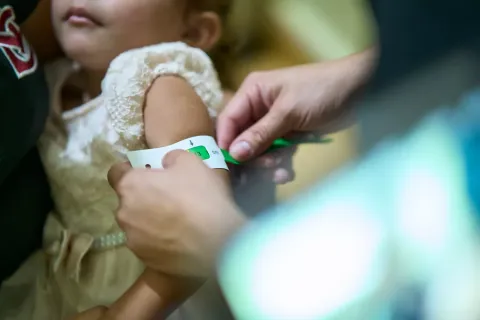
The LIFE Consortium in Honduras is present in four strategic humanitarian care points along the migratory route: Danlí, Trojes, El Paraíso, and Machuca-Ocotepeque. At these points, the Consortium provides comprehensive services, protection in shelters, safe and friendly spaces; medical attention and care for Early Childhood Development; essential supplies of water, hygiene and sanitation; educational spaces with the "Learning Passport" project where through digital tools access to learning is promoted; and nutrition services.
“We arrived a few days ago and I feel that we have received nice attention, it is good that my children are distracted here, they have been able to relax and think about other things and stop thinking about things that have happened to us.” Explains Yoraima, about the psychosocial support services and educational activities.

"They are of great help to the children in the educational but also psycho-emotional areas, we see it every day in the children and adolescents we receive at the center". Aidy Estrada specialist in education for emergencies.
In this space they have access to didactic tools to reinforce logical-mathematical and reading-writing skills, which are very popular among children who can refresh their basic knowledge in these subjects. It is also a safe space where they can identify and refer cases with protection needs and where children and adolescents receive care in SMAPS (Mental Health and Psychosocial Support in Emergencies).

The oldest son of the Paz family, Enmanuel, 17 years old, says he is happy to find these places where they can practice activities that entertain them. "I came with a headache, but I have practiced some activities, even alphabet soup and I got rid of it, I have left my studies in my country, and here we are looking for a better future," he said.
The GHTF supported UNICEF Honduras in continuing to address the psychosocial and educational needs of children and adolescents, as well as expanding primary health care for children, adolescents and caregivers, including strategic humanitarian assistance in water, sanitation and hygiene. Thanks to these funds, through the LIFE Consortium, UNICEF was able to close some critical gaps in humanitarian services that existed due to lack of funding and was able to expand attention to essential services, including access to protection and primary health.