Belle-Anse: Where Cholera Still Hides in Silence
In the Southeast of Haiti, shame and distance delay access to care. UNICEF supports health authorities to save children and break the taboos.
- Français
- English
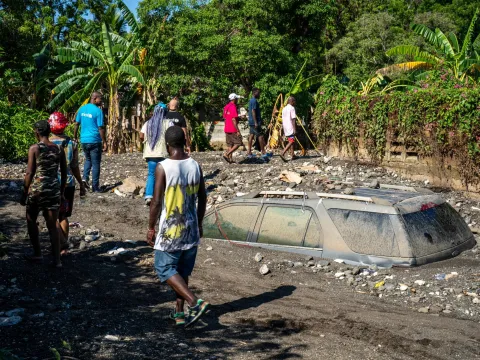
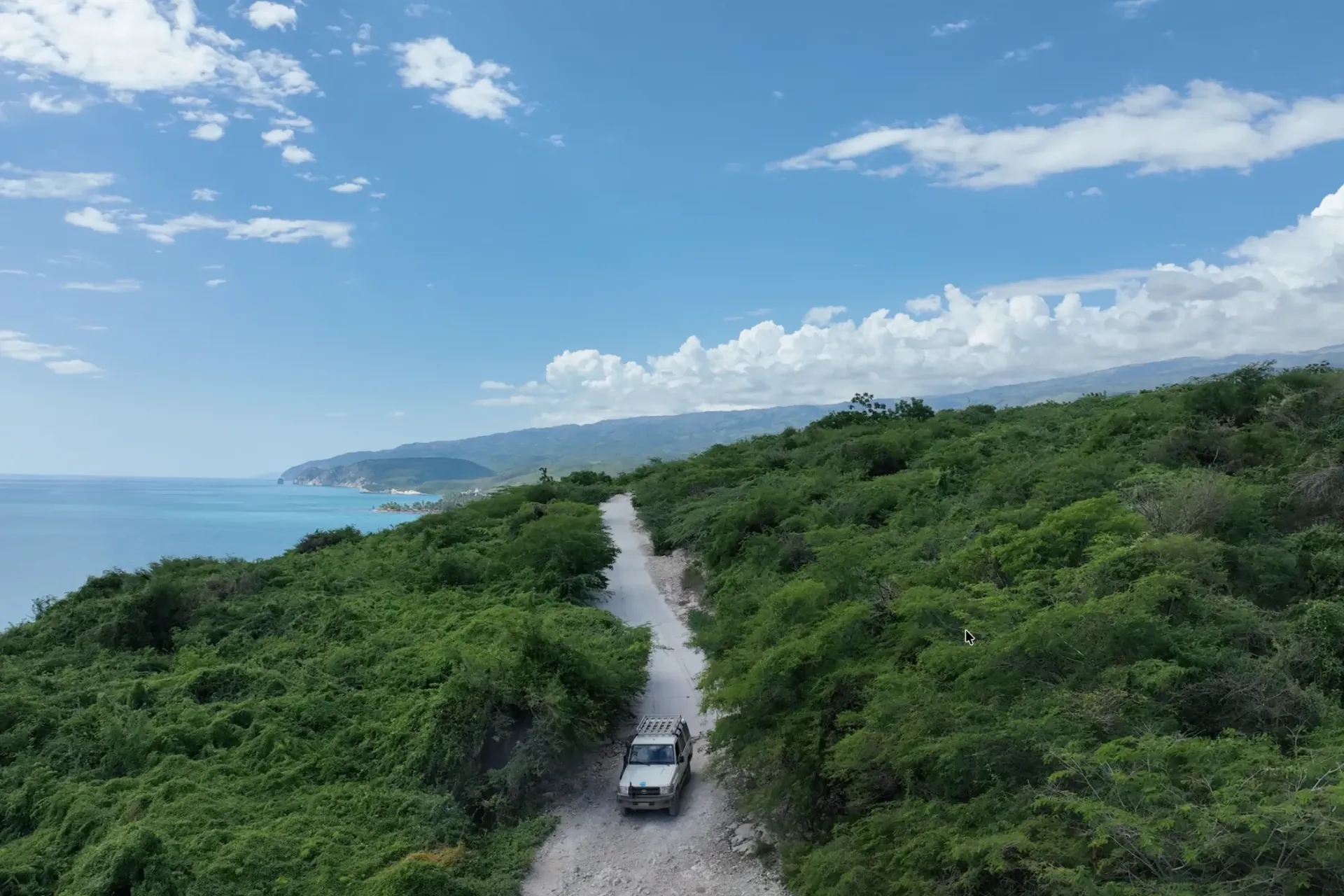
In Belle-Anse, everything seems both near and far. Bordering the sea, the town remains difficult to access as it takes hours on winding roads to get there. A road that crumbles, full of potholes from the rain, where only a few motorcycles dare to pass. Since the passage of Cyclone Melissa, it has become even more unusable, cutting thousands of families off from the rest of the country.
Here, many live without treated water and regular transport. And when illness strikes, people must walk kilometers, often on an empty stomach, to reach the nearest health center. For some, the help they seek arrives too late. In this context of limited access to clean water and healthcare, cholera continues to spread.
“People are afraid of cholera,” explains Dr. Jean Judson, the Southeast Departmental Health Director. “They hide it because they think it’s a shameful disease. Others believe it’s a punishment from the spirits. And when they do come, it’s often too late.”
In the small community of Calumette, community health workers report more than 40 suspected cholera cases. The disease, transmitted through contaminated water, continues to circulate in the area. Despite awareness campaigns, rumors still fuel fear around cholera. Many stay home until their bodies give out.
Before the cyclone, UNICEF, alongside the Ministry of Public Health and Population (MSPP) and Plan International, had pre-positioned over 600 hygiene kits in the Southeast department, trained 150 community health workers, and equipped 20 health centers with medical supplies, IV fluids, and therapeutic foods for malnourished children. But the rains worsened the situation, contaminating water sources and isolating communities such as Belle-Anse, Calumette, Thiotte, and Grand Gosier, to name just a few in the Southeast.
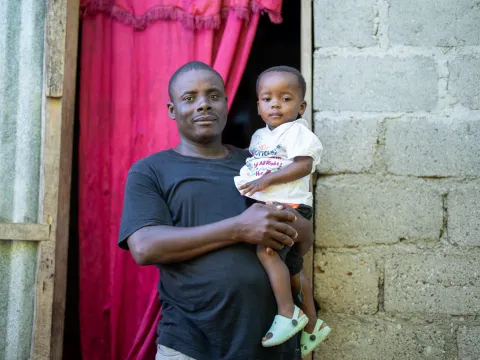
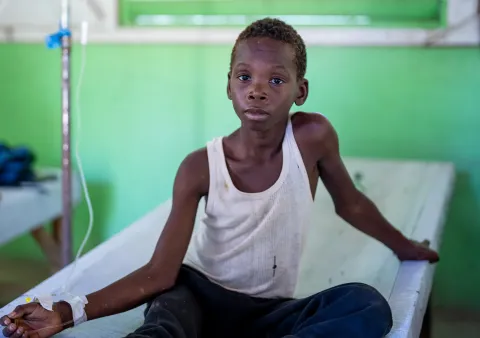
At the Belle-Anse community health center, a single room serves multiple purposes: emergency care, rest, and treatment. There are at most 10 beds, buckets for water, and IV fluids hanging from ropes. Between two beds, 7-year-old Kenson stares into space. Next to him, his father Émile holds his hand. A few days earlier, Kenson had lost his mother, Dame Élène, who was taken by acute diarrhea caused by cholera.
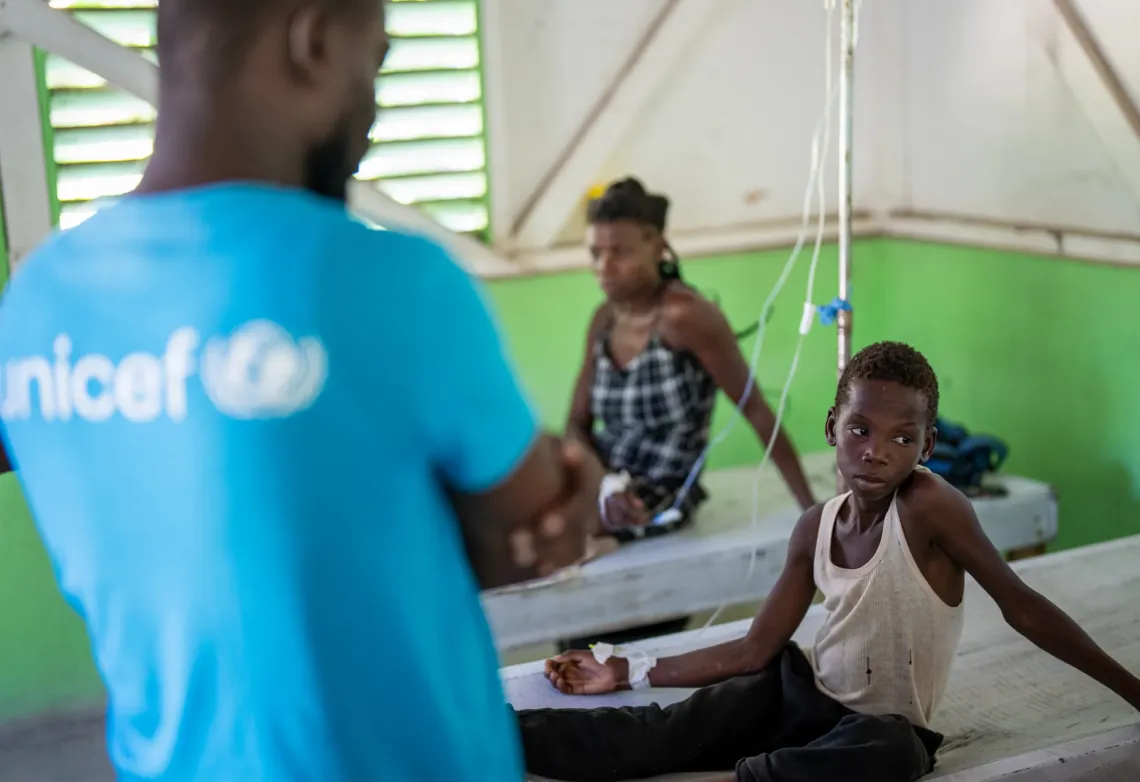
"My mom used to say I was strong…" he murmurs, lowering his tear-filled eyes. "I gave her water; I wanted her to hold on… but then she stopped speaking."
After his mother’s death, Kenson’s condition worsened. A few days later, he began showing similar symptoms: diarrhea, vomiting, and extreme weakness, unaware that he needed urgent care.
His father was not at home that day. As often, he was working in town or in nearby areas to provide for the family. A neighbor found the dehydrated, trembling child, gave him an oral rehydration solution, and sent him alone to the health centre, as she could not leave her own children unattended. She immediately informed his father.
Kenson then started walking toward the health centre, sipping the solution in small gulps, stopping to catch his breath, vomit, or relieve himself along the roadside. His father met him halfway and found him swaying before he collapsed into his arms.
"He collapsed as soon as he arrived, in my arms, unable to stand," Émile recounts. "I prayed all the way to the hospital."
Around them, other patients receive similar care, a hand on an IV drip; eyes caught between fear and exhaustion. The medical staff fights with very limited resources. The centre lacks laboratory tests, rehydration salts, and stable electricity.
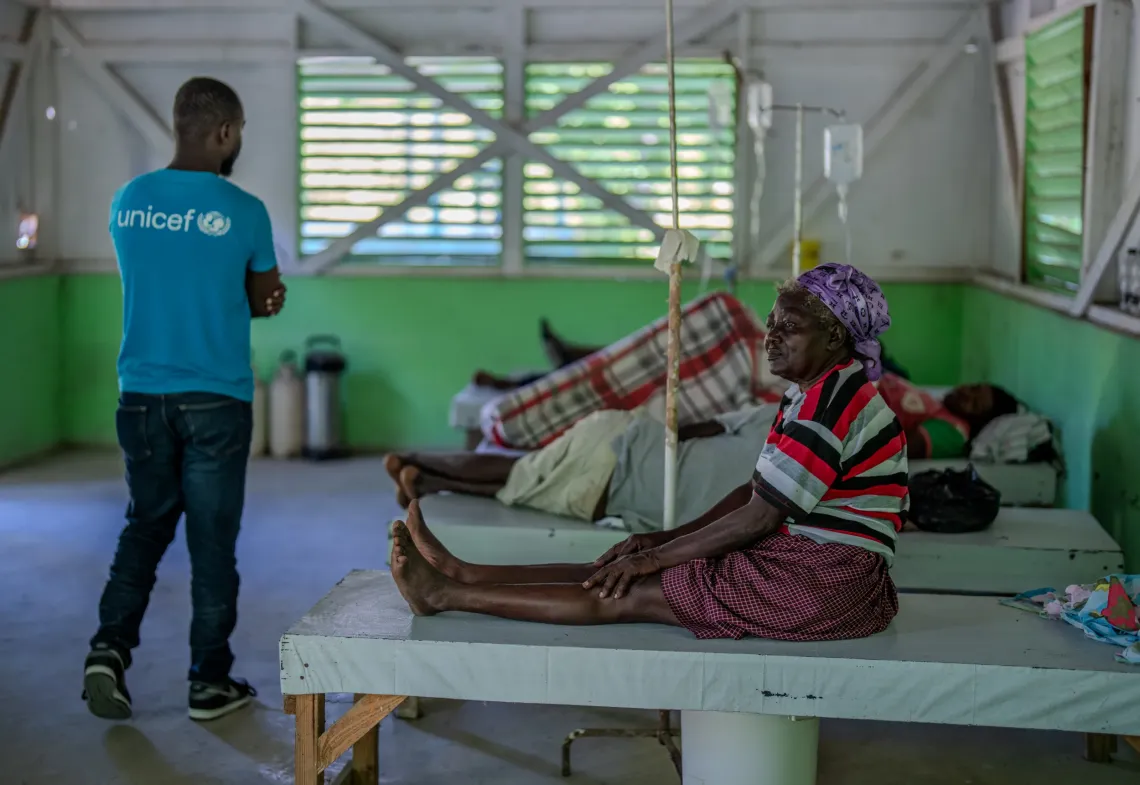
Despite the difficulties, the teams are not giving up. MSPP and UNICEF continue organising training and awareness-raising sessions in remote areas to combat stigma.
Eighteen multipurpose community health workers (ASCP), trained with the support of UNICEF, with funding from the Norwegian Government, the Multi-Partner Trust Fund Office (MPTF), and the Central Emergency Response Fund (CERF), go from house to house to identify suspected cases and decontaminate affected homes.
Tam, one of the trained ASCP, is proud to put what he has learned into practice to protect his community. “Before, people used to run away from me when I talked about the disease,” he says with a smile.
“Now they listen to me because they've seen that those who come early get better. And I'm proud to help my people stay healthy.”
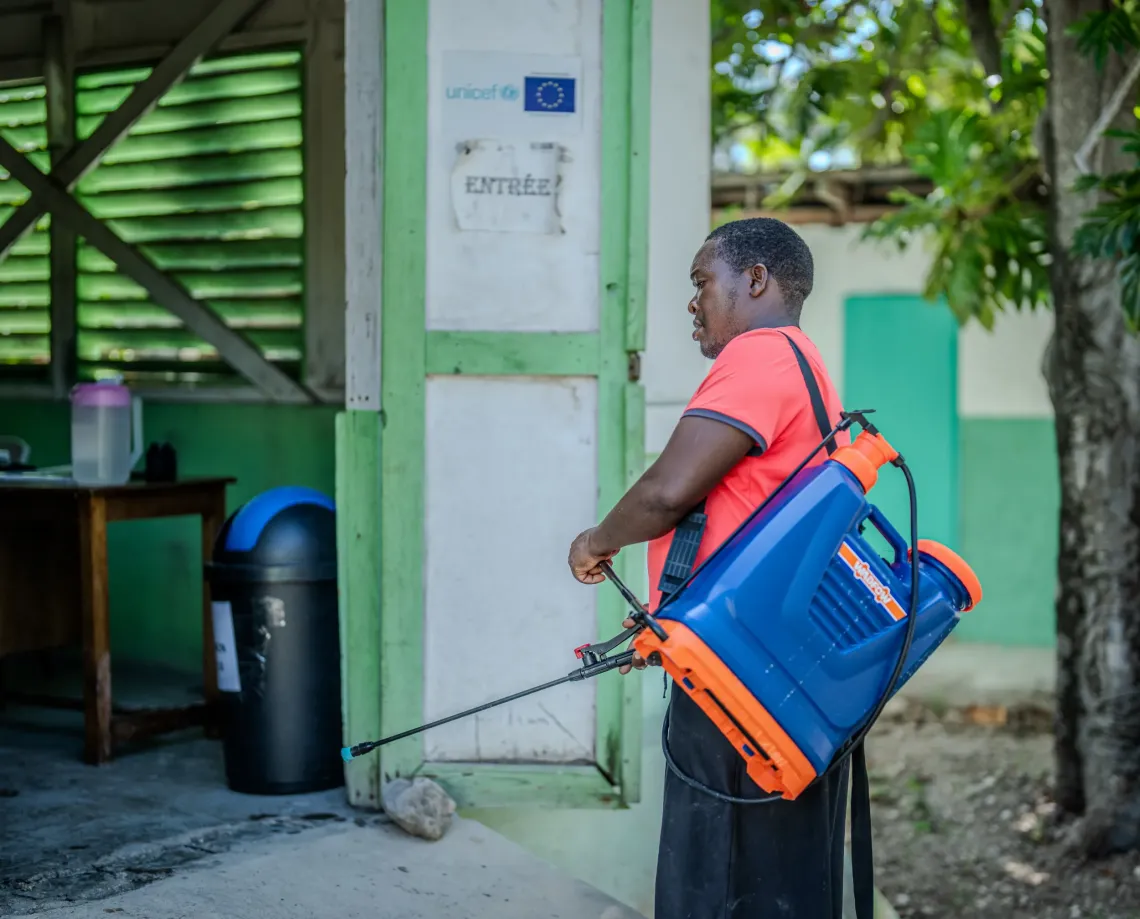
“Across Haiti, women and men are rising up every day to protect children and fight cholera. Their courage and solidarity show that even in the most difficult times, hope remains possible,” says Geeta Narayan, UNICEF Representative in Haiti.
In the hills of Belle-Anse, the roads are still damaged, but a faint glimmer of hope is reemerging.
Kenson, sitting on a makeshift bed in the community center, watches the nurse prepare his IV. He doesn't say much, but his eyes stare into space, as if trying to understand everything he has just been through. Then, in a voice that is almost inaudible, he whispers, “When I grow up, I want to be a bricklayer to build hospitals that save lives like mine.”