After the hurricane, Maxo rebuilds his life
Financial assistance, a lifeline for families in the South after Hurricane Melissa

- Français
- English
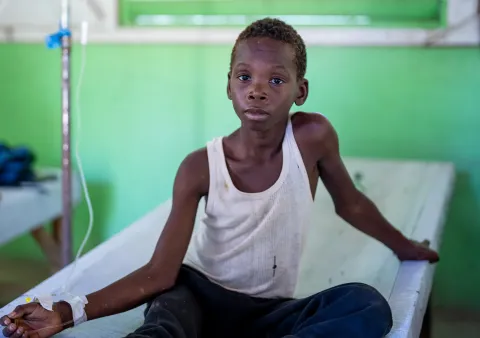
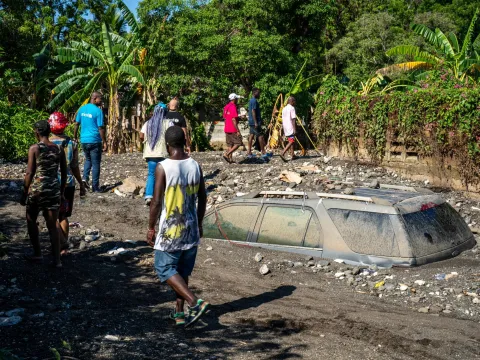
Grand-Anse, South – When Hurricane Melissa struck Roseaux, a coastal commune in the Grand’Anse Department in southern Haiti, it didn’t just devastate farmland and homes; it plunged thousands of families into uncertainty. Within hours, crops were destroyed, incomes vanished, and basic needs such as access to food and safe shelter became urgent. For Maxo and his four children, the storm marked a harsh turning point.
“Water swept everything away,” he recalls. “Our young banana plants, our beans… we couldn’t save anything. We were completely helpless.”
Like many other families, Maxo found himself without the resources to restart his farming activities, buy school supplies for his children, or even meet his family’s essential needs.
Financial assistance, a crucial support for urgent needs
It was in this context that UNICEF’s financial assistance, in coordination with the General Directorate of Civil Protection and with support from CERF, became vital. Over 7,400 families in the region received cash transfers, allowing households to decide their own priorities. For Maxo, the cash transfer was not just material support; it represented a tangible way to rebuild his life and regain a degree of autonomy.
“When I received the message informing me that we would receive assistance, I felt great relief,” he says. “This support allowed us to buy banana seedlings and seeds to restart our agricultural production. It also allowed us to buy the books and supplies our children needed. It was truly a precious help.”

Reviving agriculture and protecting children’s education
Cash transfers offer a flexibility that material aid cannot always provide. Families can meet immediate needs, such as food, healthcare, or schooling, while also planning the medium-term recovery of their livelihoods. For Maxo and his children, this meant restarting agricultural production while ensuring that the children did not fall behind in their education, a crucial element for their future.
Today, Maxo’s fields are coming back to life. Young banana plants are sprouting again, and the children are returning to school with new books. The financial support did not just help overcome the crisis; it also restored a sense of stability in an already fragile context.

“We are deeply grateful,” concludes Maxo. “This support gave us the means to act for our children and our future. Thank you to UNICEF and Civil Protection for this assistance.”
Today, Maxo’s fields are coming back to life, and the young banana plants are sprouting again. His children are returning to school with new books, and the family is gradually regaining a stable routine. The financial assistance allowed them to overcome the crisis and continue moving forward with autonomy, even in a still fragile context.