Kenson, a witness to the cholera crisis in Haiti’s South-East
Thanks to the joint response of the Ministry of Public Health and Population and UNICEF, Kenson is receiving the care he needs to fight cholera.
- Français
- English
At just seven years old, Kenson was already taking on adult responsibilities. He stayed by his sick mother’s side, trying to ease her suffering with whatever he could. He brought her water, made tea, emptied the buckets again and again. He watched her grow weaker, anxious and helpless, without realizing that the worst was yet to come. In just a few days, the illness claimed to his mother and struck him as well.
Shortly after, Kenson began showing the same symptoms. Weak and in shock, he was urgently transported first by motorcycle and then on foot to the nearest health centre.
“My mother died while I was taking care of her. Now I feel very weak and I am sick too. I am afraid of suffering the same fate as her” he says, exhausted.
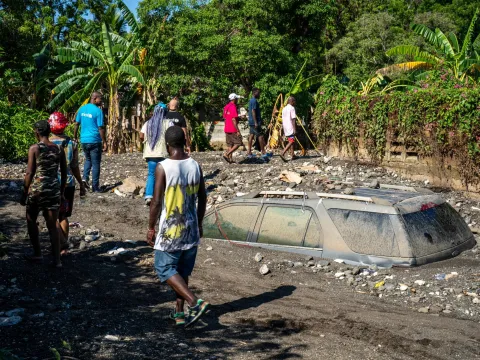
What Kenson and his mother experienced is part of a wider health crisis. Despite preparatory measures to limit a resurgence of cholera, the passage of Hurricane Melissa through Haiti’s Grand Sud in October 2025 severely worsened the situation in many communities, particularly in Belle-Anse, a remote and hard-to-reach commune in the South-East department. The disease continued to spread, affecting hundreds of households.

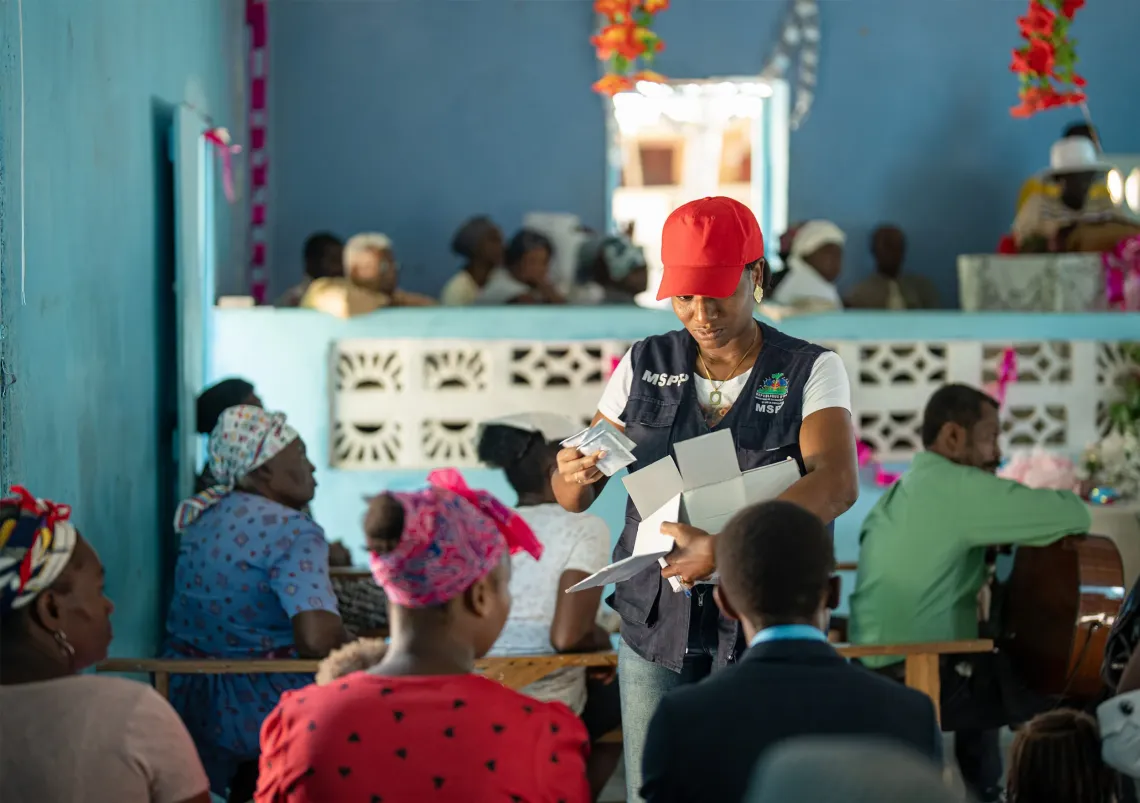
UNICEF, with the support of the United States, the European Union Humanitarian Department (ECHO), and the Republic of Korea, continues to strengthen the efforts of the Ministry of Public Health and Population (MSPP) in the fight against cholera in the South-East department.
Teams have been deployed in neighborhoods to reinforce prevention and slow the spread of the disease, establishing 81 sanitary cordons that reached 1,788 households. Hygiene and cholera kits prepositioned before the passage of Hurricane Melissa have provided more than 3,000 people with the means to protect themselves and their families.
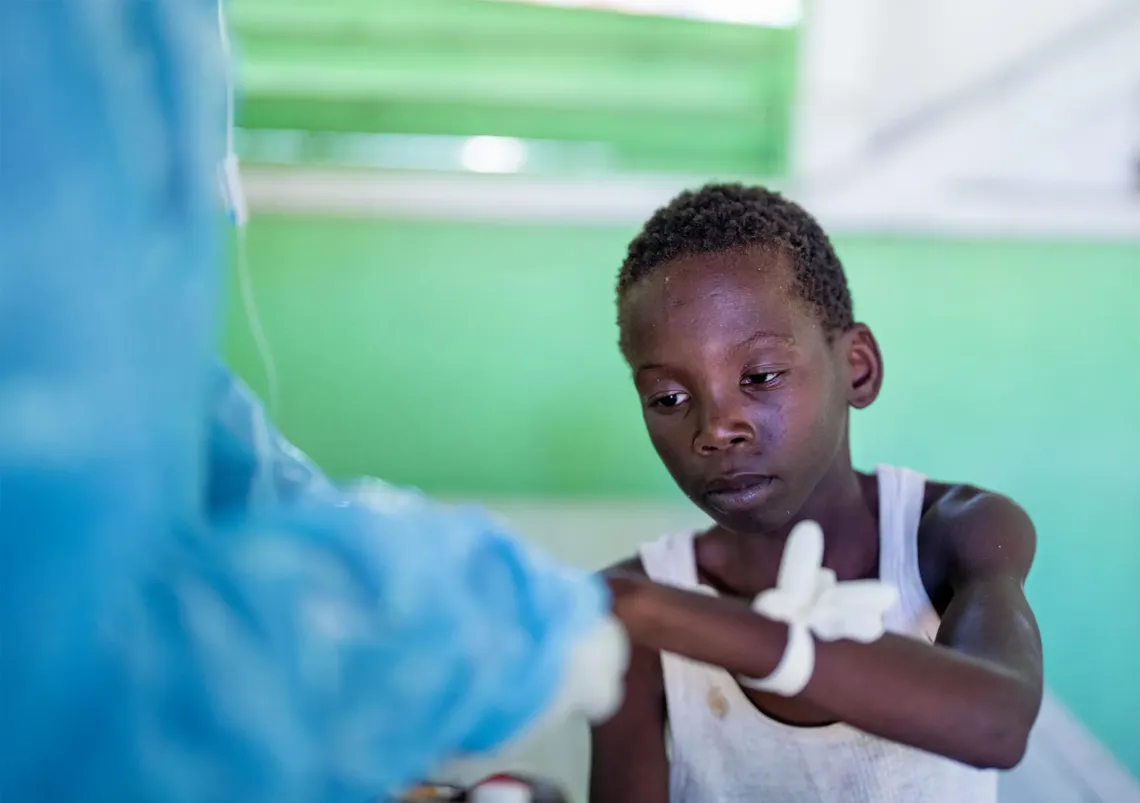

Today, Kenson is receiving care at the Belle-Anse health centre. Rehydration infusions are helping him regain his strength, while health workers watch over him closely. Thanks to this treatment, his condition is gradually improving, and he is now on the path to recovery.
Despite his fatigue and grief, Kenson is still a child. Lying in his bed, he thinks about what he has left behind.
“I want to go home. I miss my friends,” he says softly.
Despite the distance and difficult conditions, UNICEF and its partners are on the ground to ensure that medicines, oral rehydration salts, and Aquatabs reach families and health centres. Homes and public spaces are being disinfected to slow the spread of the disease. Community health workers go door to door to raise awareness, identify suspected cases, and guide people quickly to health facilities. These efforts aim to protect children and communities, reduce the number of cases, and prevent further loss of life.