Life After Deportation: A Guatemalan Family Rebuilts Their Future
Support for children and families in a migratory context
- Español
- English
Yesenia*, a 27-year-old mother from a Mayan community in Huehuetenango, Guatemala, dreamed of a better life for her four children—María (10), Sofía (8), Juan (6), and baby Ana (1.5 years). Six years ago, her husband, Miguel, migrated to the United States, seeking better opportunities to support the family. He worked harvesting palm branches, sending remittances to keep them afloat. “He wanted a future where our children could thrive,” Yesenia recalls, her voice carrying the weight of their journey.
Two years ago, Yesenia decided to join Miguel in the U.S. with their three children, determined to keep the family together. The journey was arduous, but in the U.S., their fourth child, Ana, was born—a moment of joy in their challenging new life. “We were together, and that made it worth it,” Yesenia says. “María talked about becoming a teacher, and Sofía wanted to help me with the little ones.”

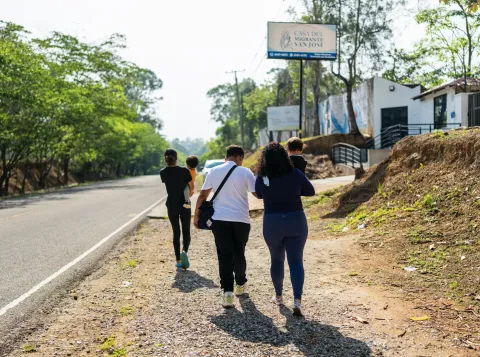
Their happiness was cut short when Miguel was deported a few weeks ago. Without his income, Yesenia could no longer sustain the family in the U.S. “I couldn’t let my children go hungry and had no income to pay the rent,” she explains. “Returning to Guatemala was our only option, but I feared what was going to happen to us, in Guatemala there is no work.”
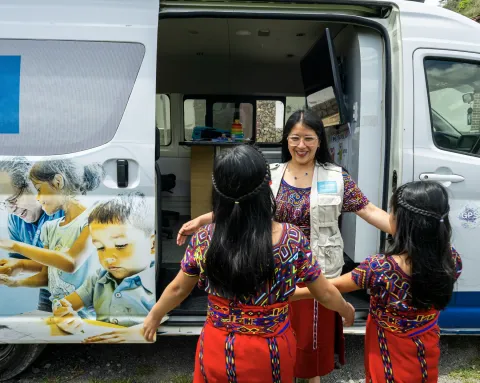
Back in Huehuetenango, Yesenia learned about support for returning families through a mobile unit’s loudspeaker announcement echoing through her village, a service provided by UNICEF, funded by the Government of Japan, and with the support of their local partner Pop Noj.
A turning point came when Yesenia and her children attended a community reintegration workshop. The workshop brought together families who had faced similar migration and deportation experiences. “I was nervous at first,” Yesenia admits, “but meeting others who’d been through the same thing made me feel less alone.”
María and Sofía made friends with other children, while Yesenia bonded with parents over shared struggles. “We laughed and we realized we could support each other,” she says. These new friendships helped combat the loneliness and stigma often faced by returnees, fostering a sense of community.

The workshop also connected Yesenia’s family to essential services. UNICEF and Pop Noj helped enrolled the children to a local school, so that María can pursue her dream of becoming a teacher. From March to June 2025, UNICEF and its partners followed up on 241 children and adolescents across the four prioritized departments: 61 in Quiché, 84 in San Marcos, 20 in Quetzaltenango, and 76 in Huehuetenango. Additionally, 335 government officers were trained to strengthen coordination and provide culturally appropriate support for returning Mayan families.
“Those workshops gave us hope,” Yesenia says. “I saw other families rebuilding, and it made me believe we could, too.”
UNICEF and Pop Noj’s team continues to visit, ensuring access to education and health services in their rural community. “María studies hard, Sofía is growing stronger, and even Juan is excited about school,” Yesenia shares, her eyes bright with possibility.

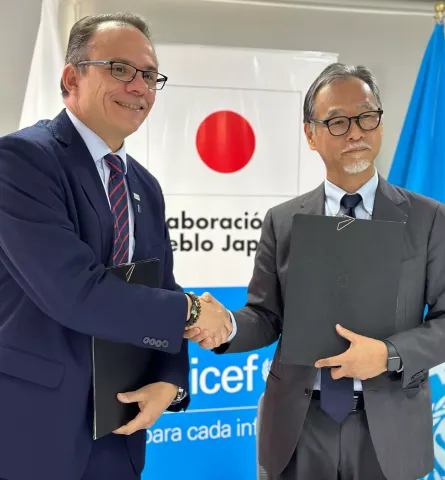
“Migration is driven by poverty, violence, lack of opportunities and family reunification,” says Estuardo Sanchez, UNICEF Child Protection Officer. “Through our partnership with the Government of Japan and organizations like Pop Noj, we’re helping families like Yesenia’s rebuild with dignity and community support.” In 2024, over 76,000 Guatemalans, including 8,400 children, were returned, with 51% identifying as Mayan. UNICEF’s efforts, including reintegration workshops, are creating networks of solidarity, helping families overcome isolation and stigma.
Yesenia now sees a future for her family. “We’re not alone anymore,” she says.
*Fictitious name to protect their identity.