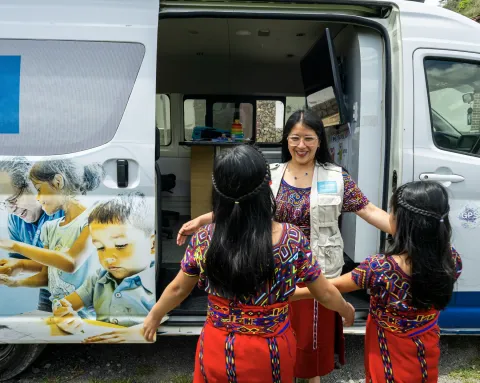
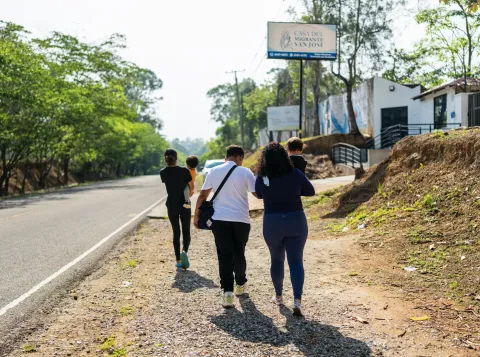
The Government of Japan and UNICEF sign a cooperation agreement to strengthen care and response for migrant children

- Español
- English
Guatemala, 31 January 2025. The Government of Japan and the United Nations Children’s Fund (UNICEF) signed a cooperation agreement today to invest in the protection of girls, boys, adolescents, and women in vulnerable situations and in the context of human mobility. The agreement represents a contribution from the Government of Japan to Guatemala, through UNICEF, of US$3.3 million over a two-year period.
The event was led by the Vice President of the Republic, Karin Herrera, as Guest of Honor; His Excellency Mr. KUWANA Ryosuke, Ambassador of Japan to Guatemala; and Manuel Rodríguez Pumarol, UNICEF Representative. This agreement holds special significance as one of the first actions in the commemoration of the 90th anniversary of diplomatic relations between the Government of Japan and the Government of Guatemala.
As Guatemala is a country of origin, transit, return, and destination for people on the move—including children, adolescents, and their families—and in the face of growing migration flows, it is increasingly important to strengthen service delivery, especially for children and adolescents, whether accompanied or unaccompanied, as well as family groups, both returnees and those in transit.
From January to December 2024, more than 76,000 Guatemalans were returned, of whom more than 8,400 were children[1]. Forty per cent were girls and female adolescents, and 51 per cent self-identified as belonging to a Mayan people[2].
This reality underscores the importance of collaboration and coordination among different institutions and sectors to improve humanitarian interventions through a comprehensive, human rights–based approach.
“We are very pleased to once again collaborate with the Government of Guatemala, this time through UNICEF, on this important issue of human mobility. Children and adolescents who migrate need protection from exploitation, violence, and organized crime, and they need their basic rights and access to essential services to be guaranteed,” said KUWANA Ryosuke, Ambassador of Japan to Guatemala.
UNICEF’s work, in support of national efforts and with funding from the Government of Japan, will focus on four strategic areas:
- Strengthening government reception centers and shelters with adequate infrastructure and specialized human resources.
- Improving civil society spaces that provide care for children, adolescents, women in vulnerable situations, and their families.
- Expanding and strengthening support for family reintegration in communities of origin through improved infrastructure at the departmental level for the Secretariat of Social Welfare of the Presidency (SBS), hiring psychosocial support teams, and providing mobile equipment.
- Expanding mechanisms and information channels on migration rights, the risks of irregular migration, gender-based violence, and the prevention of sexual exploitation and abuse.
These actions will be implemented in nine departments (Guatemala, Quetzaltenango, San Marcos, Huehuetenango, Quiché, Petén, Alta Verapaz, Izabal, and Chiquimula), as they are migration routes, border points, and/or key places of origin for unaccompanied children, in order to follow up on family and community reintegration, in coordination with the Guatemalan Migration Institute (IGM) and the SBS.
“Violence, poverty, and the effects of climate change are pushing more children and families across the region to seek new opportunities each year. This unprecedented migration flow requires renewed commitment from Governments to provide adequate responses in line with international standards, alongside the efforts of society, the international community, faith-based organizations, and the private sector. Children are children, wherever they come from, and they travel with all their rights,” said Manuel Rodríguez Pumarol, UNICEF Representative in Guatemala.
“As we shared in the Government’s first report, this year we have prioritized implementing the Return Home Plan, because we firmly believe in every child’s right to grow up in an environment of protection and dignity. We are carefully preparing to welcome back our families and fellow citizens who return to the country, offering comprehensive care that ensures protection, reception, and reintegration with opportunities. Therefore, I thank and celebrate this agreement between the Government of Japan and UNICEF, which responds to the needs of children and young people in situations of mobility and strengthens the Government’s commitment to their well-being,” concluded Dr. Karin Herrera, Vice President of the Republic.
[1] According to figures from the Guatemalan Migration Institute (IGM).: https://igm.gob.gt/informes-estadisticos/
[2] According to figures from the Guatemalan Migration Institute and the Secretariat of Social Welfare of the Presidency: https://infounitnca.iom.int/retornosguatemala/
Media contacts
Acerca de UNICEF
En UNICEF promovemos los derechos y el bienestar de todos los niños, niñas y adolescentes en todo lo que hacemos. Junto a nuestros aliados, trabajamos en 190 países y territorios para transformar este compromiso en acciones prácticas que beneficien a todos los niños, centrando especialmente nuestros esfuerzos en llegar a los más vulnerables y excluidos, en todo el mundo. UNICEF responde en las emergencias protegiendo los derechos de los niños. En coordinación con los asociados de las Naciones Unidas y los organismos humanitarios, UNICEF pone a disposición de las entidades que colaboran con él sus servicios singulares de respuesta rápida para aliviar el sufrimiento de los niños y de las personas responsables de su cuidado.
Obtenga más información sobre UNICEF Guatemala y su labor siguiéndonos en: Facebook, Instagram, Twitter, YouTube, Tik Tok, Linkedin y Medium