ASWA II: How Evaluation helped shape a better future for WASH in sub-Saharan Africa
A multi-country evaluation of ASWA II shows how learning and adaptation improved WASH services for millions, driving equity, resilience, and future investment across sub-Saharan Africa.

ASWA II: How Evaluation helped shape a better future for WASH in sub-Saharan Africa
Between 2019 and 2023, a quiet but powerful transformation unfolded. In communities where clean water and safe sanitation can mean the difference between survival and suffering, the Accelerating Sanitation and Water for All Programme (ASWA II), supported by the Government of the Netherlands, was doing more than laying pipes; it was laying the foundation for health, dignity, and lasting change.
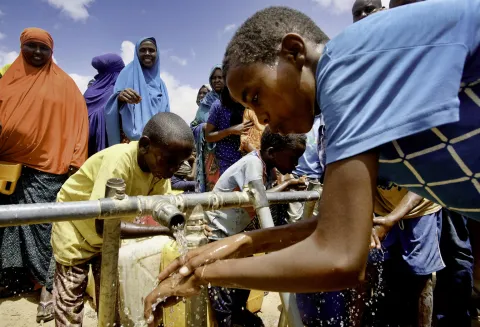
ASWA II brought safe water to over 1.4 million people and improved sanitation for more than 3.6 million in Burkina Faso, Côte d'Ivoire, Mali, Mozambique, Niger, Nigeria, Somalia, and the United Republic of Tanzania. The programme upgraded WASH services in 465 schools and 243 health facilities, trained and engaged communities on good hygiene practices across eight sub-Saharan countries. Behind these numbers was a deeper story, one of learning, listening, and adapting.
Asking Tough Questions
To understand what worked and what could work better, UNICEF commissioned a rigorous, multi-country end-line evaluation, supported by the Government of the Netherlands. This was not just about accountability; it was about learning, adapting, and improving.
Using interviews, surveys, country case studies, and document reviews, the evaluation examined value for money, equity, sustainability, and how WASH services were being delivered to communities. It asked tough questions and listened closely to the voices of communities, partners, and country teams.
And it led to action.
- Climate resilience was prioritized
- Focus on inclusive WASH finance strategy development
- A gender landscape analysis informed targeted equity measures
- A revised planning and monitoring tool was developed to better align with UNICEF’s systems
- Sustainability checks became part of routine country-level processes and
- Cross-sectoral coordination improved, especially between WASH and nutrition programmes.
The Power of Partnership and Investment
The donor’s active engagement throughout the evaluation process had an influence. It ensured the findings were relevant, grounded, and timely. That, in turn, helped reinforce trust and laid the foundation for future investment, helping to mobilize resources for ASWA III, a powerful example of how evaluation can drive investment and impact.
Evaluation as a Catalyst for Progress
ASWA II’s evaluation was not just a look back but a tool for moving forward. It helped country teams refine their strategies, strengthen collaboration, and laid the groundwork for scale.
It reminded us that evaluation is not a separate exercise—it’s part of how we work: asking better questions, listening more deeply to feedback, and using what we learn to deliver better results for children and communities.