Unlocking Literacy
A remedial programme is enabling children in Egypt to close learning gaps by improving their Arabic language skills
- English
- العربية
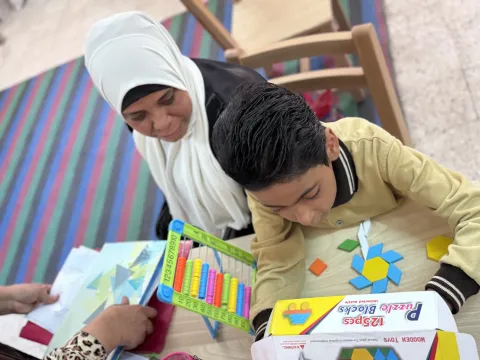
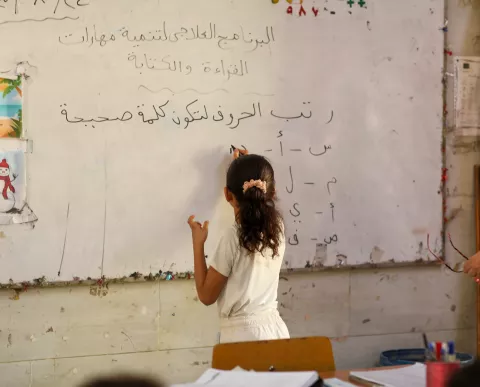
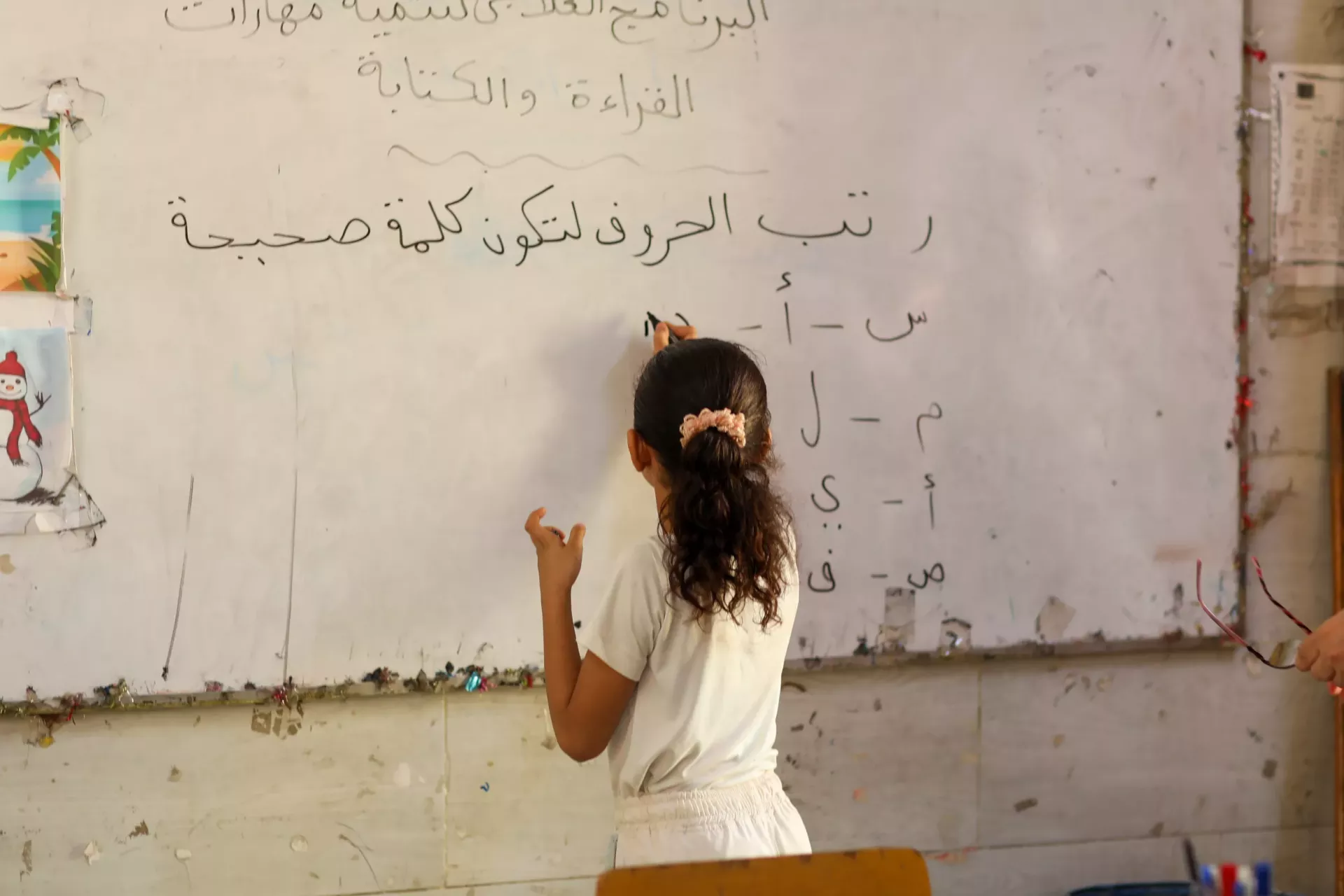
In a bright classroom in Cairo, the sound of children reading fills the air. Small hands grip pencils, eyes scan letters, and voices rise with growing confidence. For many of these students, this moment marks a turning point.

UNICEF/Egypt 2025/Ibrahim Mohamed
Ahmed’s face lights up as he carefully writes his name across the page. Just months ago, he struggled with Arabic letters. “Before I joined the programme, I was facing difficulties with reading and writing. Now I can write well and read stories. I feel proud of myself,” he says with a smile.

UNICEF/Egypt 2025/Ibrahim Mohamed
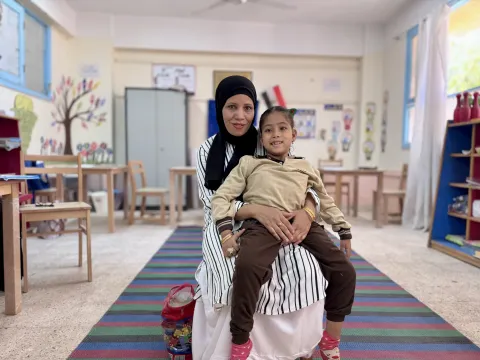
For Tasneem, the change came when she stopped feeling shy about speaking in class. “They taught me how to form words, read them, and understand them. Now I feel proud, and I am not shy anymore,” she shares.

UNICEF/Egypt 2025/Ibrahim Mohamed
Hesham, too, beams with confidence as he flips through a children’s book. “I never thought I could read a book by myself. Now I can read and write, and I feel excited to learn more every day,” he says proudly.
Ahmed, Tasneem, Hesham and around 200,000 primary school students across Egypt have benefited from the National Programme for Developing Arabic Language Skills, a 12-week remedial initiative by the Ministry of Education and Technical Education and UNICEF, with the generous support of the German Cooperation through the German Development Bank (KFW).
Many of these children had fallen behind in basic Arabic reading and writing. Limited access to learning support at home, and lack of focused and structured teaching and learning on foundational literacy left them struggling to keep up. Parents often worried but didn’t know how to help. One mother admits, “I used to feel sad because my daughter couldn’t read like the others. But now she reads to me at home, and I feel proud.”

Teachers have also witnessed the change first-hand. With new training and tools provided by the programme, they could tailor lessons to struggling learners and encourage children to rebuild their confidence. “Before, they were shy and afraid of making mistakes,” recalls one teacher. “Now, they raise their hands, they participate, and they believe in themselves.”
This progress is not just about learning to read and write. For children, it means opening doors to all subjects, improving their chances of success in school and beyond. For families, it brings hope. For teachers, it affirms the power of patient guidance and the right support.
In September 2025, UNICEF and the Ministry of Education and Technical Education celebrated the success of Phase One of the programme, which directly reached around 200,000 students and trained over 6,000 teachers.
Literacy scores increased by 17 per cent (with the largest gains for students who started with the lowest scores). The share of students scoring zero fell from 1 in 3 to less than 2 per cent. Girls made even greater progress than boys, especially those starting from behind. Teachers reported strong uptake of new pedagogical methods, with 95 per cent implementing the programme as designed.
Building on these results, Phase Two was launched to give every child the chance to unlock the power of words and take steps toward a brighter future.