Making Room for Every Learner
For Mazen, inclusive education opened a new path to learning

- English
- العربية
When |Mazen was about to start kindergarten at age five, Manal entered his life as a caregiver. His biological mother had been diagnosed with cancer and was undergoing a difficult course of treatment that began when Mazen was still an infant. At a crucial stage in his development, Mazen needed additional support to communicate, learn and connect with those around him. Recalling their first meeting, Manal says: "I noticed that he would repeat words and questions. He didn't interact or express himself, and even when he was in pain, he wouldn't tell anyone or express what he was feeling."
Manal consulted specialists to better understand Mazen’s needs. Their assessments differed: some suggested he might be on the autism spectrum, while others believed he had communication difficulties that could be linked to his early social experiences. She also sought support from speech therapists to help him communicate and express himself, beginning an intensive series of sessions to prepare him for starting school the following year.
However, Mazen faced another barrier. His father was initially reluctant to send him to school. He believed they could simply register him without having him attend regularly because he did not think Mazen would benefit from school.
Such concerns are not uncommon among families of children with disabilities. Some families may question whether their children will benefit academically from school, while others worry about their safety, particularly when a child has difficulty communicating or reporting what has happened to them. Yet, Manal saw beyond academic performance: she recognized how important school could be for Mazen’s learning, development, and social interaction. When Mazen enrolled, the school identified that he might benefit from additional support and advised Manal to seek further assessment.
When teachers or parents feel a child might need extra learning support, they can request a formal evaluation from the relevant education authorities. If the assessment confirms that a child needs additional support, accommodations are provided in accordance with relevant regulations. These may include support from an educational or family aide and measures to facilitate the child’s participation and mobility at school.
Mazen was subsequently enrolled in the inclusive education programme in Aswan, joining thousands of other students receiving additional support to participate and learn at school.
Manal shares: "At first, I used to bring him and stay with him the whole day. I saw that the teachers were working well with him and that he was making academic progress. This soon encouraged me to drop him off and leave him with them for the full day."
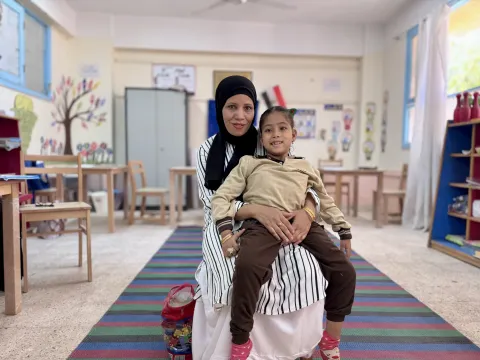
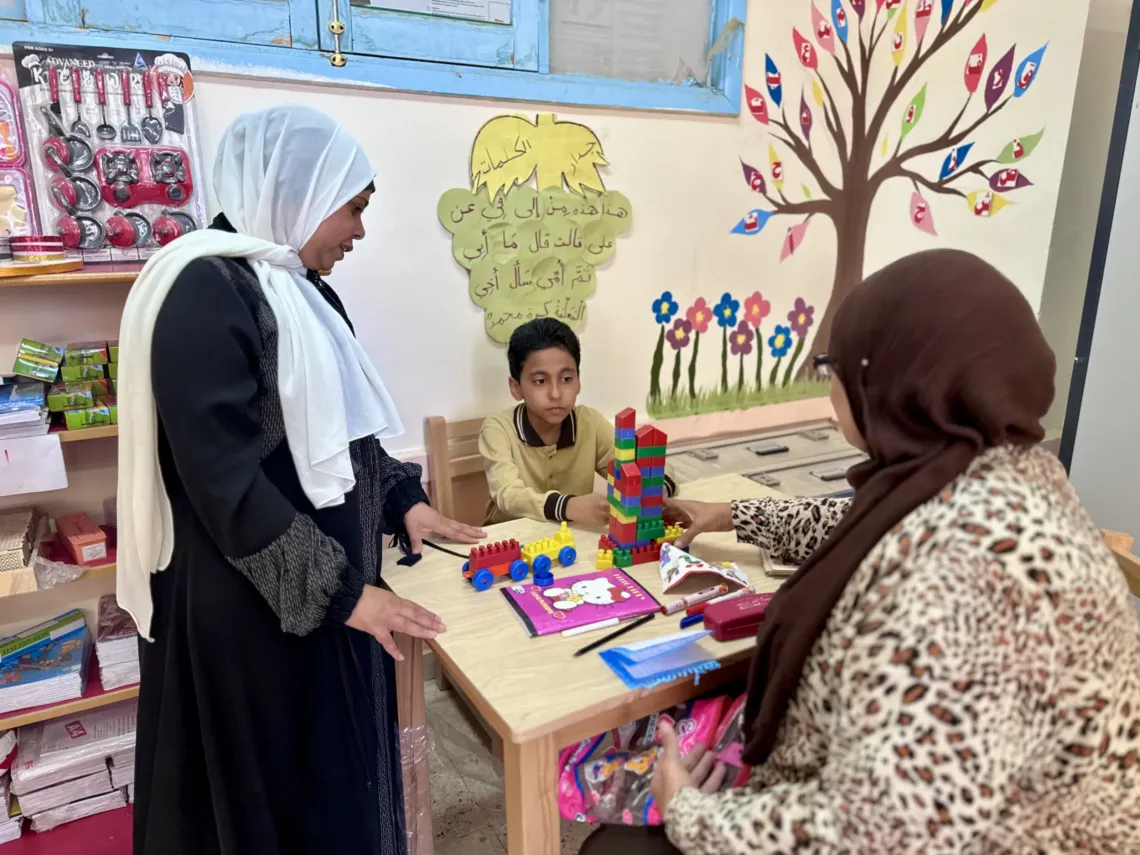
Today, thanks to support provided through UNICEF, with funding from the Italian Agency for Development Cooperation (AICS), in partnership with the Ministry of Education and Technical Education, Mazen receives additional learning support at school and has opportunities to explore his interests in drawing and clay modeling inside the school’s "Resource Room."
The Resource Room is equipped with learning materials and games that support children in developing literacy, numeracy and other skills. Teachers are also trained to identify and respond to different learning needs, helping children like Mazen participate more fully in the classroom.
This support is part of a broader capacity-building programme for teachers in Aswan under the Comprehensive Inclusion Programme, which aims to strengthen teachers’ ability to support children in inclusive education settings.
This Comprehensive Inclusion Programme, led by Egypt’s Ministry of Education and Technical Education in partnership with UNICEF, aims to strengthen access to quality, inclusive education so that children with different learning needs and abilities can learn and participate alongside their peers.
Supported by partners including the Italian Agency for Development Cooperation (AICS), the German Federal Foreign Office, the European Union, the Joint Platform for Migrants and Refugees, and the Prospects Programme, the initiative is currently implemented in 1,000 schools, with a target to reach 2,000 schools by 2027 in Egypt.