Egypt’s National Literacy Mission
Building a Future Where Every Child Can Read
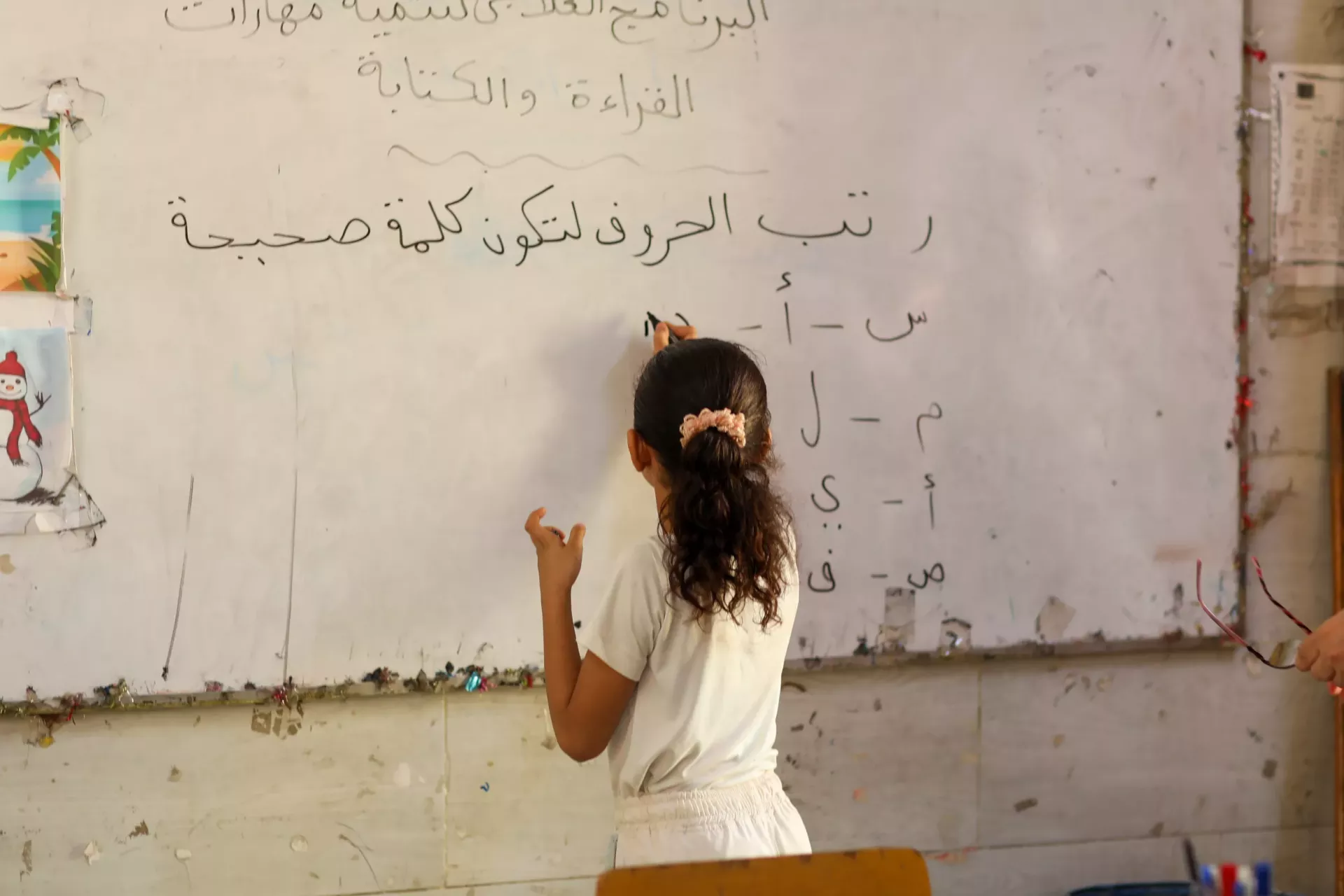
In a classroom in Alexandria, nine-year-old Fairouz stands in front of her classmates, clutching a book in trembling hands. Just months ago, she would have stared silently at the page, unable to grasp the words. Today, she reads. Slowly, hesitantly, but aloud. Her classmates cheer, and her teacher beams with pride.
For Fairouz, this is not just about making it through a paragraph. In that moment, she steps into a future filled with opportunity, dignity and choice.
The crisis we cannot ignore
We often assume that by age 10, reading just “happens” – that schools will deliver it, or children pick it up along the way. But unlike spoken language, reading does not just happen, it must be taught, practiced, and supported. And millions of children are missing out.
Globally, nearly two-thirds of ten-year-olds in low- and middle-income countries cannot read and understand a simple text.
Egypt faces the same challenge. Despite near-universal primary enrollment, more than half of Egyptian ten-year-olds cannot read and understand a simple Arabic paragraph. By the time they reach eighth grade, nearly three-quarters struggle with basic math, and more than half with basic science.
The reality behind these statistics is a story of children like Fairouz and Ahmed: children who carry the same hopes and ambitions as any other, and the possibility of a brighter future if given the chance.
What we face is today’s global learning crisis. If we do not take urgent action, it could become tomorrow’s generational catastrophe.
Why reading by ten matters, for everyone
Reading by age ten is more than a milestone. It is the foundation of all future learning. Without it, children cannot unlock the logic of mathematics, explore the wonders of science and the universe, grasp the technologies shaping modern life, connect with history or make sense of the rules that guide their society.
Children who learn to read early in elementary school keep learning. They can think critically and adapt to a fast-changing world. Those who don’t, fall further behind with each passing year. They are more likely to drop out, face risks like early marriage or child labour, and grow into adults with fewer opportunities and less empowered to shape their communities.
The economic toll is enormous: trillions of dollars in future earnings are lost when children cannot read.
But the reverse is equally true: If every child could read by ten, global GDP could rise by US$6.5 trillion1 annually. For Egypt, this would mean not just stronger growth, but greater equity, dignity, and opportunity for millions of families.
Egypt is standing at a turning point. In just 20 years, it will be home to one of the largest working-age populations in the world. That’s an incredible opportunity, if we equip today’s children with the skills they need to thrive.
By investing in learning now, Egypt can transform its young generation into the driving force of its future success.
Understanding the barriers
The challenges start early.
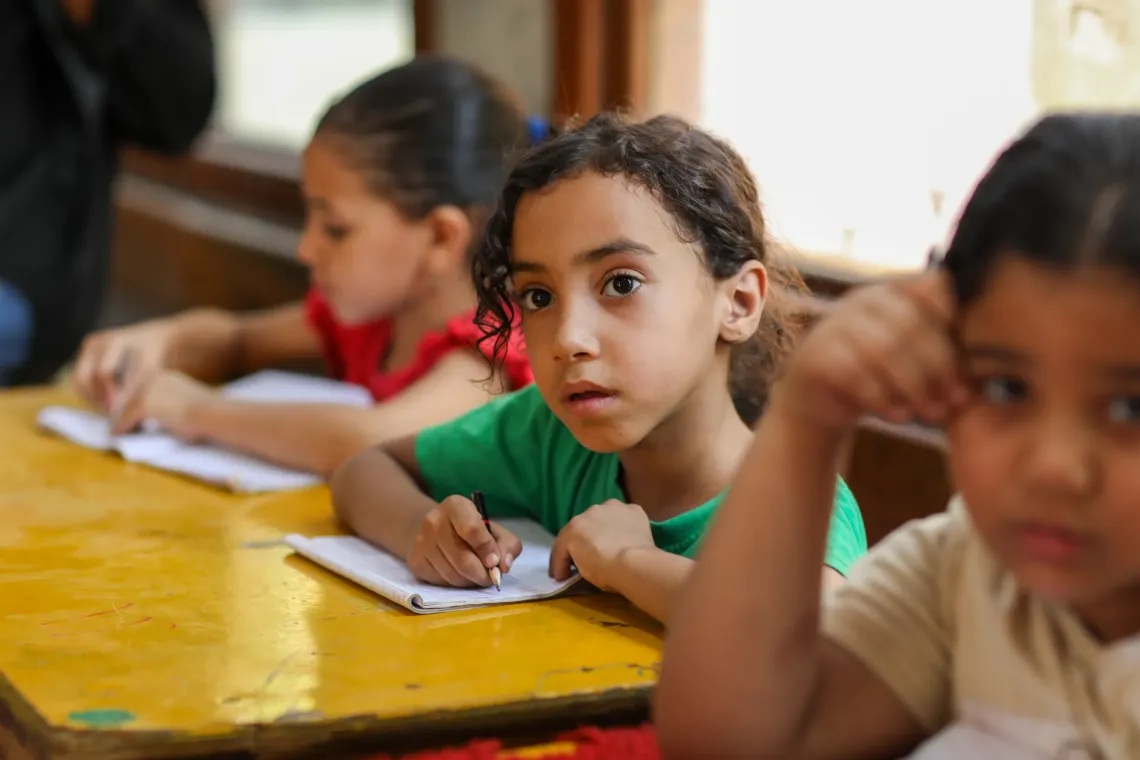
Fewer than one in four kindergarten-aged children in Egypt are enrolled in government-certified kindergarten classes. About half attend non-formal, largely unregulated private or community preschools – a critical missed opportunity to ensure quality early learning and school readiness.
Even for those who make it to school, real learning can remain out of reach. Many children begin Grade 1 without the foundational skills they need, starting behind the curriculum and continuing to fall further behind, often without ever catching up.
Despite teachers’ strong commitment and efforts to manage large class sizes, many children are learning in double-shift schools and classroom environments that are not conducive to effective learning.
Egypt’s education system is stretched to its limits, serving the largest student population in the Middle East with limited resources.
Overcrowded classrooms, overstretched teachers, and constrained learning environments leave families, especially the most marginalized, bearing the burden. For millions of children, this means potential left unrealized.
A Bold National Response
Egypt is refusing to stand still. With clear leadership and determination, the country is confronting the learning crisis head-on and driving reforms that can deliver lasting results at scale.
Government leadership is evident. At the Transforming Education Summit in 2022, Egypt endorsed the global Commitment to Action on Foundational Learning, pledging to halve learning poverty. It is bold and ambitious, but one the government is pursuing with clear resolve.
Foundational Literacy and numeracy is now a core government education reform agenda, backed by the UNICEF, World Bank, Sawiris, German Development Cooperation and many others Together, these efforts reflect a coordinated push to transform learning outcomes nationwide.
For UNICEF, this is not just another programme. It is a global and national strategic priority, and central to our long-standing partnership with the Ministry of Education and Technical Education. It is fully aligned with Egypt’s Vision 2030, particularly its Education and Training Pillar, and with the Government’s broader human development agenda that places people at the centre of sustainable development. By doubling down on foundational skills since the disruptions caused by COVID-19, UNICEF is directly supporting national priorities to equip every child with the knowledge and competencies needed to learn, thrive, and contribute to Egypt’s future.
The National Literacy Mission: A Bold Promise for Egypt’s Future
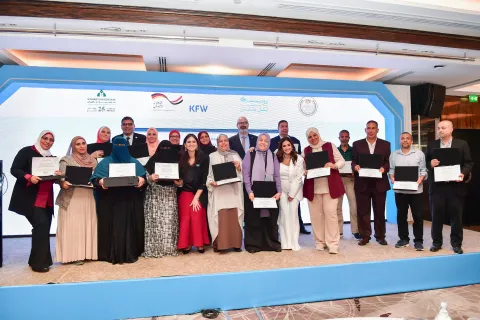
In 2025, the Government of Egypt and the Ministry of Education and Technical Education, with UNICEF and partners, particularly the German development cooperation, launched an ambitious national literacy mission with one clear goal: eliminate learning poverty.
The approach is smart and practical. Every child passes through primary school, resources are directed where they matter most: into teachers, textbooks, targeted programmes, and assessments. This makes it one of the most cost-effective and high-return investments in a country’s future.
At its heart is a simple but transformative goal: ensure every child can read and count with confidence. New Arabic textbooks, designed on the best evidence of how children learn, are already reaching 13 million students. Teachers, the backbone of the system, are receiving practical training and coaching so they can better support children at all levels. For those who have fallen behind, a transformative 60-hour remedial programme offers a crucial second chance, guided by regular assessments that help tailor lessons to each child’s needs.
But learning doesn’t stop at the classroom door. Parents are being given tools to make reading part of daily life, while carefully chosen technology helps teachers personalize feedback and children practice at their own pace.
At the same time, systemic reforms such as early learning assessments and stronger national data systems are being put in place to make sure these gains last.
Early results and what they mean
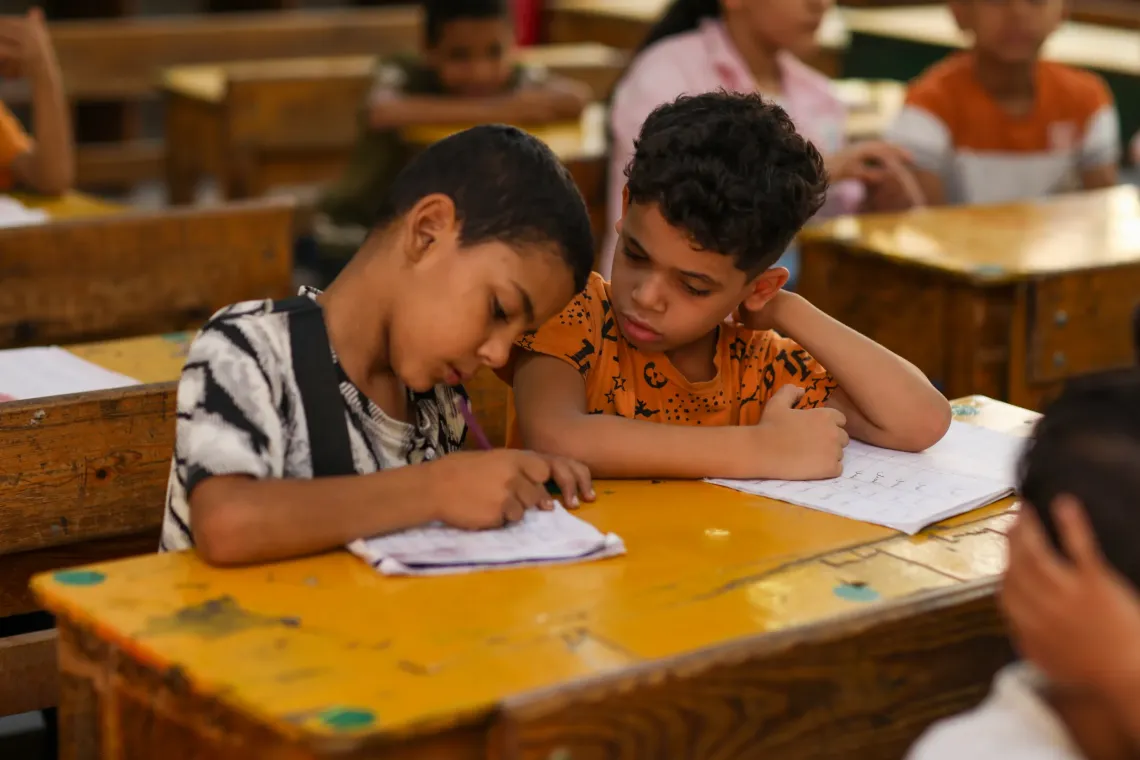
The results are promising2: The first phase of implementing Egypt’s 60-hour remedial programme, which reached half a million students across 1,000 schools, found that literacy scores rose by 17 per cent compared to those didn’t participate in the programme, and the share of children unable to recognize even a single letter dropped from one-third to less than 2 per cent.
The programme is also reaching children who are often left furthest behind, including children with disabilities and on the move, helping ensure that improvements in foundational literacy are inclusive.
Teachers themselves embraced the change, with 95 per cent saying they are now applying the programme as designed.
These shifts show what’s possible: well-designed interventions, delivered at scale, can transform learning outcomes within months. The programme is now into its third phase, impacting 3,000 students and 1.5 million students.
For students and teachers, the change is deeply personal.
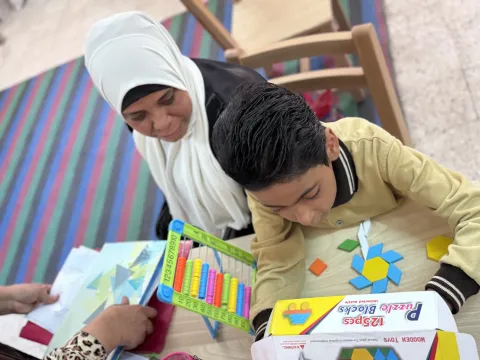
“Before the programme, I didn’t know how to read or write,” says Ahmed, his face lighting up as he traces his name on the page. “Now I can read stories and write my name. It makes me proud.”
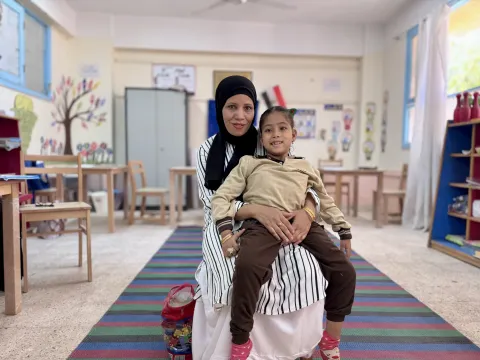
Naglaa, a lead teacher in Alexandria, reflects on the transformation in her classroom: “This programme changed us as teachers. I feel a stronger connection to my students, and I can finally reach the quiet ones who used to hide when it was time to read.”
Building on this progress, the Ministry has launched the second phase of the National Programme for Developing Arabic Language Skills, ensuring gains are sustained and expanded.
This is not a short-term project. It is a comprehensive, wide-sweeping reform effort. Few investments deliver such powerful returns. For a relatively low cost per child, the impact lasts a lifetime, strengthening not only individual futures but also Egypt’s social and economic prosperity.
Literacy is everyone’s business
The future of this mission does not rest with government alone.
Literacy is a shared responsibility, one that reaches far beyond the classroom. Every child’s ability to read depends on the collective efforts of families, communities, teachers, leaders, and society as a whole.
Parents can transform lives simply by reading ten minutes a day with their child. Communities can create safe spaces where children learn without fear of judgment. Civil society can champion inclusion, and the private sector and faith leaders can use their influence and resources to make reading a right for every child.
As one mother puts it: “I used to feel sad because my daughter couldn’t read like the others. But now she reads to me at home, and I feel proud.”
And at the centre of it all are teachers. With the leadership of committed headteachers and the dedication of teachers in classrooms across the country, they are the driving force behind this transformation. Through their patience, persistence, and daily guidance, they form the heartbeat of this mission, ensuring that every child not only learns to read but also learns to love learning.
“Through this programme, we’re helping children build a strong foundation for learning,” said Naglaa Ragheb, Lead Arabic Teacher. “The skills we cultivate today will shape the future: the doctor who heals us, the officer who protects us, the engineer who builds our homes, and the teacher who guides the next generation.”
Writing Egypt’s Future
With strong government leadership, broad partnerships, and early success on the ground, Egypt is emerging as a reform leader –showing the region and the world how to tackle learning poverty not with promises but with results.
With sustained investment and collective action, Egypt can secure a future where every child not only goes to school but truly thrives in it, unlocking the country’s greatest resource: the potential of its people, a cornerstone of Egypt’s Vision 2030.
From Alexandria to Upper Egypt, children like Fairouz and Ahmed, are turning hesitant mumbling into confident voices. Each of these individual triumphs is part of a broader shift: a system adapting, a teaching force motivated, parents becoming active partners in learning, communities rallying around their schools, and a government resolved to leave no child behind.
Because when a child learns to read, they don’t just master a skill, they begin to write their own future. And with every child who succeeds, they help write Egypt’s collective future.