Medical Deception
Naja's daughter nearly died because of FGM medicalization
- English
- العربية
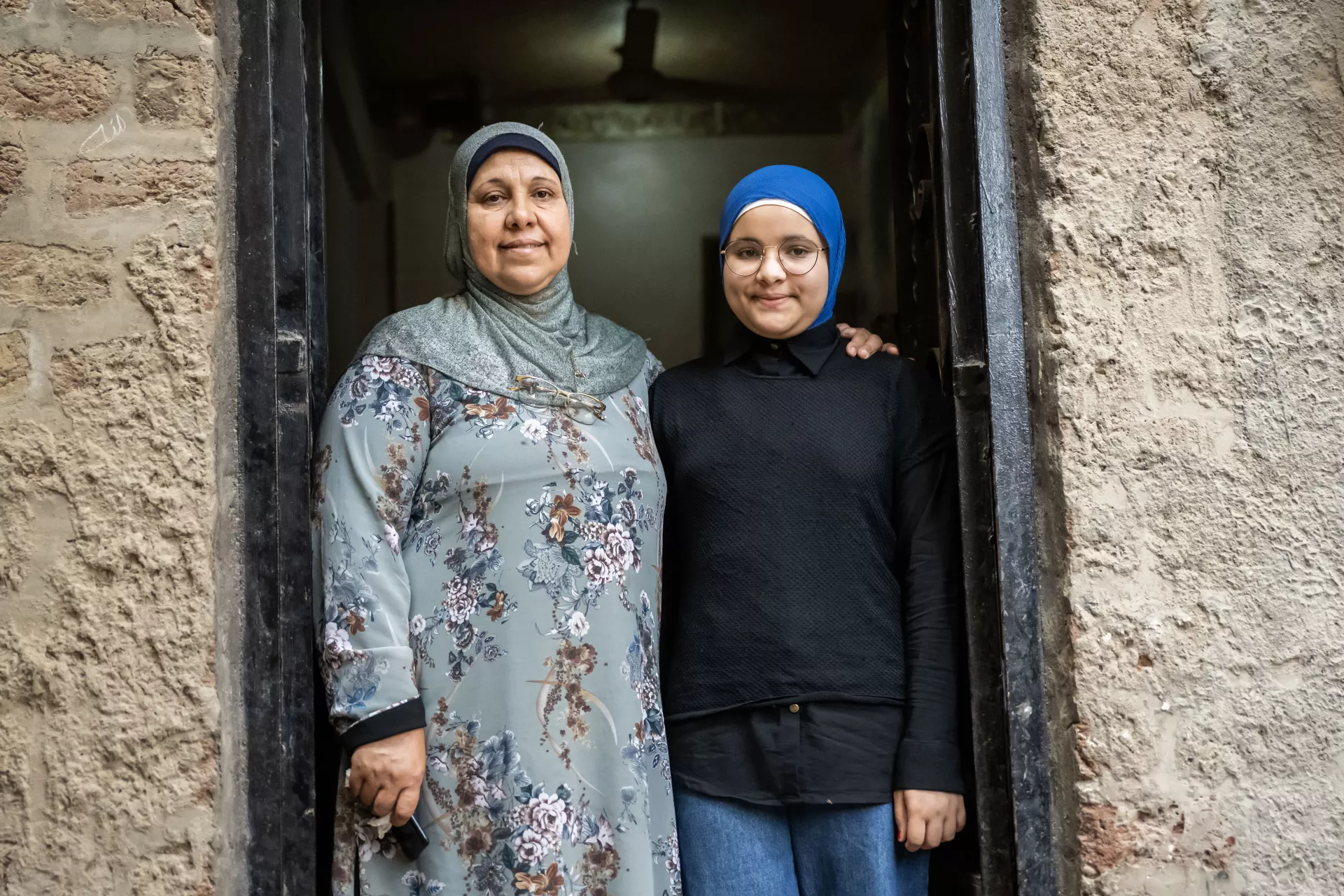
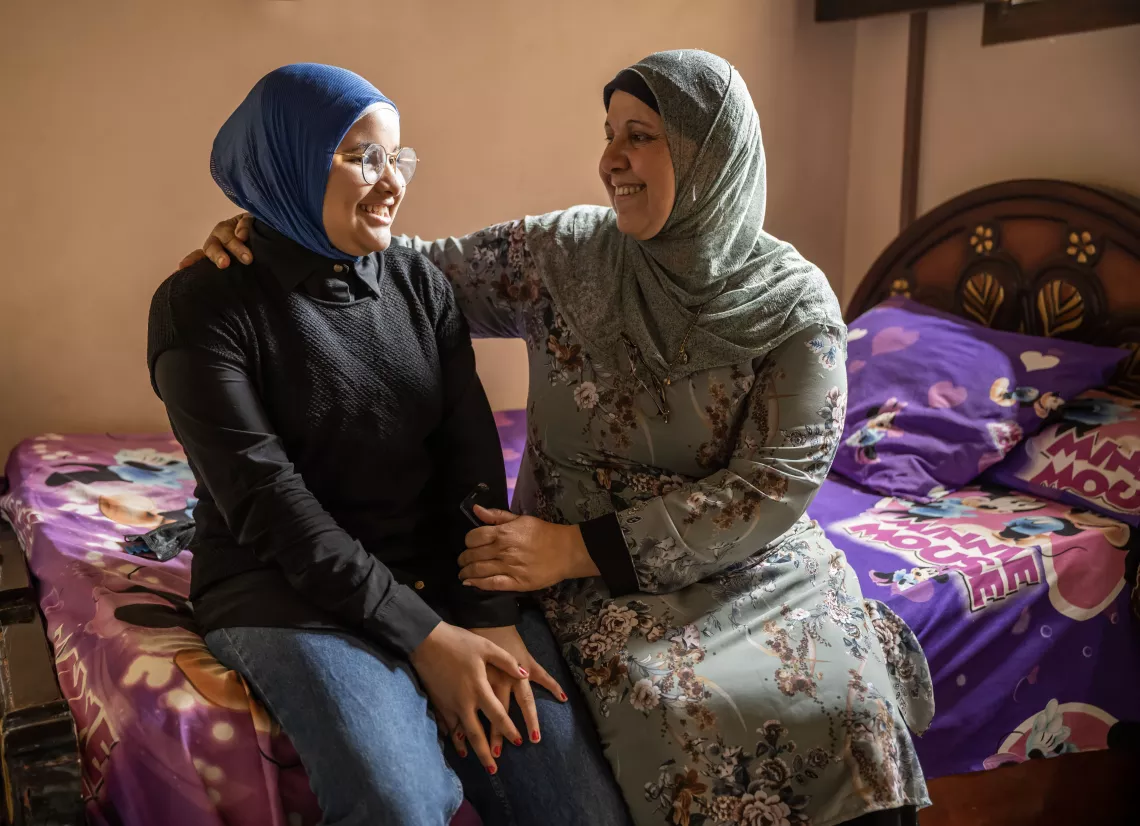
In the village of Al-Shamiya in Assiut, Naja lives with a great sense of guilt towards her only daughter.
After more than 4 years, Naja was finally able to tell her story to UNICEF in order to raise awareness among other mothers about the myth of "medicalized Female Genital Mutilation (FGM)." Naja says: “FGM is a deeply rooted tradition in our village; everyone must ‘purify’ their daughters. My mother-in-law suggested that the midwife would cut my daughter, but I disagreed and insisted on getting a doctor to do it.”
What is FGM medicalization?
In its 2021 edition, the Egyptian Family Health Survey showed a significant decrease in the rate of FGM in Egypt. Despite this, Egypt still ranks first in the rates of FGM medicalization. This surgical procedure is not mentioned in medical textbooks. It is considered a medical crime according to the WHO for causing mutilation and/or removal of the clitoris, which is a vital organ in the female body (and not just a piece of excess skin as in the case of males).
Recently, many parents have turned to medical staff informally to medically cut their daughters, believing that this will protect them from complications such as bleeding and wound contamination.
But in reality, this does not protect the girl from psychological harm, and loss of confidence and dignity. In addition, a surgical procedure without guidelines can cause serious complications up death. Perhaps the most famous victim of FGM medicalization was 12-year-old Nada who died in Assiut Governorate while undergoing medicalized FGM at the hands of a doctor in 2020. Another girl also died in a similar circumstance in Minya in 2007, an incident that made the state consider its dates (June 14th) as the National Day for the Elimination of FGM.
Well-played trick
Najat went to consult a famous doctor who comes to the village occasionally to cut girls. He insisted on examining her first because, according to his claim, there are girls who need circumcision and others who do not, and he does not cut girls under the age of 9 (!) Najat was a bit reassured: "His words made me feel convinced that he knows what he was doing." Najat agreed with the doctor that he would come for the procedure at home.
A domed day
On the day of her daughter's procedure, she recounts: "The most difficult moment was when he took my daughter from my arms. She kept hugging me, crying, screaming and begging me not to do this to her as she’s just a kid.”
With the intense resistance and violent movements of the girl, the doctor injured her larger than usual, causing severe bleeding from which she suffered for ten days. She almost lost her life.
All this made Najat doubt if resorting to a doctor to perform this procedure (or doing it in the first place) was a good idea.
Realizing the trap
Najat began researching and asking some members of the Assiut Association for Childhood and Development NGO who provide awareness to women and girls across the governorate about medicalized FGM. She discovered that she was one of thousands of victims exploited for financial profit by greedy doctors and nurses.
The health educators also corrected many of her misconceptions according to the trainings they received from UNICEF on FGM's health and religious aspects. Najat realized that she had committed a great sin that would affect her daughter forever.
In tears, Najat said to her daughter: "I hope you forgive me and don't be upset. I didn't want to hurt you, hear your screams and see you bleed in front of me. But it was out of my hands."
National and global efforts
UNICEF - in cooperation with the Egyptian government, the National Committee for the Elimination of FGM and civil society - undertakes and facilitates several initiatives to educate and correct misconceptions about FGM.
The organization works to address and protect against female genital mutilation on several levels, including strengthening national child protection systems such as the 16000 Child Helpline. It also pays special attention to cooperating with Al-Azhar Al-Sharif, the Egyptian Coptic Church, and the Ministry of Endowments (the most important religious leaders in the country) to train imams and priests. To spread awareness about the issue and not link it to religion.
Since 2008, UNICEF has worked in collaboration with the United Nations Population Fund to implement the Joint Program to Eliminate Female Genital Mutilation in 17 countries. The program links shifting social and gender norms - which often lead to FGM - with laws prohibiting the practice, as well as supporting access to child protection and reproductive health services for girls and women at risk or who have already experienced FGM. This program is supported by the governments of Belgium, Canada, the European Union, France, Germany, Iceland, Italy, Luxembourg, Norway, Sweden, Spain, the United Kingdom, and the United States.
On June 14, 2019 - National Day for the Elimination of Female Genital Mutilation - the National Committee for the Elimination of Female Genital Mutilation was established under the chairmanship of the National Council for Women and the National Council for Childhood and Motherhood, in cooperation with the relevant ministries, specialized national councils, Al-Azhar, the Church, and civil society. With support from UNICEF and the United Nations Population Fund, the committee launched a campaign to confront female genital mutilation under the slogan #Protect_from_FGM.
In 2021, Egypt tightened the penalty for FGM, with non-medical personnel involved in FGM facing a prison sentence of no less than seven years in the case of permanent disability, and no less than 10 years in the case of death due to the procedure.
Recent amendments to the law stipulate that medical workers - such as doctors and nurses - who are convicted of performing FGM could face up to 20 years in prison.
It also expands professional and societal responsibility by closing the private facility where female circumcision is performed if the owner is aware of it, and deleting “medical necessity” as well as Article 61 to confront any attempts to circumvent or evade the application of the penalty for female circumcision.
Finally, penalties were included for those who advocate and promote circumcision, even if it does not result in action.