The young Ukrainians finding independence
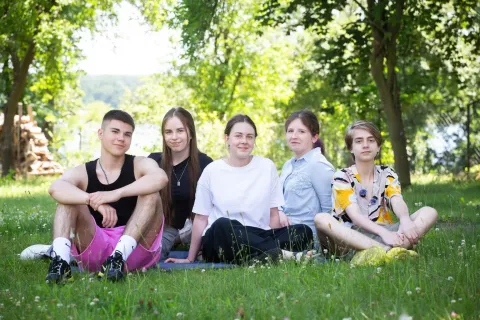
More than 2,500 Ukrainian children from residential care institutions were evacuated to Poland. As many of them turn 18, they are now navigating a new challenge: adulthood – and independent living – in a new country.

- English
- Українська
- Polish
When the war in Ukraine escalated in February 2022, more than 4,000 children living in residential care institutions were evacuated to safety abroad. Around 2,500 were placed in 27 different locations in Poland, where the Ukrainian authorities, the Government of Poland, local authorities and social services, together with UNICEF, cooperated closely to ensure their protection and care.
As these young people turn 18, they face another major transition: leaving residential care and starting life on their own. For many, this means finding a place to live, securing a job or continuing education, managing finances, and making everyday decisions independently for the first time. For evacuated youth from Ukraine, these challenges are even greater, as they begin adulthood in a new country.
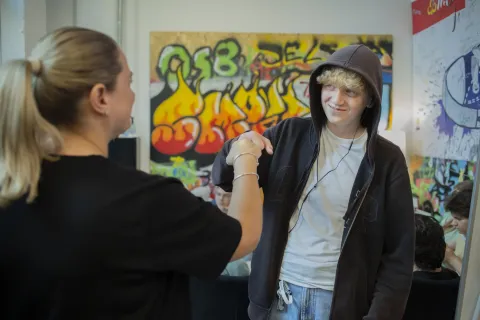
But thanks to devoted partners in Poland, they do not have to face this transition alone: They are supported by specialized social workers, known as independent living assistants. While similar roles exist within Poland’s social welfare system, the support of independent living assistants for children evacuated from Ukraine was made possible through UNICEF’s support and close cooperation with national partners.

The process starts with creating an ‘Individual Independence Plan’ with each young person to ensure it is tailored to their individual needs.
“The plan sets out the main goals and the steps needed to reach them,” says Marcin, an independent living assistant in Słupsk, northern Poland.
“But ultimately it is the young person who decides how they see their future. Some choose to return to Ukraine or reconnect with their biological family. Others decide to stay here and build their lives locally. Our role is to support them and adjust our guidance to their choices.”
Marcin often focuses on practical matters: helping young people search for housing, contact schools, enroll in courses, prepare a CV or find employment.
Marcin also emphasizes financial literacy and practical life skills.
“For topics like budgeting and understanding the value of money, I always include them,” Marcin says. “We talk about the current prices, the real cost of renting a place, and other daily expenses – things they might not realize.”
The District Family Support Centre also provides personalized legal support through its in-house lawyer, and connects interested youth with the local labour office to continue education or participate in courses.
Housing is often one of the biggest challenges. Those who continue their education can remain in their current accommodation until the age of 25. Those who do not, however, must arrange their own accommodation when they turn 18. Sometimes employers provide a place to stay, or young people decide to share apartments with friends. Other times, independent living assistants help with finding affordable options.
As crucial as practical guidance is, emotional support is equally important.
“The transition from care to independent living involves a range of developmental and practical adjustments, which may be more complex for young people with experiences of war, displacement, or other forms of trauma,” says Julia Durska, Child Protection Officer at the UNICEF Refugee Response Office in Poland.

Young people can attend regular meetings with a psychologist, and those already living independently can request additional consultations if needed.
“Everything depends on the individual,” Marcin says. “Sometimes when young people are still living in care and do not yet carry the responsibility of supporting themselves, it may seem they will struggle once they leave.
“But when the moment comes and they realize they truly have to take responsibility, we often see remarkable changes. They begin taking initiative and things start falling into place.”
One example is 19-year-old Andrii, who has just started living independently in the town of Ustka on the Baltic coast.
After the war escalated in 2022, at 16 years old, he was evacuated from his institutional care facility in Ukraine.
At first, he continued studying online within the Ukrainian education system. But by autumn 2023, he began attending a vocational school in Poland, where he trained as a cook.
Despite the challenges of a new language and culture, Andrii quickly learned Polish and adapted to his new school, showing determination and resilience.
When he turned 18, he made a difficult decision: to pause his studies and start working.
Today, he works long shifts in a hotel’s kitchen. While the demands of his job are challenging, Andrii is determined to financially support his grandmother in Ukraine.
But cooking is not his ultimate dream.
“I would really like to study programming,” Andrii says. “I enjoy it very much. But now I live on my own and work 12 hours a day, five days a week. With such a schedule, studying is almost impossible.”
Still, he tries to study on his own for at least an hour a day. “Sometimes progress feels slow. There were moments when I really wanted to give up, but I didn’t,” he says.
Alongside work and studying, Andrii is also taking driving lessons. With his driving test approaching, Marcin has offered to help him practice. “We drove around together so I could get more familiar with the roads,” Andrii recalls. “He even sent me a video from the dashcam so I could remember where the road signs are and feel more confident during the exam.”
Marcin’s support means a lot to Andrii.
“He helps me with problems related to documents or other issues,” Andrii says. “If I know there’s something I don’t understand – rules, procedures, or paperwork – I ask Mr. Marcin right away.”
For now, Andrii has given himself five years to see whether he can build a life for himself in Poland. Long-term, he imagines living in his own house in the suburbs, close to nature and away from the noise of the city.

For Marcin, supporting young people like Andrii does not end once they find a job.
“Even if a young person finishes school and starts working, if later they decide they want to continue their education, they can absolutely count on our support,” Marcin says.
For Andrii, the road to independence is only beginning. Between long shifts in the kitchen, driving lessons and late-night coding practice, he continues to move forward, building his future step by step.
UNICEF and partners provide targeted support to care leavers among children evacuated from institutional care facilities in Ukraine to Poland to ease their transition to independent living. In collaboration with municipal programmes offering vocational training, job counselling, and individualized transition planning, staff works closely with young people through one-on-one sessions to map realistic pathways for education, employment, and housing. Complementary workshops on life skills, financial literacy, job readiness, and safe mobility help them make informed decisions and reduce risks such as exploitation and unsafe employment, supporting safer and more sustainable transitions into adulthood.
UNICEF is currently documenting this model of support for care leavers to share it with both Ukrainian and Polish authorities as an effective approach that can be further applied and replicated in both countries.
This important work for refugee children from Ukraine in Poland is possible thanks to the support and co-funding from the Bureau of Population, Refugees, and Migration of the U.S. Department of State (PRM), the European Union, and the Government of Japan.