‘I wanted to learn how to be fully independent’
When she had to leave Ukraine for Poland, Zoriana encountered numerous challenges – including discrimination and a lack of accessibility. Now a volunteer and advocate for disability rights, she’s discovered both new sense of purpose, and of independence.

- English
- Українська
- Polish
Nineteen-year-old Zoriana vividly remembers the night she knew she had to leave Ukraine. For weeks, she and her mother hesitated to leave, believing their home was safe. But the repeated shelling shattered that illusion. Now, the sky over her hometown in the Lviv region was glowing blood red. With the help of volunteers, Zoriana, who has used a wheelchair since she was four, was evacuated to Katowice, Poland with her mother.
Yet, as she began settling into her new life, another challenge emerged. In June 2022, Zoriana’s mother had to make the difficult decision to return to Ukraine, where the rest of their family remained.
This moment changed everything for Zoriana. For the first time, she was alone – in a foreign country.
“It was terrifying,” she recalls. “I remember watching my mother leave on the bus, then coming back to the apartment, lying on the couch, and just crying. I didn’t know how I would manage on my own or what other challenges awaited me. I felt completely lost.”
The hardest moment was spending her birthday alone. “Back home, my entire family would gather around the table, celebrate and talk. And suddenly, I was here – alone,” she says.
Zoriana constantly worried about her loved ones in Ukraine and struggled with feelings of guilt. “I kept asking myself, why am I safe here while they are there? Children are dying, people are suffering, and I can’t do anything to help,” she says.
Determined to regain control, Zoriana began seeing a psychologist to help her cope and sought out opportunities to engage with her new community.
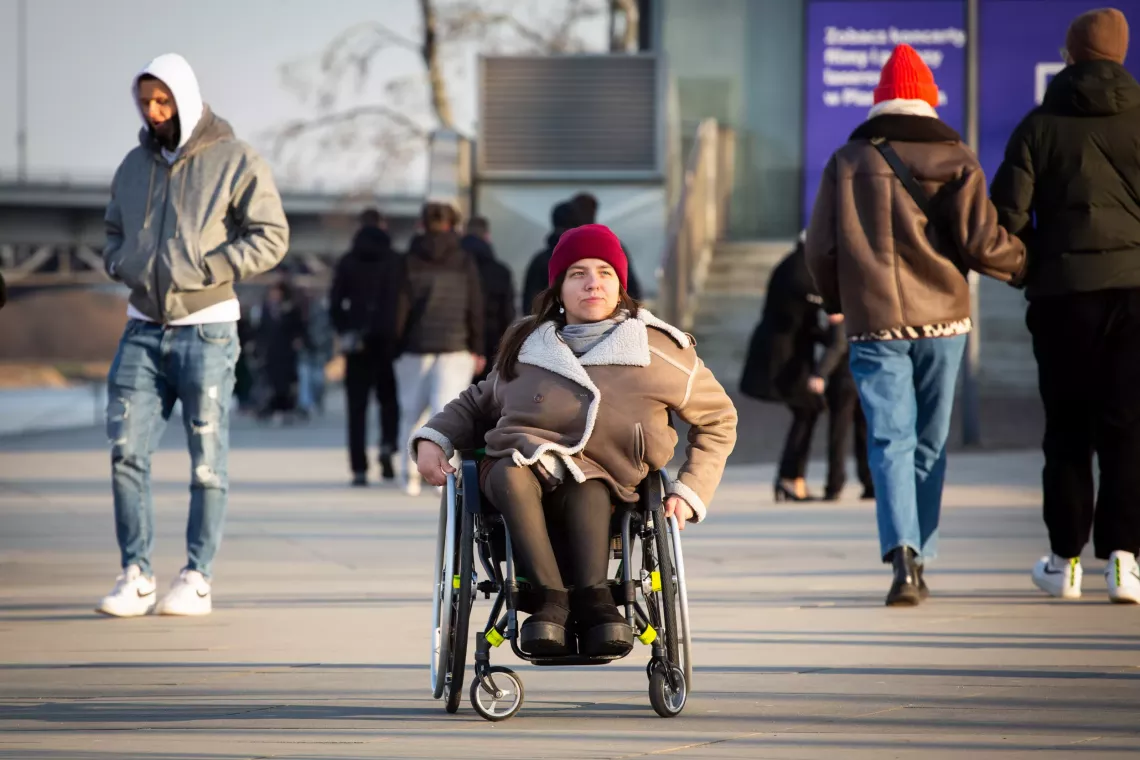
She joined events organized by the Foundation for Active Rehabilitation in Katowice, which supports people with disabilities. When the foundation announced a special camp for young people with disabilities, Zoriana signed up.
“I wasn’t fully independent, and I wanted to learn how to be. That’s exactly what these camps are for,” she explains.
The camp became a turning point. There, she met people who became her support system. “They are incredible. I’ve always found it easier to connect with people who share similar experiences,” she says.
Inspired by her journey, Zoriana became involved in volunteering and advocacy work. She started volunteering in programmes for children and youth with disabilities, leading wheelchair mobility workshops. Her passion for communication and social change led her to speak at the flagship event, "Let's Make Inclusion Happen! Inclusive Education for a Fair, Resilient, and Competitive EU”, which was part of Poland’s Presidency of the Council of the European Union in March 2025.
Together with other youth advocates, Zoriana was supported by UNICEF to prepare her speech. She used the opportunity to advise decision-makers on how to create job opportunities for young people with disabilities, sharing her lived experience and offering practical recommendations for a more inclusive job market.
“For three years, I searched for a job. Three years filled with hope, job interviews, and… disappointment,” she recalls. “There were many challenges: offices that were not adapted to my needs, employers who saw me through the lens of my disability rather than my skills. I often encountered the belief that people with disabilities couldn’t handle their responsibilities as well as their non-disabled colleagues.”
Zoriana emphasizes that education is key to fight the prejudices that still exist in society. “Employers often lack knowledge about what it actually looks like to work with a person with a disability. Sometimes they hesitate to hire someone with a disability because they don’t know what to expect. That’s why it’s important to speak out and show that disability does not mean a lack of competence,” she stresses.
Another crucial step is adapting workplaces to the needs of people with disabilities. “Accessible offices, flexible hours, remote work, these are not luxuries; they are basic tools that can open up the job market to many people,” Zoriana says.
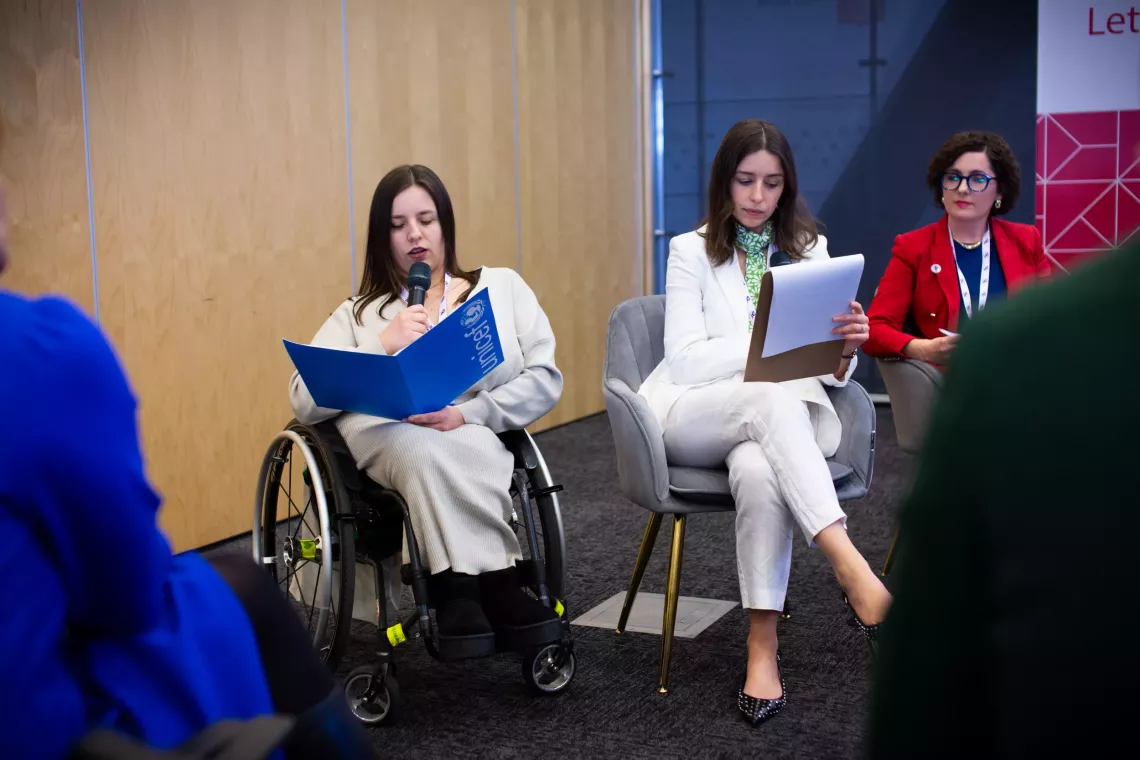
She believes that the participation of young people with disabilities in conferences and events involving policymakers is crucial. When young people with lived experiences are involved in shaping policies, they bring insights that professionals might overlook. Their perspectives help create real and lasting change.
In Poland and throughout the Europe and Central Asia region, UNICEF prioritizes inclusive education, recognizing that all learners have unique and diverse needs. In an inclusive school, every student is valued and supported to participate in learning and contribute to all aspects of school life. UNICEF supports schools to become more inclusive by training teachers, removing physical and social barriers, and advocating for policies that promote equal opportunities for all students. UNICEF also supports a human rights-based approach to inclusive education, which fosters a sense of belonging, acknowledges the significance of individualized support, and encourages experiences that prepare learners for lifelong learning.
The participation of youth advocates in the Conference on Inclusive Education organized in Warsaw by the Presidency of Poland of the Council of the European Union, was made possible with support from the Government of the Republic of Korea.