Warsaw teenagers foster social connection and create welcoming spaces in their school
UPSHIFT supports students building skills and making connections in Polish schools.
- English
- Українська
- Polish
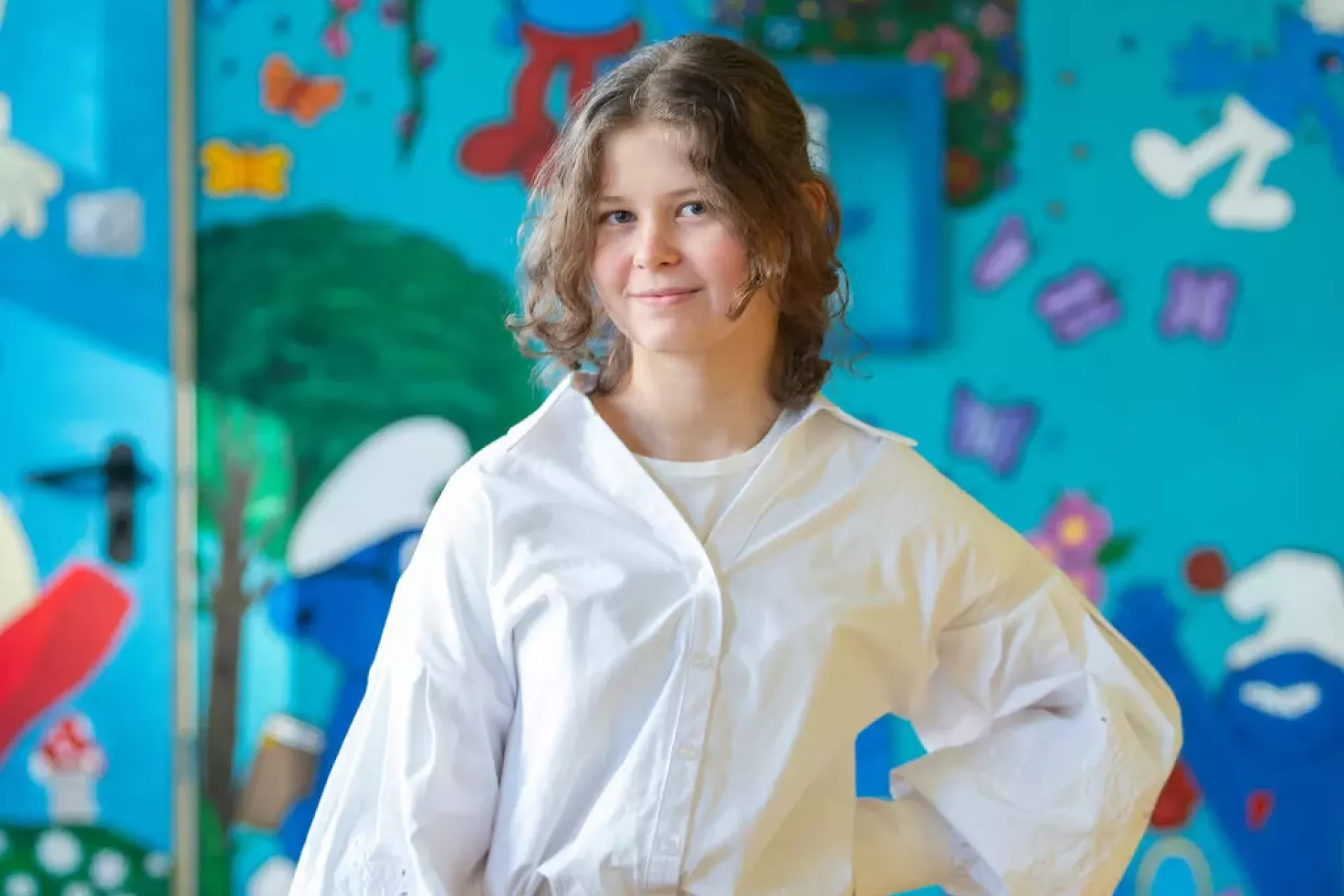
Kseniia, 13, fled from Kyiv, Ukraine to Poland with her mother nearly three years ago. She has adapted well to the Polish education system and is now a seventh grader in a Warsaw primary school. Language has not been a major barrier because she was encouraged to learn Polish even before leaving Ukraine as the two countries are neighbours.
Currently, 58 per cent of schools in Poland have students from Ukraine learning in classrooms. Kseniia’s school is particularly diverse, with more than 100 foreign children. Kseniia had normally not struggled to make friends, but she found it challenging in a new country and environment.
“When I heard about UPSHIFT and realized it could help me meet new people, I signed up to expand my circle,” she shares.
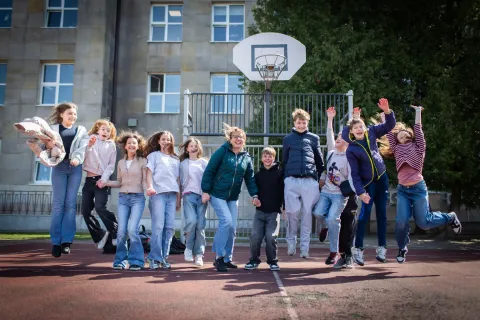
In October 2024, Kseniia’s school joined UPSHIFT, a UNICEF programme that works to empower teenagers to tackle local challenges, build practical skills, and spark creativity. Having brought together 80 students aged 12 to 15, the initiative aimed at fostering teamwork.
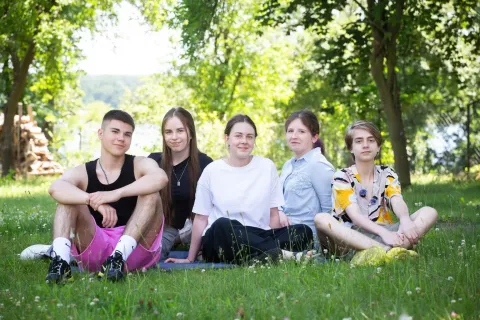
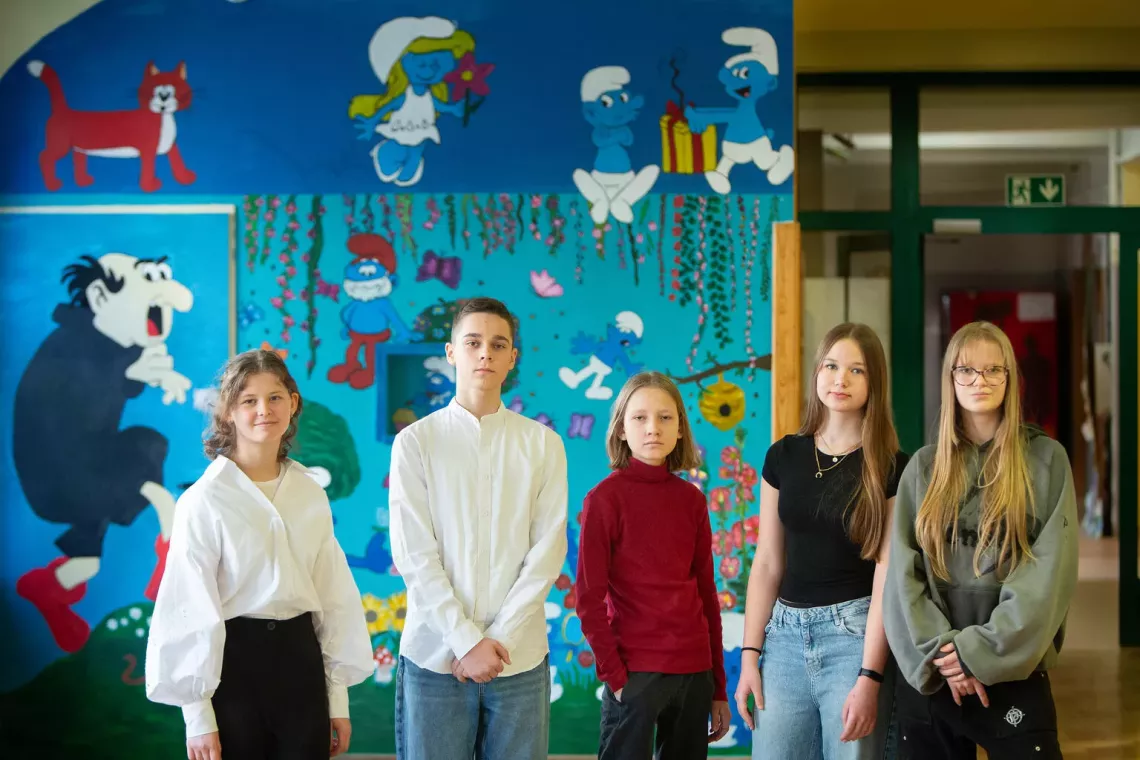
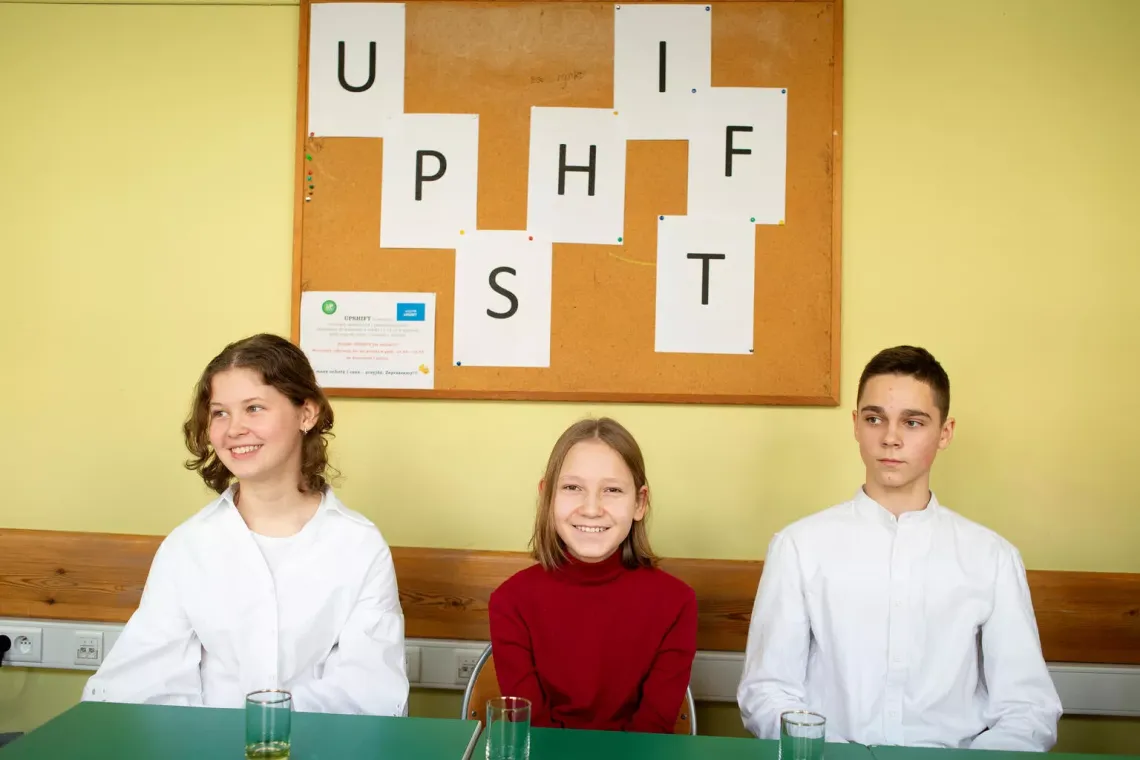
"At first, I felt a bit uncomfortable, but after starting with UPSHIFT, I didn’t want this experience to end," recalls Kseniia, who joined a team of peers she didn’t know at all, staying true to her goal of making new friends. 12-year-old Yan and 13-year-old Ivan from Belarus, along with Zosia and Julia, both 13, from Poland, also took part. For them, it was an opportunity to collaborate on something meaningful beyond the classroom.
“I realized UPSHIFT was different from a regular class or workshop when I learned we wouldn’t just discuss problems of our school community – we would actually create real solutions and bring them to life,” says Kseniia. “The best part was that the ideas for what to change weren’t to come from teachers or parents, but from us, the pupils,” she shares with excitement.
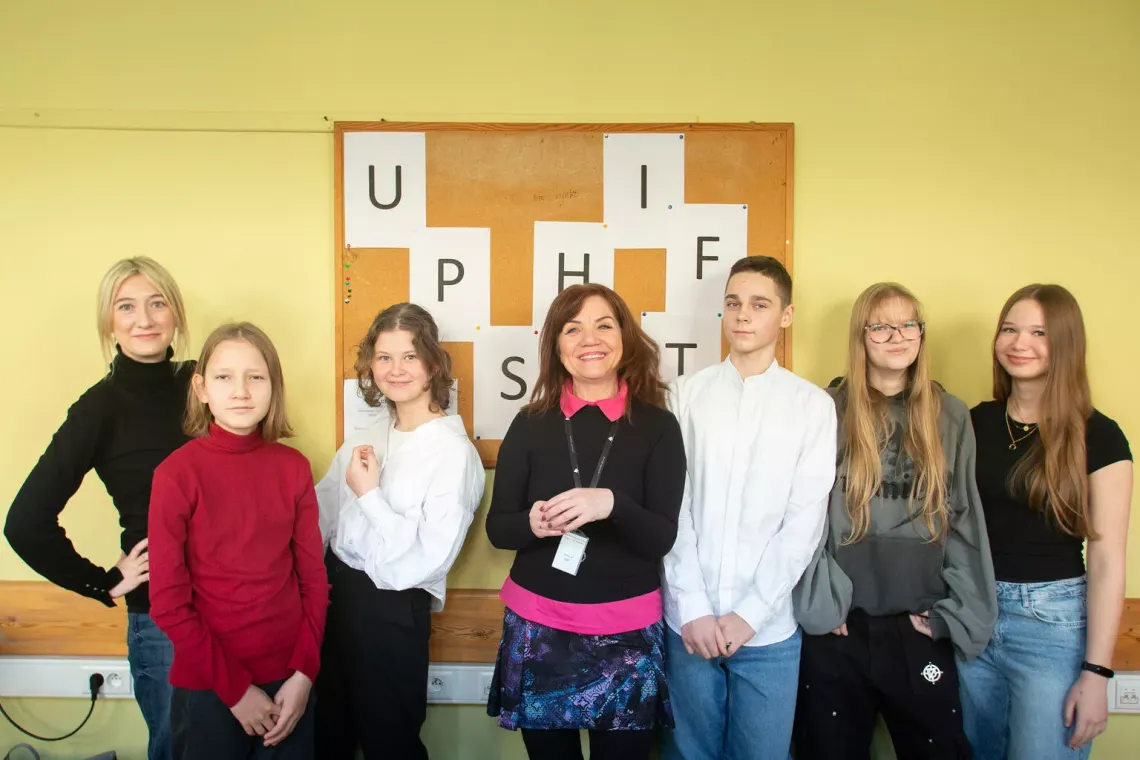
“For us, it is more than just a skills workshop – it has become a bridge between cultures,” says Teresa Bator, a music teacher and UPSHIFT mentor.
Alongside her colleague, Marta Brzezińska, a Spanish teacher, she guided students through the programme. They were dedicated to creating a welcoming and supportive space. With more children from different nationalities joining their classrooms, both educators felt they had to develop new skills to better support their student body.
As the programme kicked off and teams brainstormed ways to enhance their school experience, a kaleidoscope of ideas emerged – modernizing recreational spaces, brightening hallways, and creating much-needed relaxation zones between lessons. The discussions uncovered shared needs, highlighting the programme’s power to foster empathy and collaboration.
Yan reflects, “I did not have one specific idea of what we should do. I listened to my group’s ideas and acknowledged them all, but for me, UPSHIFT was mainly about working together and being part of the entire process.”
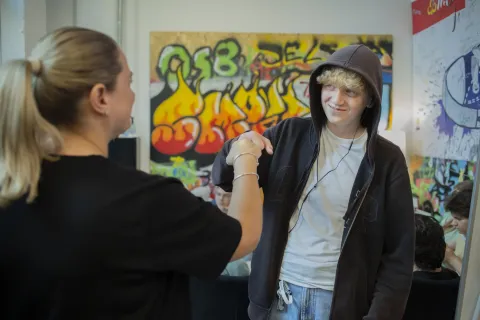
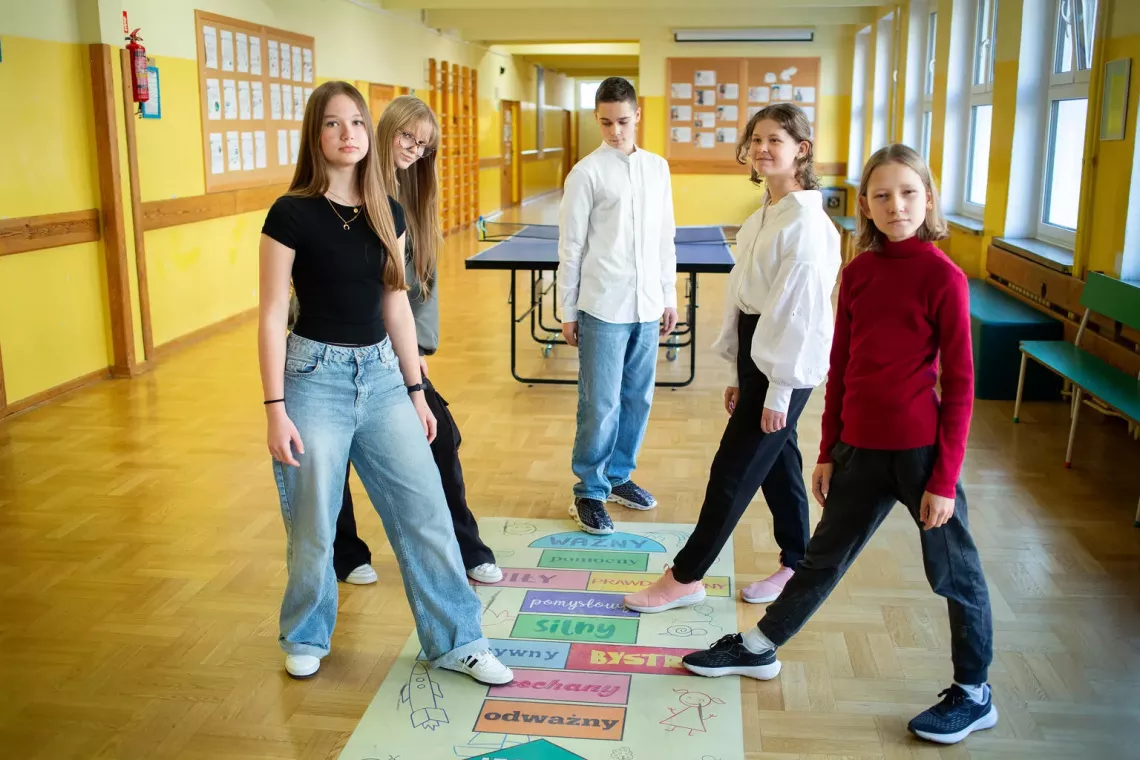
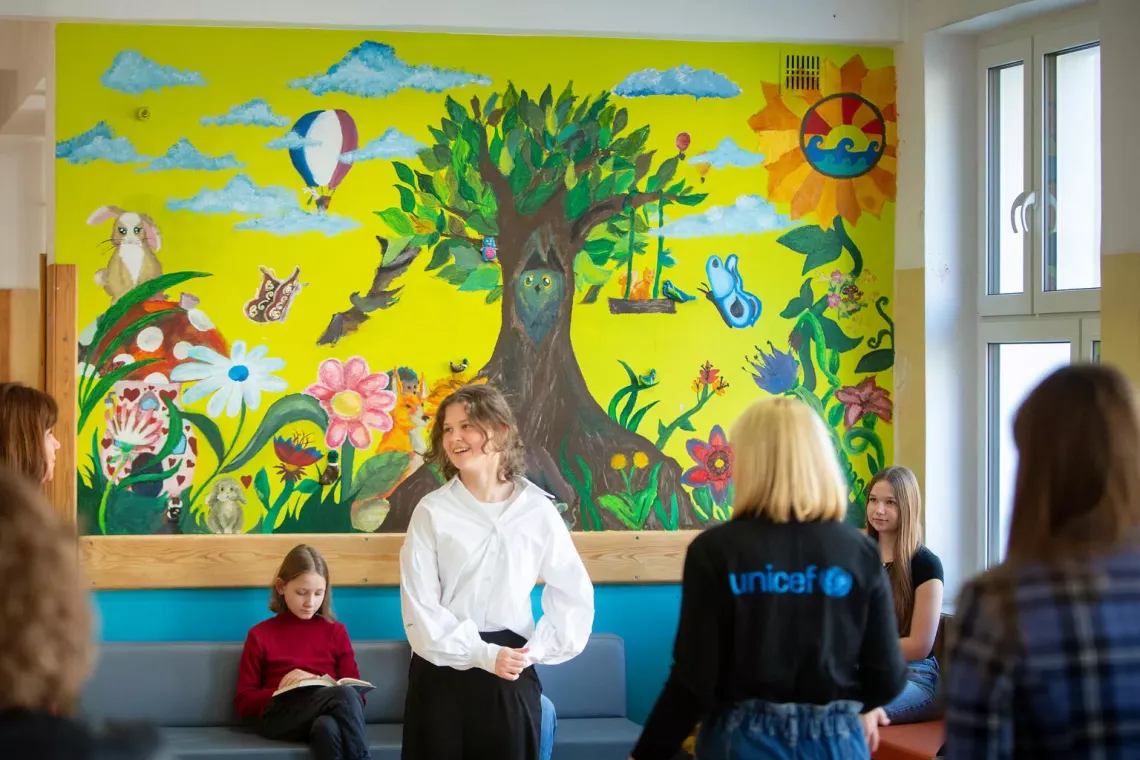
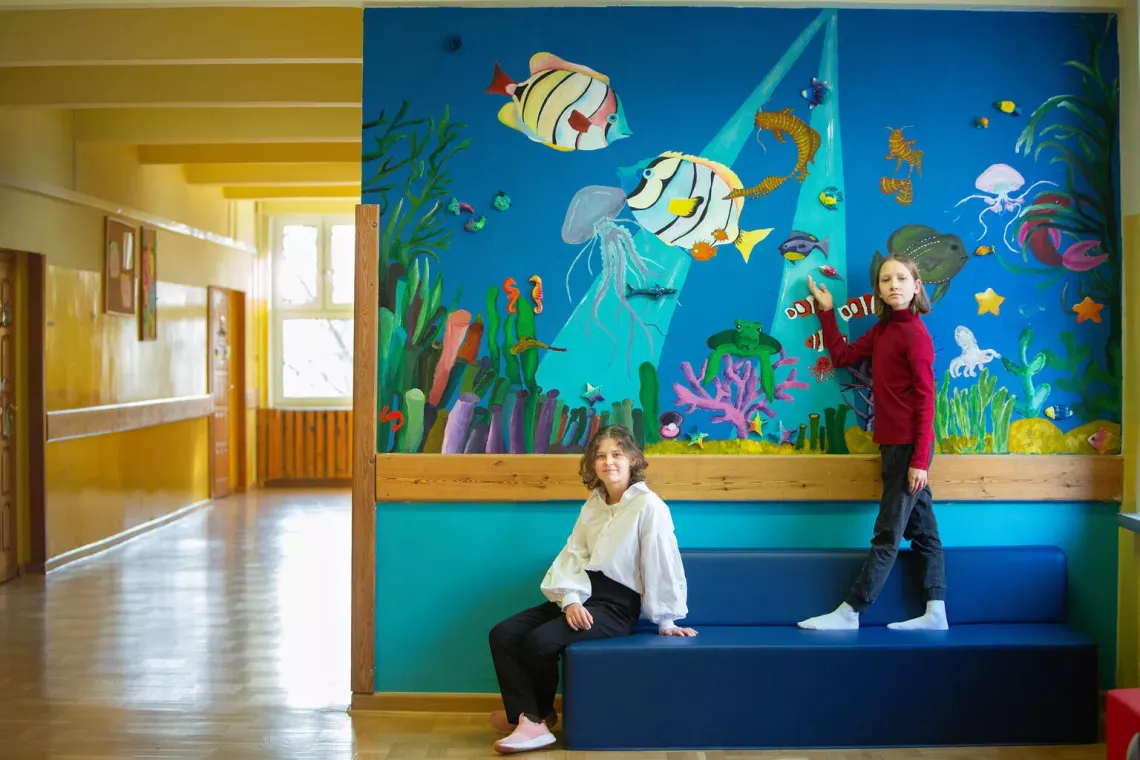
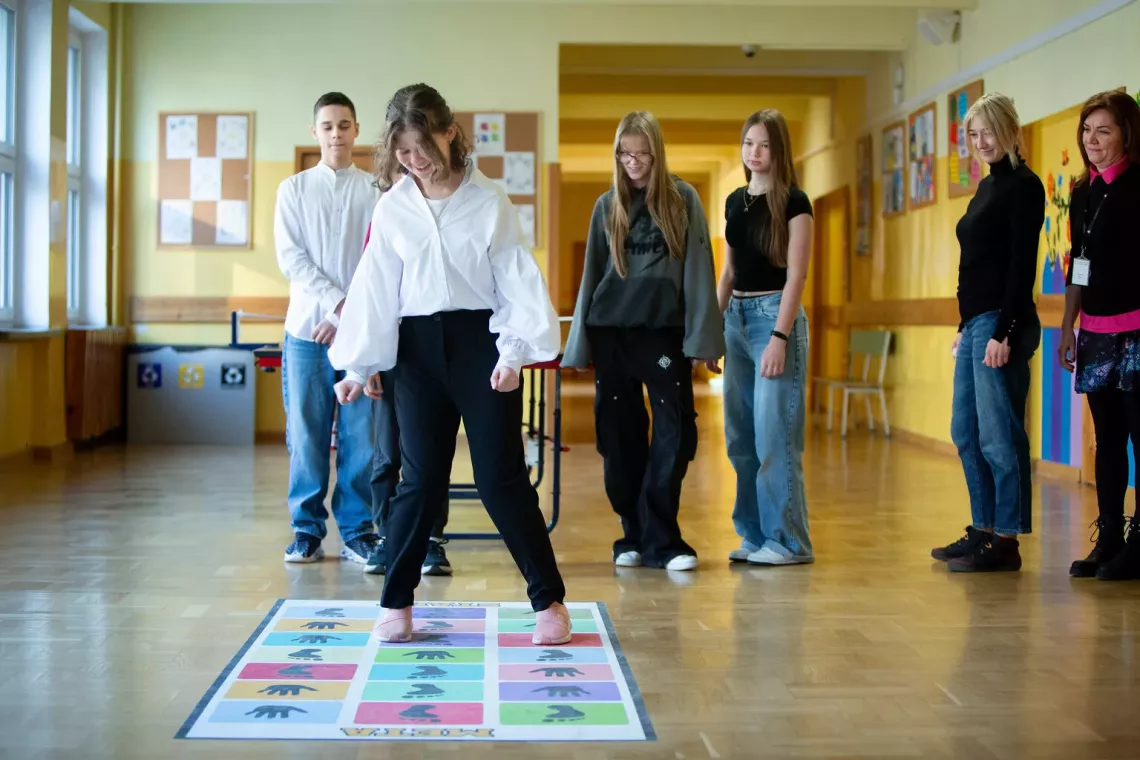
They quickly united around one idea: "emotion zones" in the hallways. Designed and created entirely by the self-proclaimed “UPSHIFT-ers” – a name they embraced to highlight their role as local changemakers – these spaces would feature colourful, cozy sofas, meaningful hopscotch decals on the floors for playful energy, and vibrant murals. They divided into teams, each taking on a specific role: the design team planned the space layout, the finance team managed the budget, and the artistic team focused on mural concepts and creation. Julia explains how everyone had the opportunity to identify what they felt they were good at.
Beyond gaining new skills or rediscovering talents, like Zosia’s passion for painting, UPSHIFT fosters a sense of ownership and shows the teenagers how they can shape their own environment.
“UPSHIFT has boosted our pupils’ confidence and taught them how to tackle complex projects step by step,” says Teresa, highlighting how empowering this experience has been for children, who despite their young age, approached the challenge with remarkable dedication. “They began to see themselves as ‘doers.’ We were there for support, to help navigate any doubts along the way, but the lead role was entirely theirs,” adds Marta.
The final two weeks of the programme were a whirlwind of creativity as students passionately brought their ideas to life. They prepped walls, painted murals, and set up the zones, often voluntarily staying after school. Excitement filled the air as their vibrant designs took shape, reflecting diversity and teamwork. Kseniia, Yan and Ivan note how the project evolved, showcasing participants’ adaptability and openness to new ideas.
Teresa sees UPSHIFT as unique because it gives children both a voice and the tools. ”No one tells children what to do or how to do it. We all learned from each other,” she shares. Both teachers noticed students becoming more confident, asking more questions instead of running away immediately after the lesson.
“UPSHIFT has also had a snowball effect – I’ve never seen so many volunteers sign up for the school play I advertised,” Teresa adds. She believes continuing such initiatives could unlock even more potential, inspiring lasting change and strengthening the spirit of teamwork and civic responsibility.
UPSHIFT programme in Poland is made possible with support from the UNICEF Office of Innovation and UNICEF National Committee for Luxembourg as well as the Government of the Republic of Korea.