

Education
Every child has the right to go to school and learn.
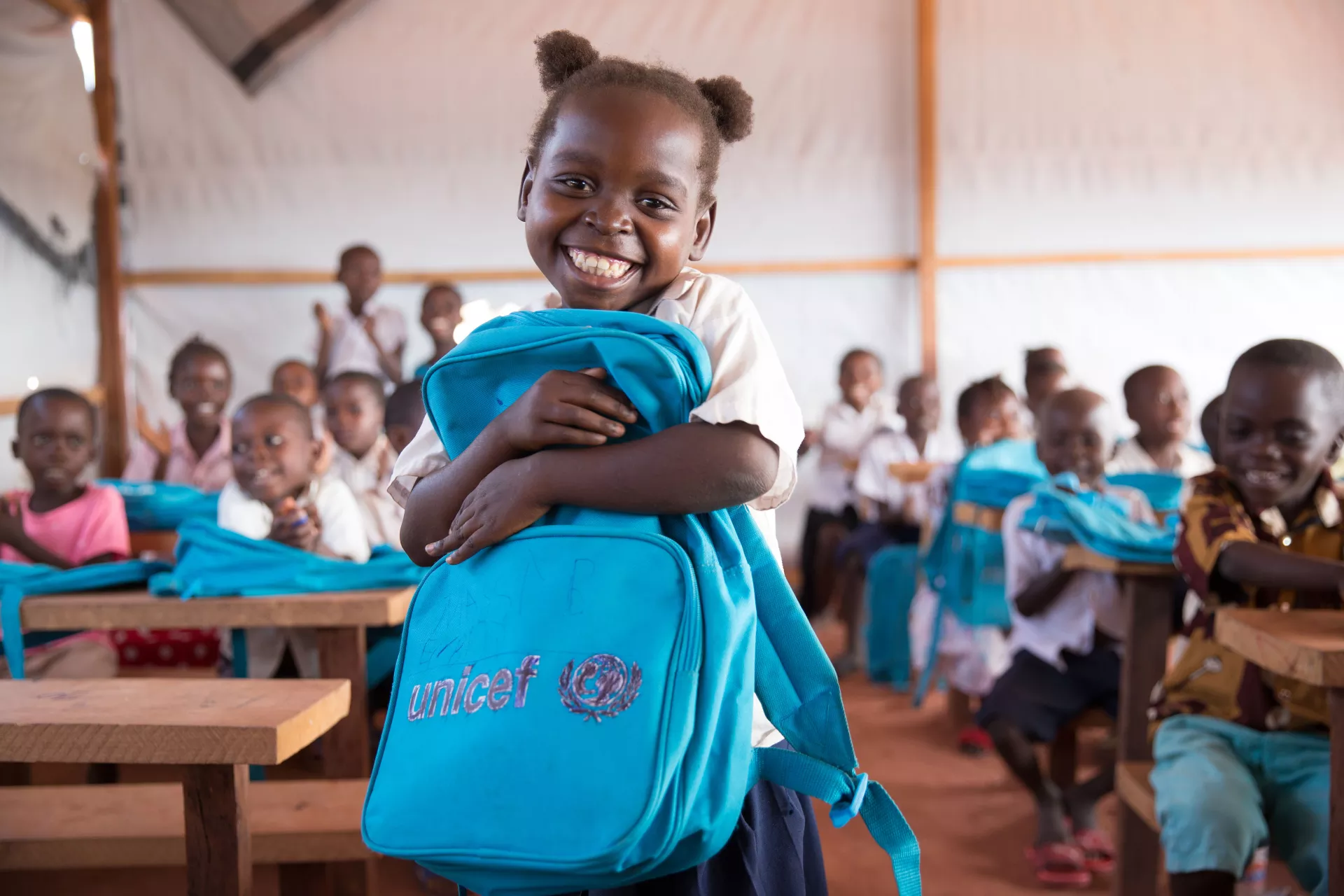
- Français
- English
Challenge
The Democratic Republic of Congo (DRC) has made significant strides towards universal access to primary education over the past few decades. The net attendance rate has increased from 52% in 2001 to 78% in 2018, but 7.6 million children aged 5-17 are still out of school.
The preschool rate for children aged 3-5 is only 5%. This level is considered very low given the benefits that preschooling can bring to young children in terms of improving primary school entry and early cognitive and social development. Moreover, repetition and dropout rates at the primary level undoubtedly have an impact on the secondary level.
The direct costs (registration fees) and indirect costs (school materials, uniforms, etc.) borne by poor households seem to be one of the obstacles to the enrollment of children in school, despite the policy of free primary education promulgated in 2010 by the Government of the DRC.
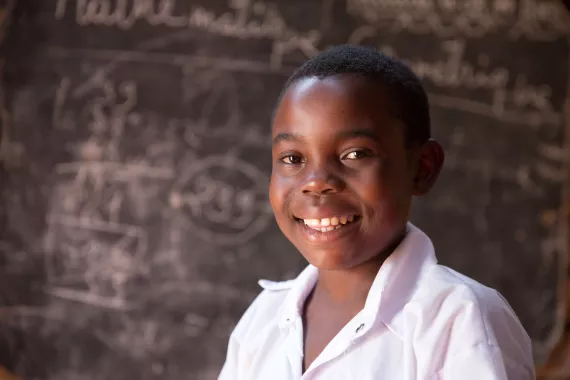
Nearly 7 million children aged
5 to 17 are out of school
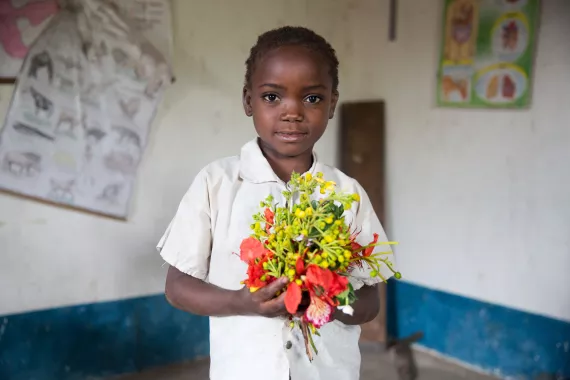
Half of girls aged 5 to 17
do not go to school.
Solution
Every child should complete a quality and relevant basic education.
UNICEF is helping to strengthen national policies, in particular by supporting the significant reduction in the number of out of school children, effective implementation of the free school measure and improvement of pre-primary coverage. In addition, UNICEF is working with the Government to ensure the implementation of the comprehensive curriculum reform package and supported data collection with Governmental counterparts at provincial levels.
To ensure greater effectiveness, UNICEF promotes multi-sectoral actions including child survival and protection, nutrition, water, hygiene and sanitation, and communication for behavior change.
In the midst of conflict and disaster, education can be both life-sustaining and life-saving. UNICEF supports education for peace and the restoration of the capacity of destabilized institutions. Children are directly involved in the organization of their school, including through clubs and student committees. Actors in the education system benefit from capacity building activities.
For every child, an education
UNICEF works around in the Democratic Republic of Congo to support quality learning for every girl and boy, especially those in greatest danger of being left behind.