Learning at one’s own pace to progress
The TaRL approach is transforming learning by adapting teaching to the real level of each student
- Français
- English
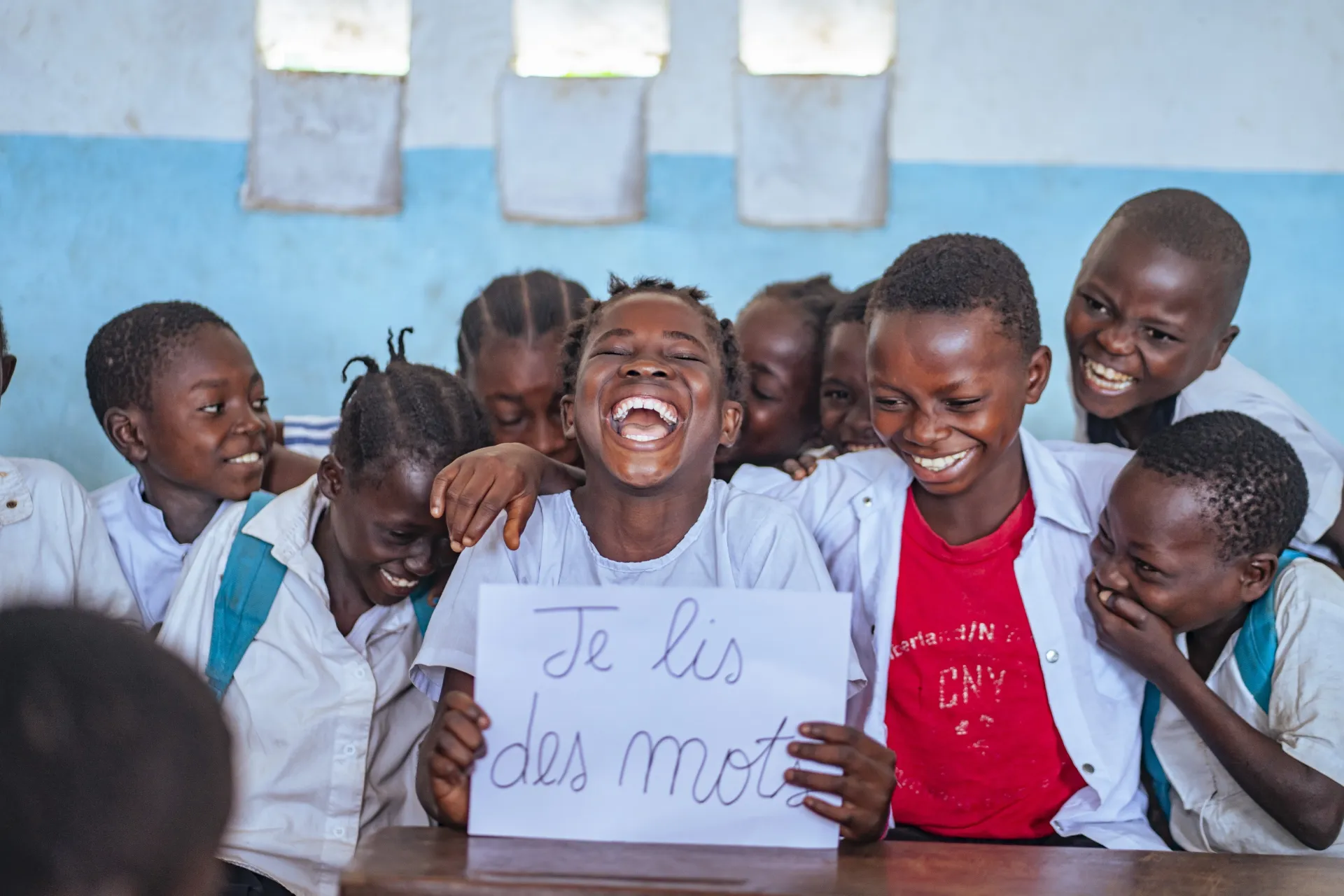
Mbunda Kanku bursts into laughter with her classmates inside a classroom at Tshienda Primary School in Kasaï Province. In her hands, a small sign reads: “I read words.”
Behind this seemingly ordinary scene lies the journey of a student who, like many children in the Democratic Republic of the Congo (DRC), struggled for years with reading and mathematics, gradually losing confidence in herself.
At the blackboard, 13‑year‑old Soni Miji now reads aloud in front of the class. She follows the chalk‑written sentences with greater assurance than before.
“Before, it was difficult for me to read. Now I understand better and I can follow in class,” she says simply.
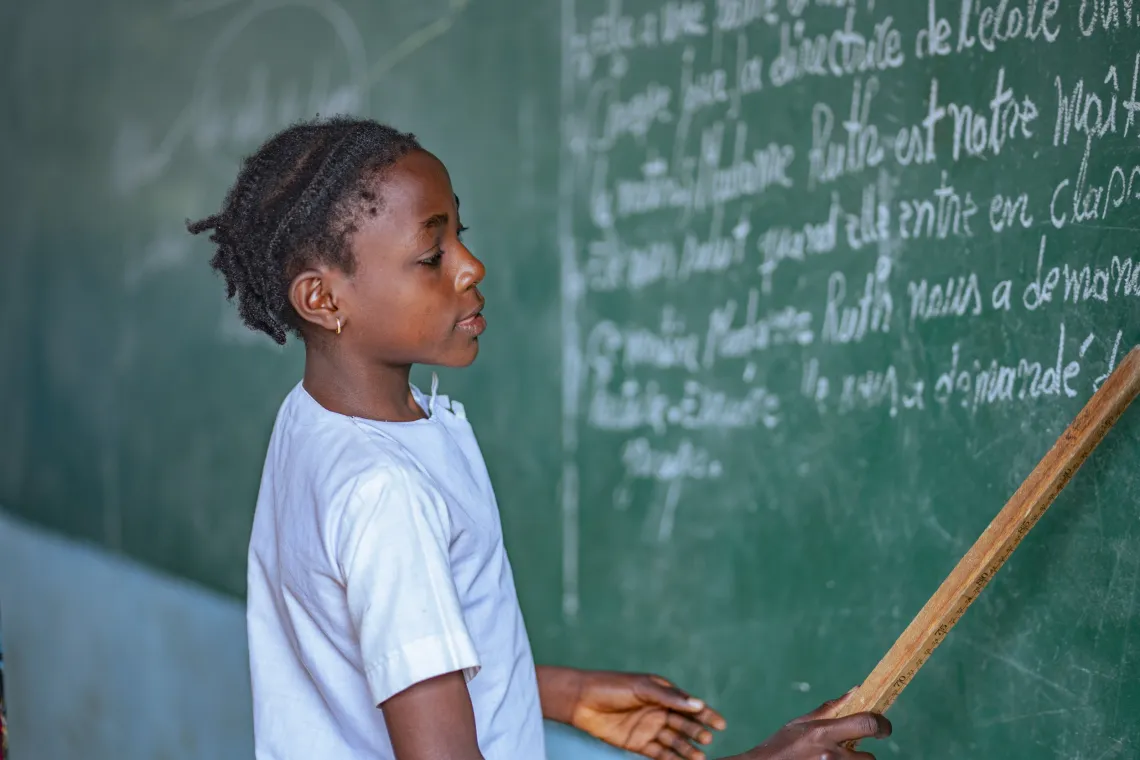
Such scenes are becoming increasingly common at Tshienda Primary School. Students participate more, dare to answer questions, and progress at their own pace thanks to the Teaching at the Right Level (TaRL) approach, a method that adapts instruction to the actual learning level of each child, rather than their age or official grade.
In many schools across the DRC, teachers face overcrowded classrooms with highly diverse learning levels. Some students already master the basics, while others still struggle to read simple words or solve basic operations.
To address this reality, the Ministry of Primary, Secondary and Technical Education, with support from UNICEF and Street Child, is gradually rolling out the TaRL approach in several provinces.
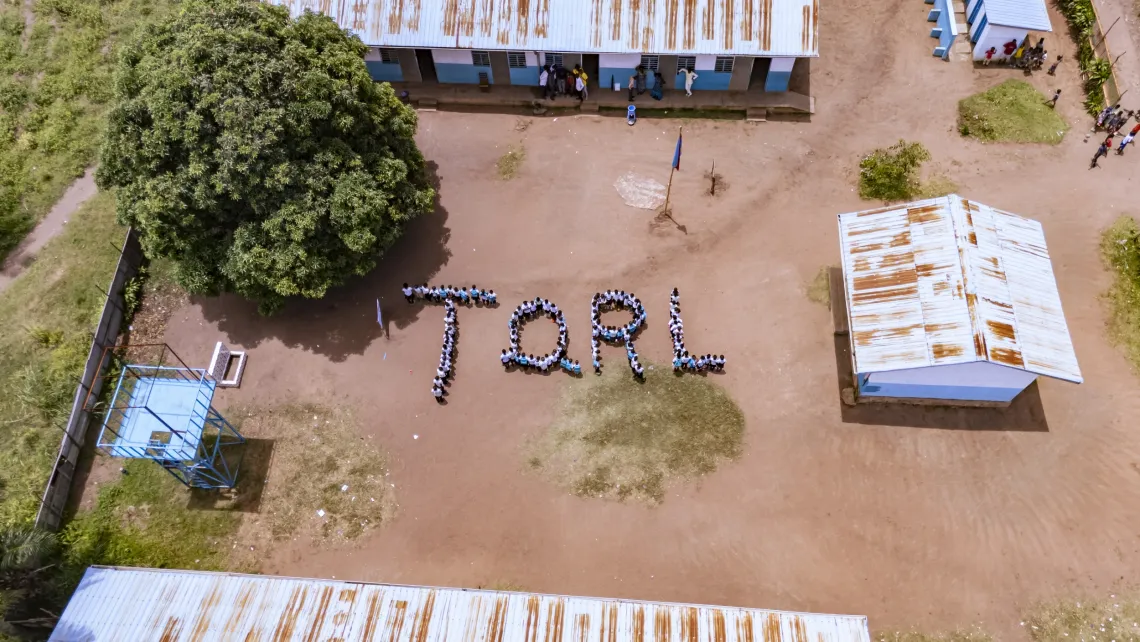
At Tshienda Primary School, teacher Nzeba Kalodji has embraced this new way of teaching. Students begin with an initial assessment to identify what they can actually do in reading and mathematics.
They are then grouped by learning level to follow activities tailored to their needs. Teachers closely monitor each child’s progress, enabling them to move from one level to another.
In Nzeba Kalodji’s class, children aged 8 to 13 learn side by side. The goal is not to move faster, but to ensure that each child progresses from where they truly are.
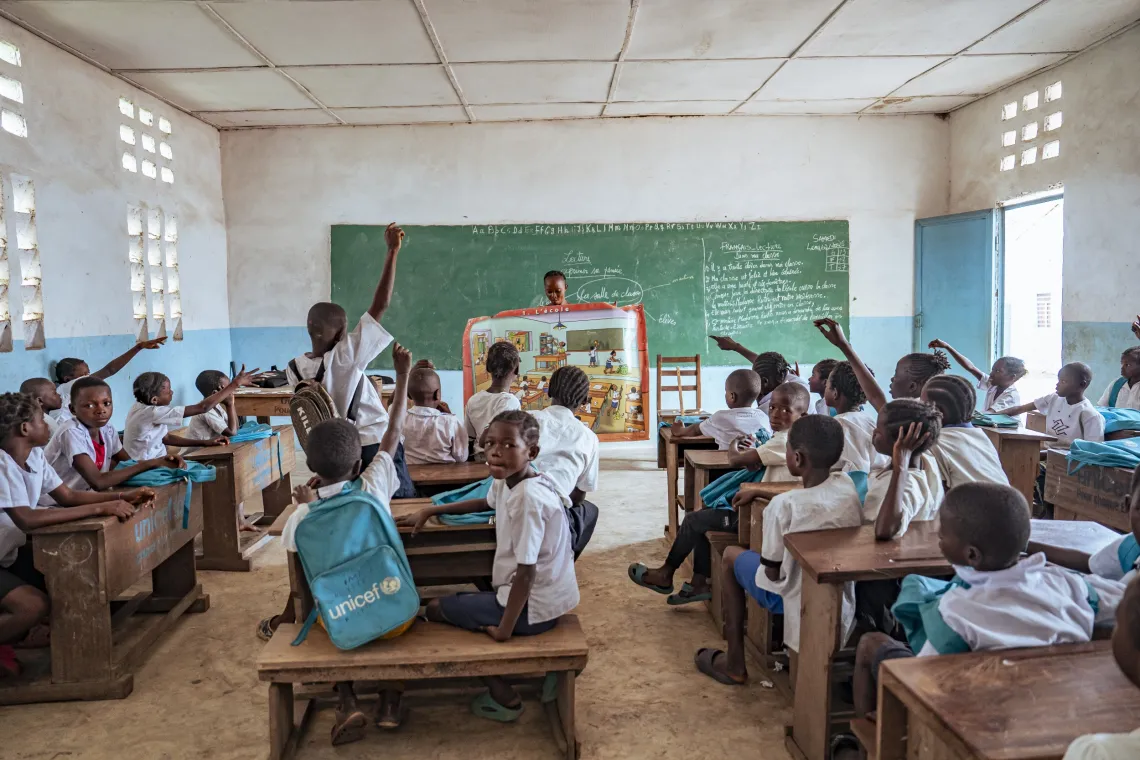
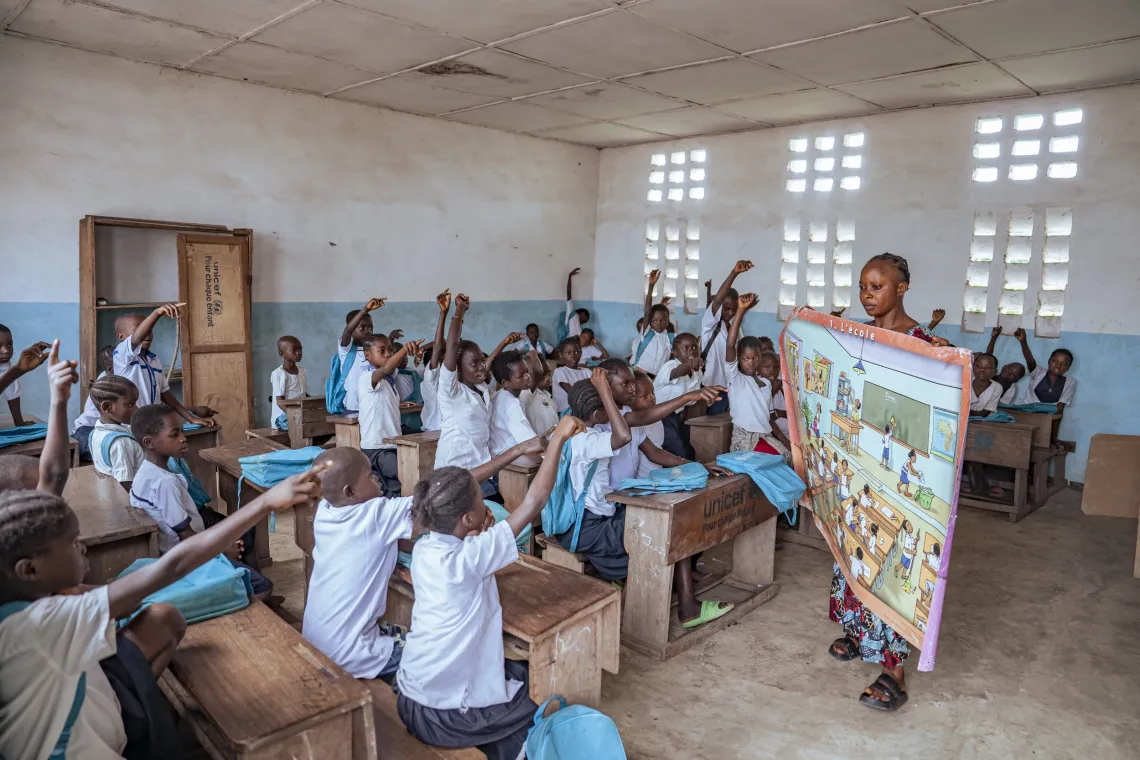
In class, students regularly raise their hands to answer questions. Some read at the blackboard; others work with visual aids or join group activities.
“We support each child according to their needs to help them progress,” explains Nzeba Kalodji.
Thanks to training received under the programme, she now uses more appropriate teaching tools.
“Learning materials make understanding easier and keep students more engaged,” she adds.
For children, these changes are gradually transforming the classroom atmosphere. They are more willing to speak up, ask questions, and take part in group exercises.
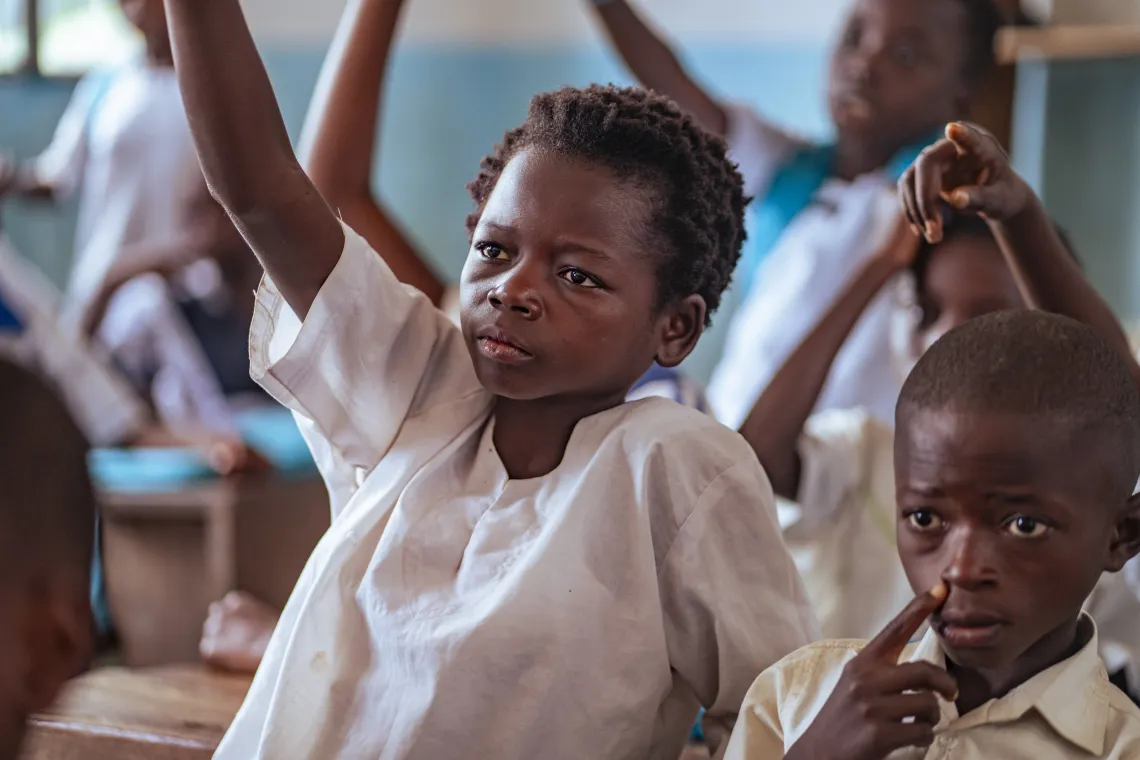
“I like learning this way because everyone participates in class,” says 11‑year‑old Mazala Ngueja.
Tshienda Primary School is one of 324 pilot schools implementing the TaRL approach in Kinshasa, Kasaï, North Kivu and South Kivu. Through this method, more than 170,000 students are expected to improve their reading, writing and mathematics skills by the end of 2027.
Teachers like Nzeba Kalodji are already seeing tangible changes: students participate more, understand lessons better, progress faster, and regain confidence in their abilities.