The women who protect childhood from mpox
Women on the frontlines of prevention, care and community protection
- Français
- English
As mpox spread across parts of the Democratic Republic of the Congo, families faced growing uncertainty. In displacement sites, urban neighbourhoods and busy markets, fear and misinformation often travelled as fast as the virus itself.
UNICEF’s response places children, pregnant and breastfeeding women, and underserved communities at the centre of its efforts, combining vaccination, community engagement, infection prevention and access to essential services.
Across affected communities, women play a central role in bringing this response to life.
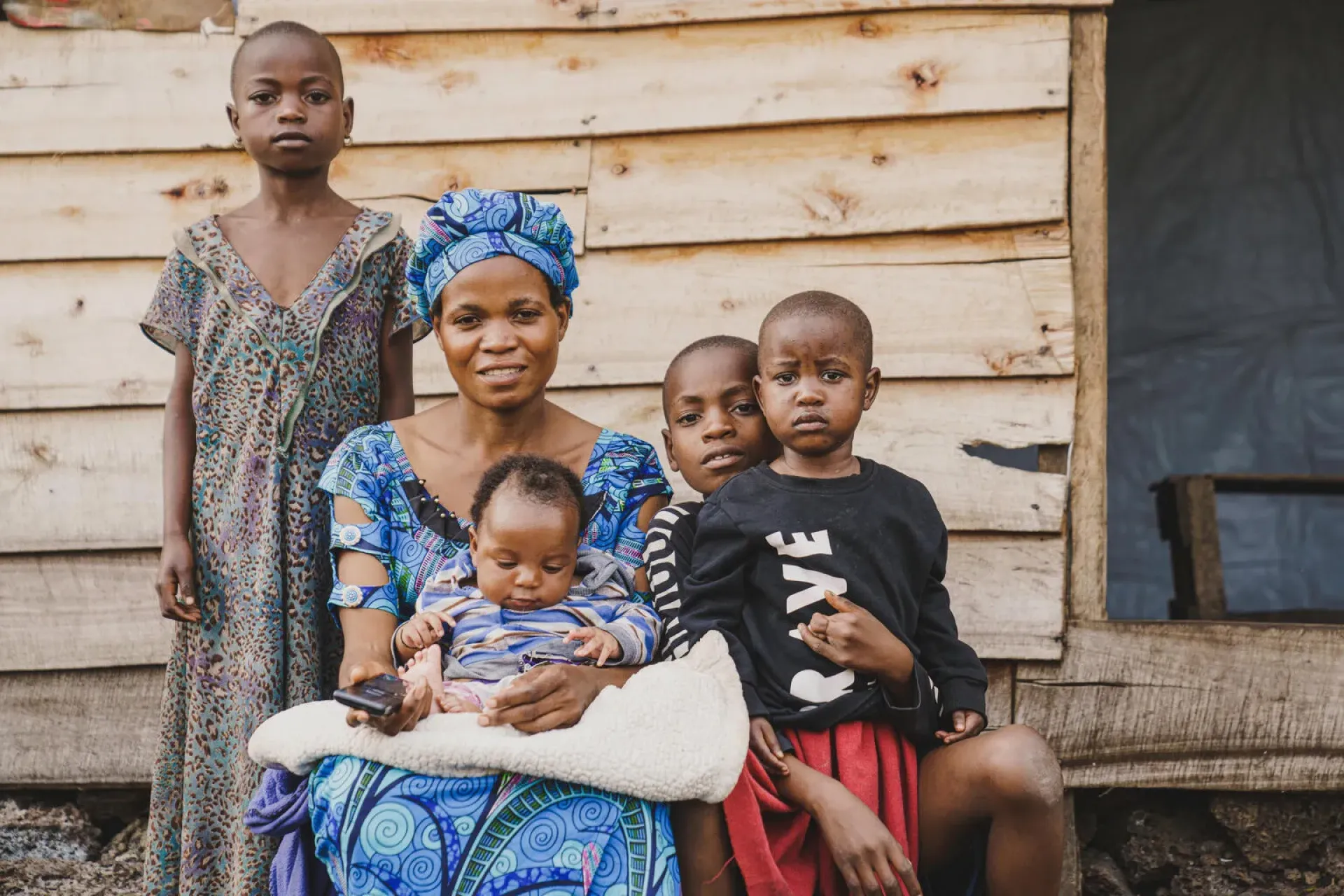
At a UNICEF-supported health centre in Goma, Safari holds her six children close after they all received their mpox vaccinations.
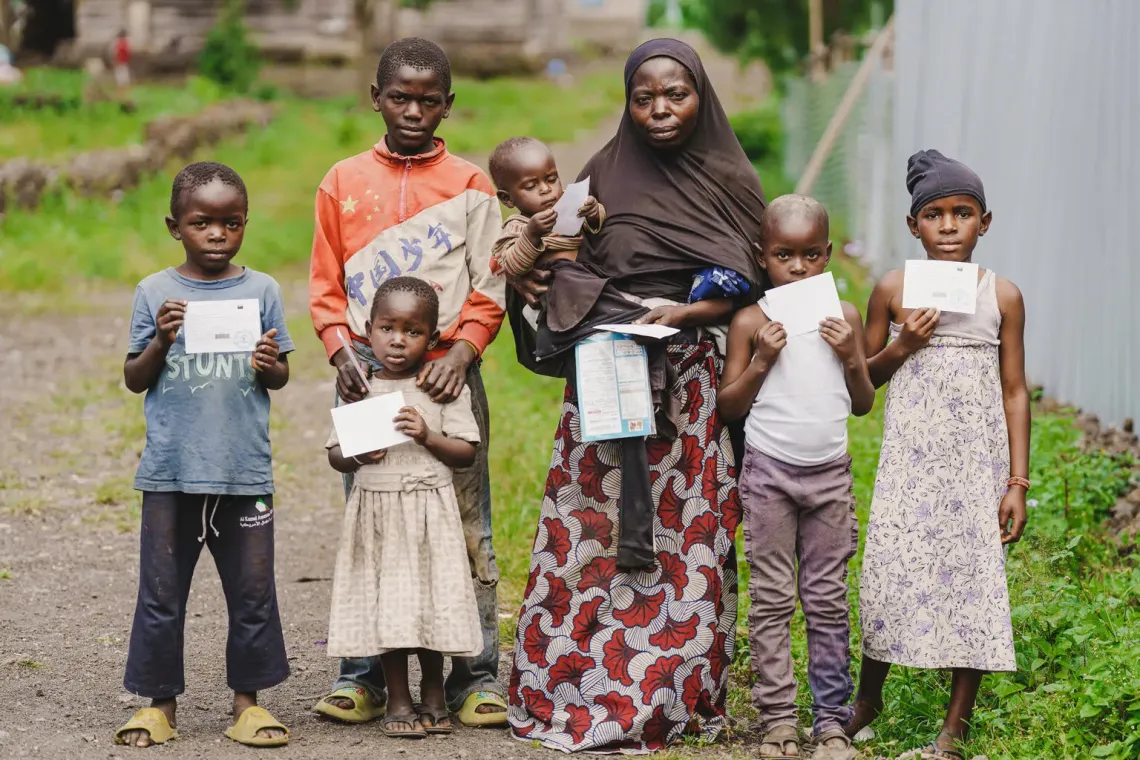
The family lived in a displacement site near Goma before it was dismantled and now stays with relatives in the city, unable to return home after their village was burned down.
The mpox outbreak brought new fears to an already difficult reality.
“I saw people suffering from mpox, and it was frightening,” she recalls. “When I heard that the vaccine was available, I didn’t hesitate to come with my family to get vaccinated.”
Through vaccination campaigns targeting high-risk communities, families like Safari’s can protect their children while helping interrupt transmission.
Hundreds of kilometres away in Bukavu, another woman is helping protect children, this time through information.
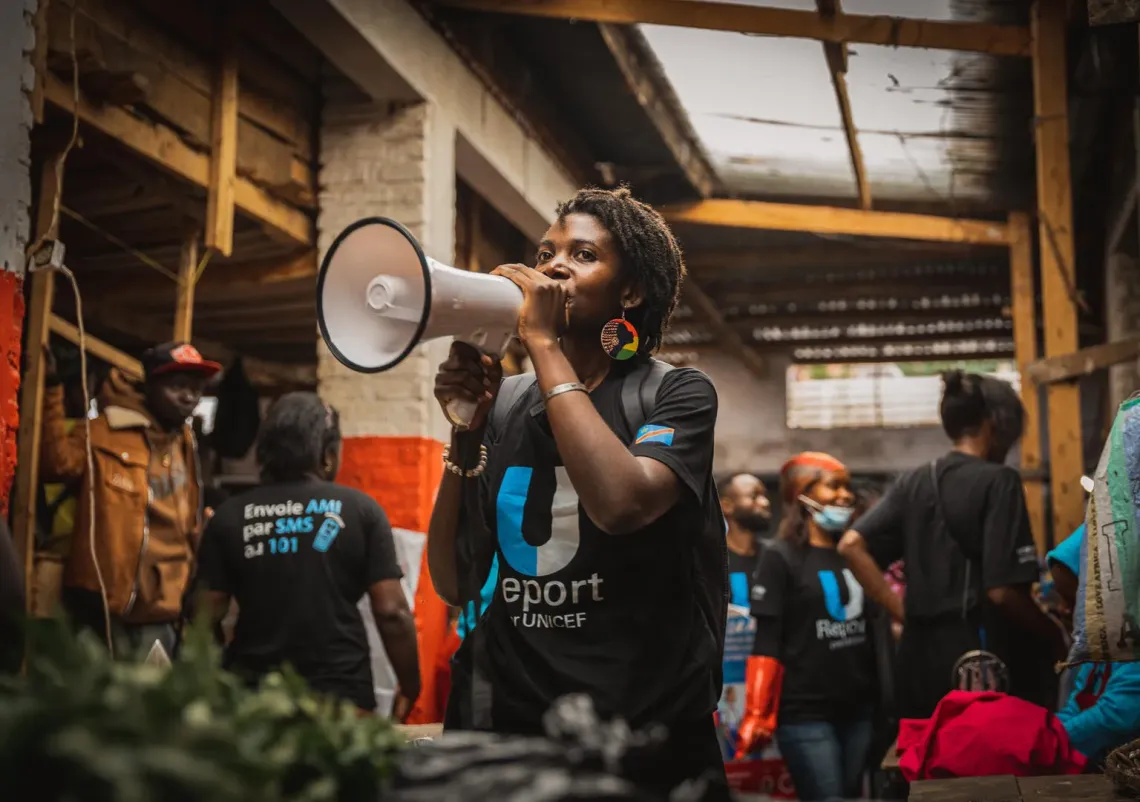
Charmante, 26, is a U-Reporter. In crowded markets, she moves from stall to stall speaking about mpox, cholera and essential family practices. Her work is part of broader community engagement efforts designed to counter misinformation, reduce stigma and encourage early care-seeking.
“There are so many myths we tackle,” she explains. “I talk to women, share facts, and then they go home and share with their families. This is how we make real change.”
Conversations led by young people and community workers like Charmante often influence how families respond to the outbreak and protect their loved ones.
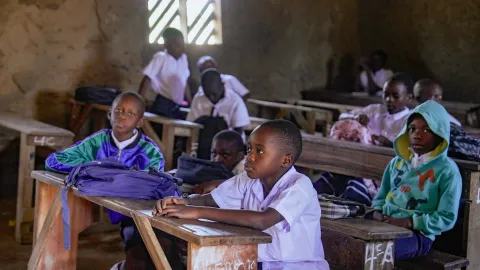
In a school courtyard in Goma, eight-year-old Rehema holds a poster raising awareness about mpox.
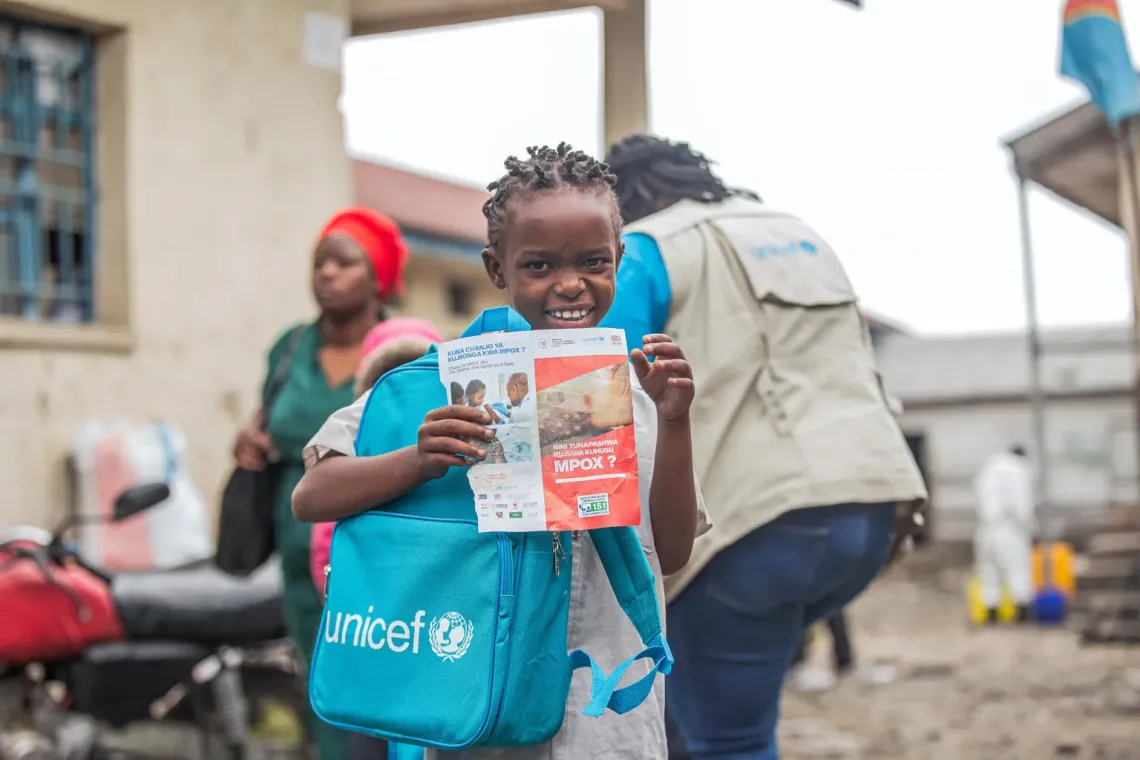
At school, she learned about handwashing, recognising symptoms and seeking care early, and now shares these messages with friends and family.
By passing on what she has learned, children like Rehema help important information travel beyond school walls and into their communities.
Conversations led by young people and children often shape how families respond to the outbreak, including their willingness to seek vaccination.
In Kinshasa, Vicky carefully holds a dose of mpox vaccine during a vaccination campaign. Vaccination remains one of the most effective tools to protect at-risk populations.
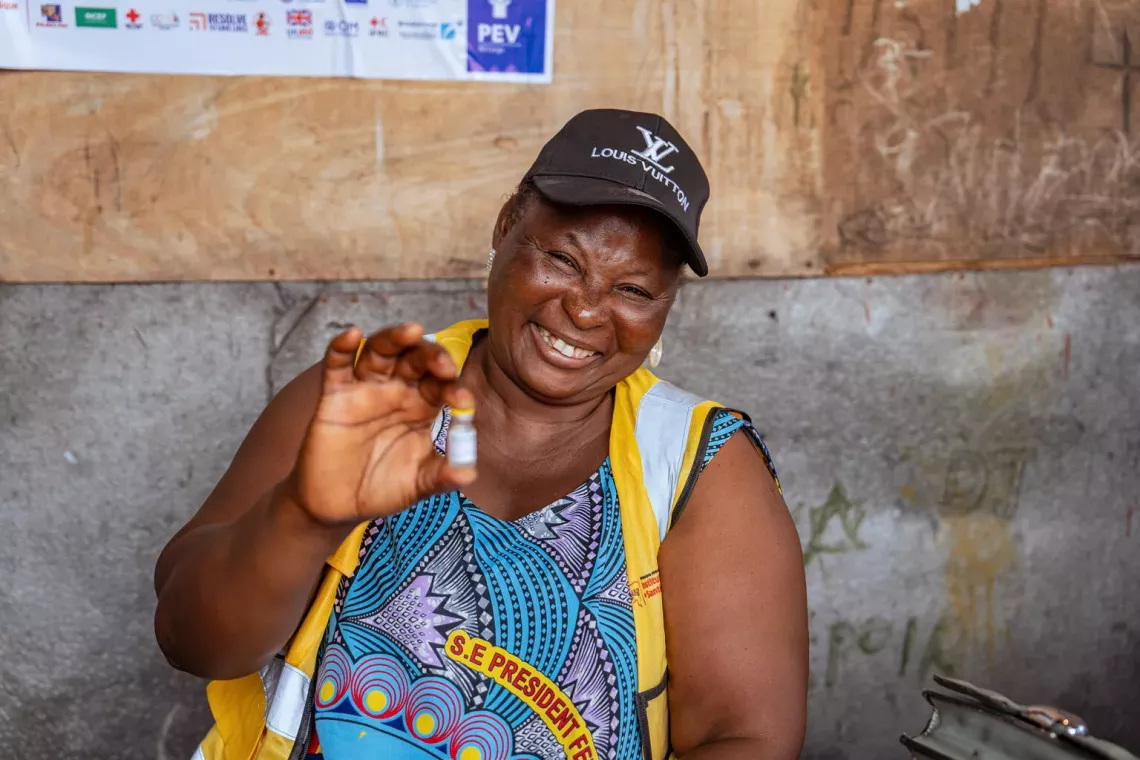
“I’m proud to help prevent mpox in my neighbourhood through vaccination,” she says. “We vaccinated nearly 400 people in four days here.”
For Vicky, each dose administered is one more layer of protection for the community.
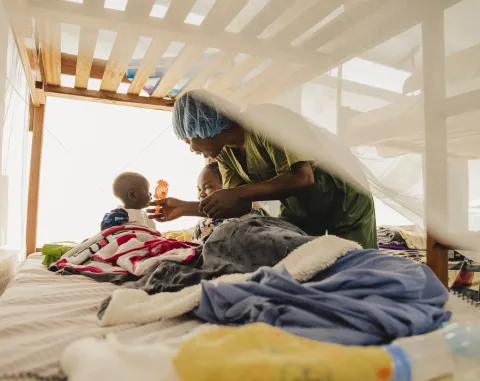
Inside mpox treatment centres in hotspots, protection takes another form. To reduce infection risks and ensure children continue receiving care, UNICEF has supported the establishment of nursery spaces within treatment facilities.
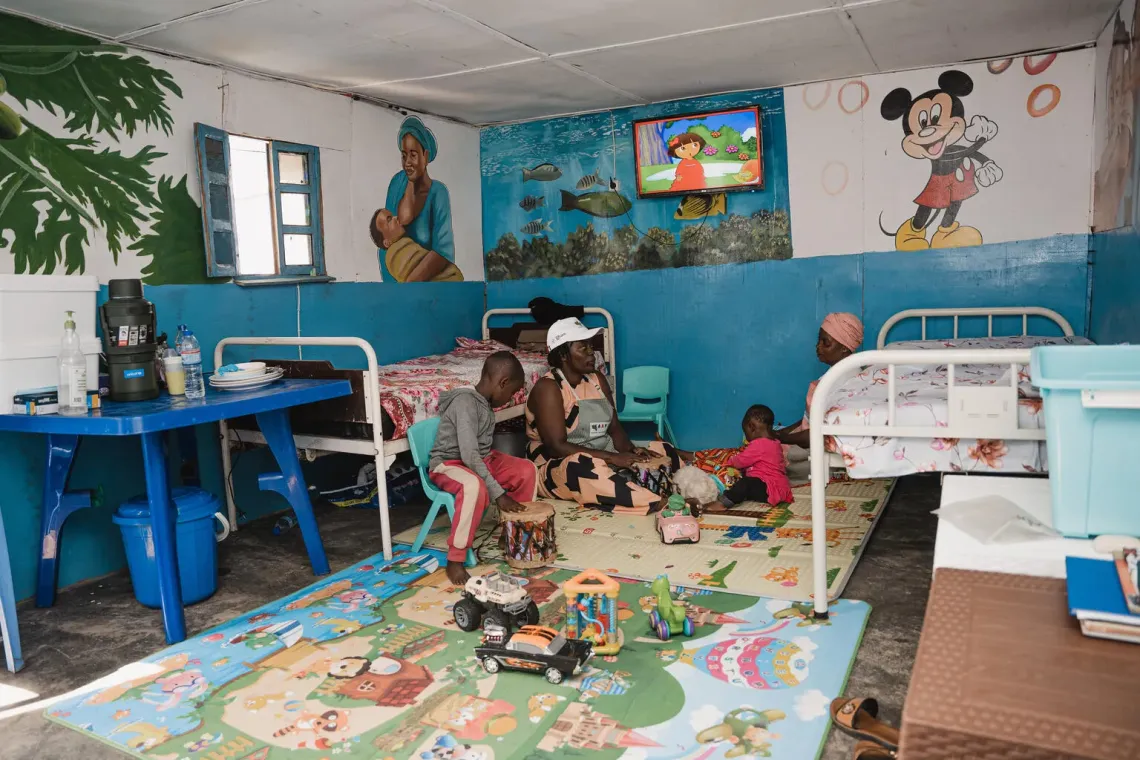
In these dedicated wards, women care for young children whose parents are receiving treatment. For many, the separation is difficult. Some arrive distressed or confused, too young to understand why they cannot stay with their families.
Caregivers feed them, comfort them and help maintain daily routines, creating a sense of stability in an unfamiliar environment.
This support preserves children’s wellbeing while allowing parents to focus on recovery, ensuring continuity of care for families throughout treatment.
While caregivers protect children inside treatment centres, safe health facilities remain equally essential to stopping the spread of mpox.
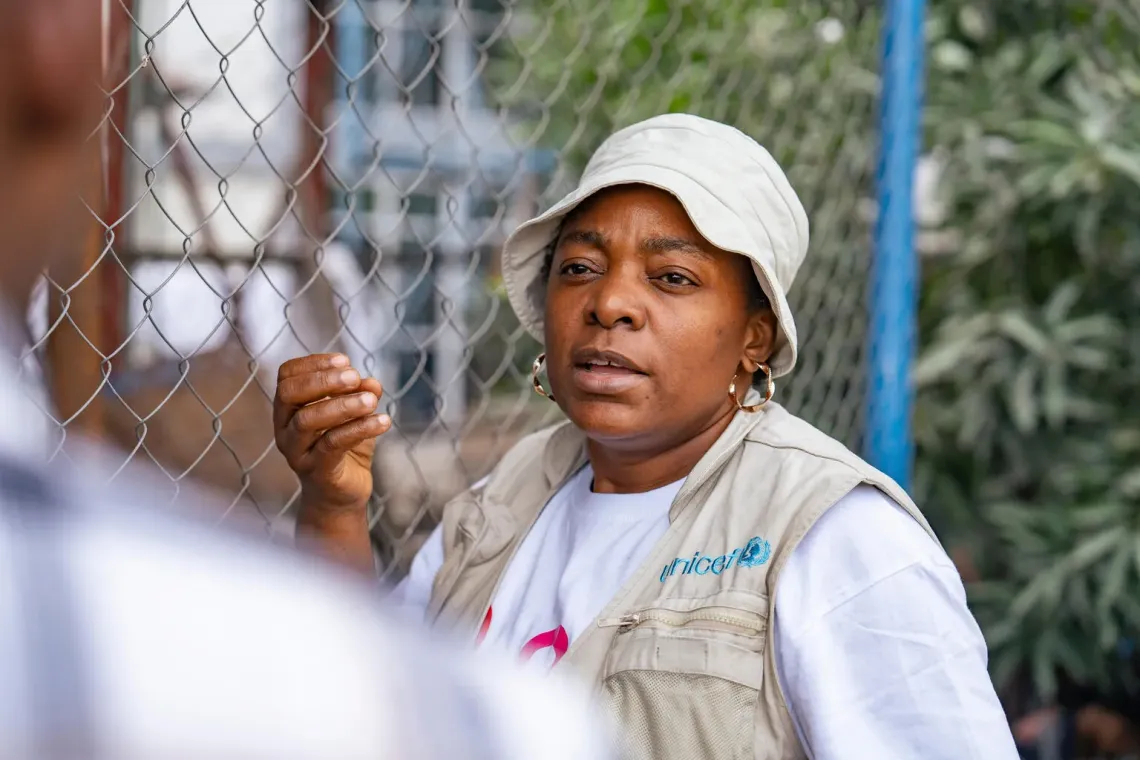
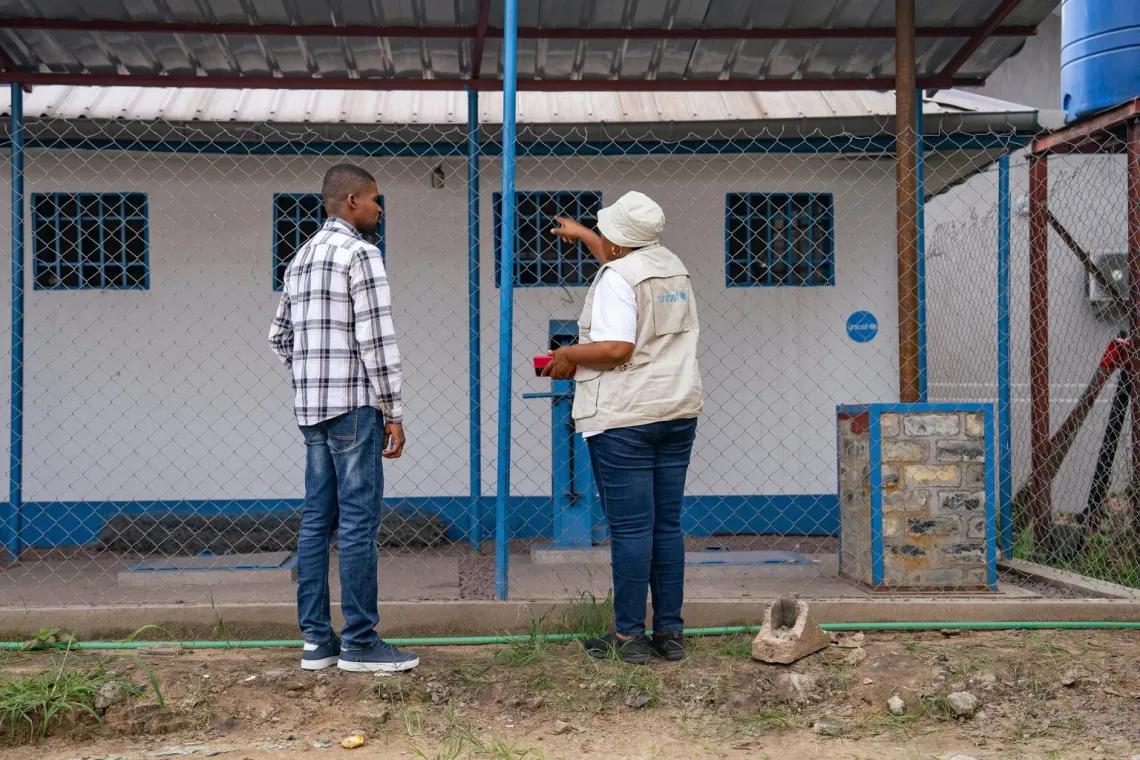
With the support of the Mastercard Foundation, UNICEF is strengthening infection prevention and control measures in health centres across affected areas.
At Vijana Health Centre in Kinshasa, this includes safe water access, rehabilitated toilets, handwashing stations and personal protective equipment, reducing transmission risks for patients and health workers alike, while helping protect surrounding communities and interrupt the spread of infection.
For WASH Officer Daddy Bimbola Kahamba, these improvements are lifesaving.
“Infection prevention is about protecting every child who walks into a health facility. Safe water, sanitation and hygiene make that protection possible.”
From mothers making the decision to vaccinate, to community workers, vaccinators, caregivers and healthcare providers, women are shaping the response to mpox at every level. With the support of the Mastercard Foundation, UNICEF and partners continue working to protect children and the communities around them.