In Tchunga, motorbikes facilitate community surveillance in the Ebola response
Health teams use two wheels to verify alerts, trace contacts and conduct investigations in villages
- Français
- English
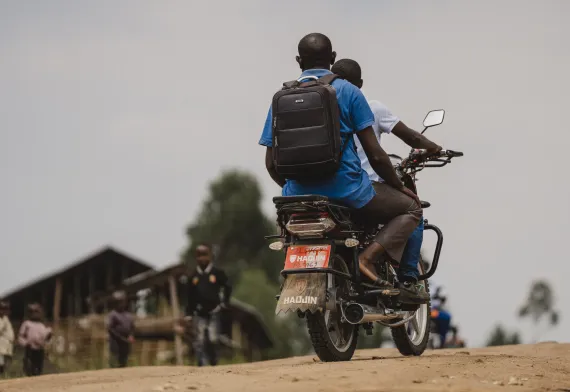
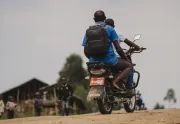
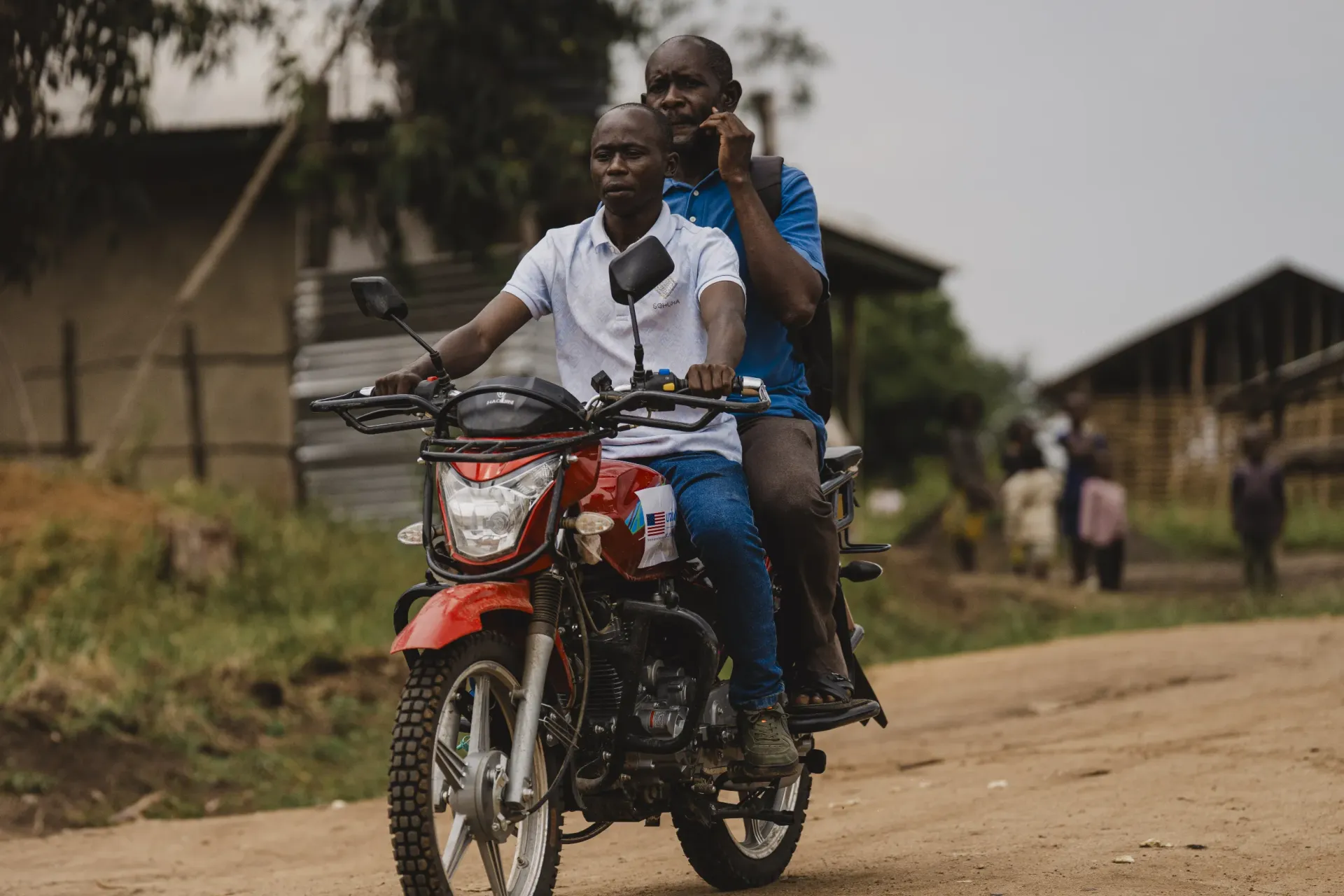
Head nurse Pelo Gloire starts up his health facility’s new motorbike and takes the muddy path leading to a small ford across a stream. Behind him is Luc Bugasari, a community health worker who knows the area around the Tchunga health facility in Ituri well. Every day, Pelo travels to villages by motorcycle to verify reports, trace contacts and conduct investigations. His small health post covers a vast area, and getting around is a real challenge.
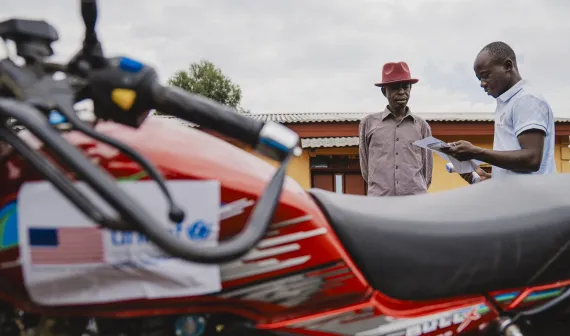
"The ongoing Ebola outbreak requires us to be following up on health alerts and making regular visits to the contacts of people infected with the virus," says Pelo. In collaboration with community mobilizers like Luc, he raises awareness among families and strengthens their trust in health services. The motorcycles provided by UNICEF to Ebola-affected health zones allow for rapid access to hard-to-reach areas and accelerate the response. Thanks to this mobility, teams can detect new cases more quickly and help stop the spread of the epidemic.
Health workers and community health workers: working together to identify and support new contacts
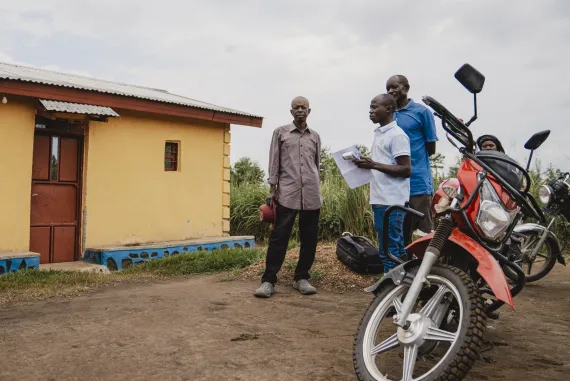
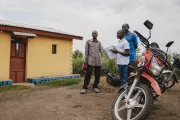
Nurse Pelo visits a family's home with a local community health volunteer for a follow-up visit. "Today, we are in the field tracing contacts within a household where a case has been confirmed," he says.
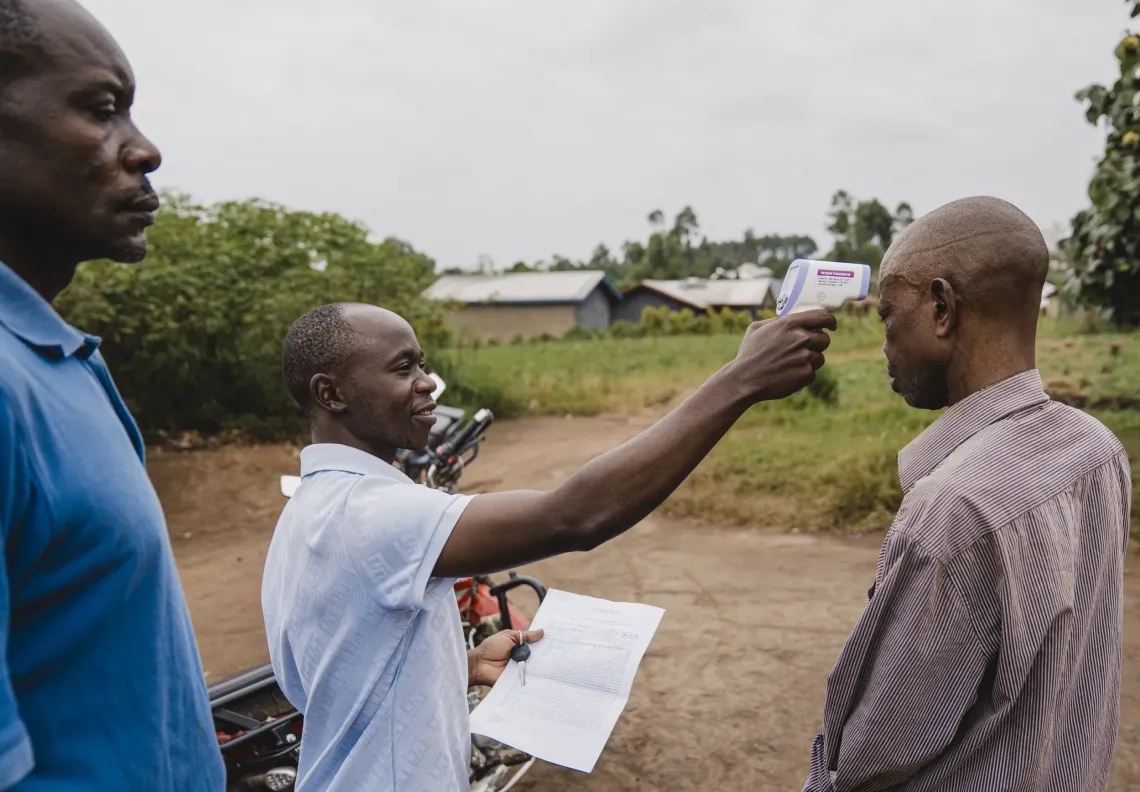
"If we didn't follow up with these contacts, we would have difficulty tracing and monitoring the evolution of the epidemic. The motorcycles play a crucial role in this intervention. Previously, we struggled to be truly present where the communities live. We receive health alerts through community mobilisers and we have contacts to follow up with.”
Contact tracing is a crucial step in the Ebola response. As soon as a case is confirmed, it allows us to identify people who have recently been in direct contact with the infected person. These contacts are then closely monitored to quickly detect any symptoms and to check if they have contracted the virus. This approach allows us to quickly identify contacts and isolate them as soon as the first symptoms appear, to limit further infections and get them to care as soon as possible. These home visits are also an opportunity to reiterate preventive measures, answer families’ questions, and reassure them. “These kinds of visits really help build trust within the community,” explains Pelo. “People are now starting to understand that there is an epidemic. They are ready to act and respect preventive measures.”
Thanks to funding from the US government, UNICEF has already donated 168 motorcycles to the fight against Ebola to strengthen community surveillance and local health services, including 100 to the Provincial Health Division (DPS) with fuel costs covered, as well as two vehicles.