Women's Associations at the heart of Ebola response in Eastern part of RDC
Women's associations remain engaged against Ebola in RDC

- Français
- English
Alongside community engagement activities carried out in the field, UNICEF is investing in strengthening the capacity of local actors, particularly women's associations. Faced with the rapid spread of the Ebola virus disease in a context marked by mistrust and the circulation of rumors, women play a central role in raising awareness among families and mobilizing communities.
Recognizing this influence, UNICEF has placed women at the center of its response strategy by partnering with the Collective of Women's Associations (CAF), a local organization. Through this partnership, UNICEF aims to implement a large share of its community engagement and social and behavior change activities to foster greater community acceptance of prevention measures and help curb the spread of the disease. As of 3 November 2026, Ebola had already claimed 1,544 lives, including 562 children, in North Kivu Province alone.
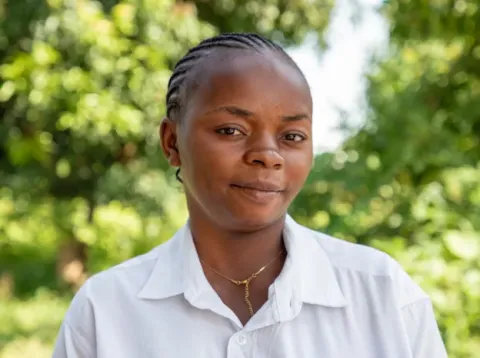
"The health of our community depends largely on us, the women. It is our responsibility to raise awareness and inform our families and neighbors. If we fully commit ourselves and spread the right messages around us, I am confident that we can defeat Ebola," said Zawadi Antoinette at the end of the two-day training conducted by UNICEF teams.
Through this approach, UNICEF is focusing on strengthening the capacity of local women's organizations while continuing dialogue with youth leaders and community advocacy groups. The objective is to promote the adoption of protective behaviors, reduce transmission risks, and strengthen the protection of children and their families.
Beyond the CAF, two other partner organizations, the Red Cross of the Democratic Republic of the Congo and the Support Program for Pygmy Communities, have also benefited from capacity-building sessions on the various components of the UNICEF-supported Ebola response. The training covered Risk Communication and Community Engagement (RCCE), community-based surveillance, Infection Prevention and Control (IPC), Water, Sanitation and Hygiene (WASH) interventions, child protection, mental health and psychosocial support (MHPSS), Prevention of Sexual Exploitation and Abuse (PSEA), as well as the monitoring of key performance indicators