On the Front Lines of the Ebola Response
Psychosocial Support for Children and Families Affected by the Epidemic
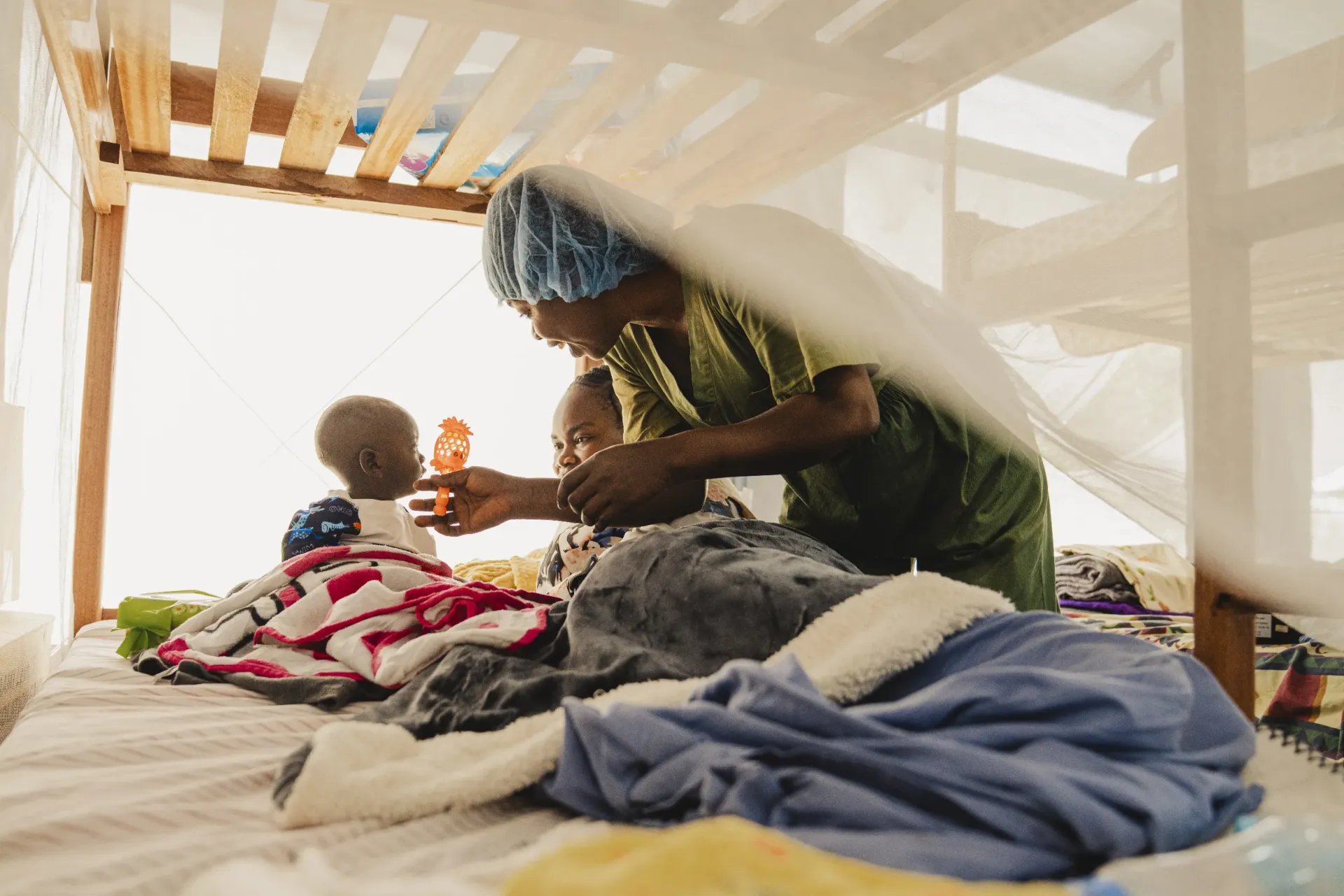
Government social workers, supported by UNICEF, are on the frontlines of the Ebola response providing psychosocial support in Ebola treatment centres in Ituri Province. We followed one social worker through her day.
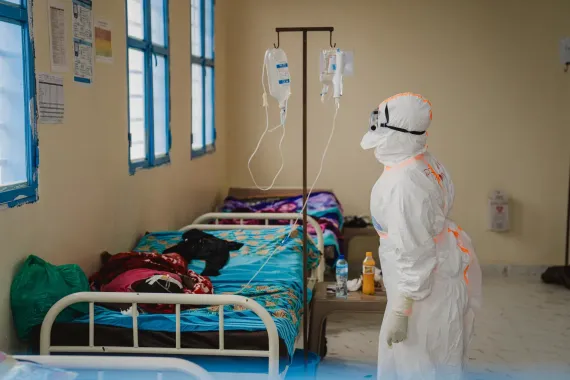
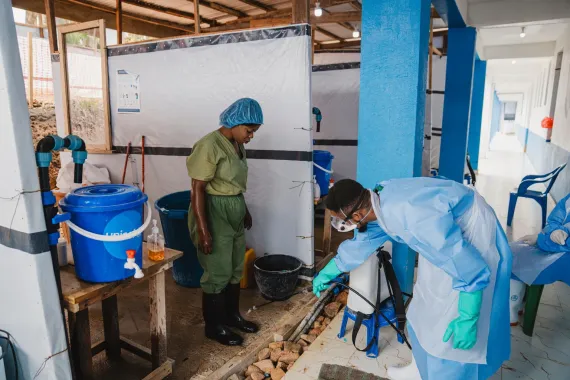
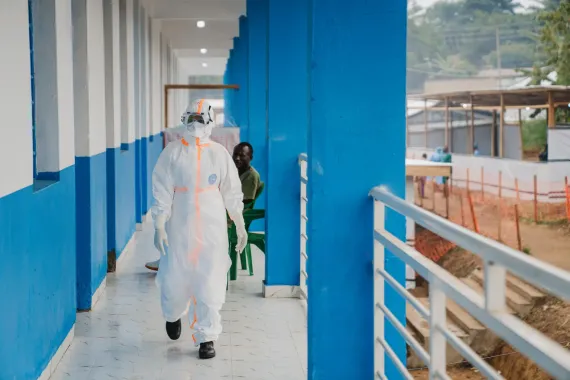
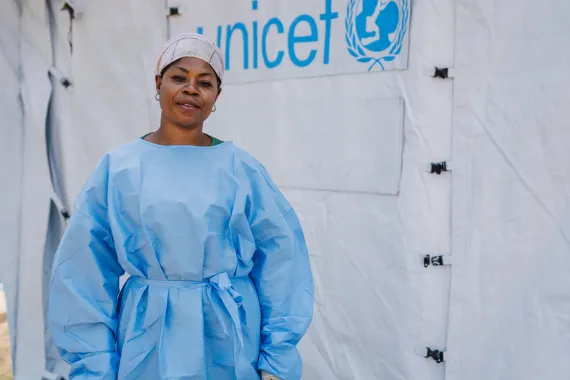
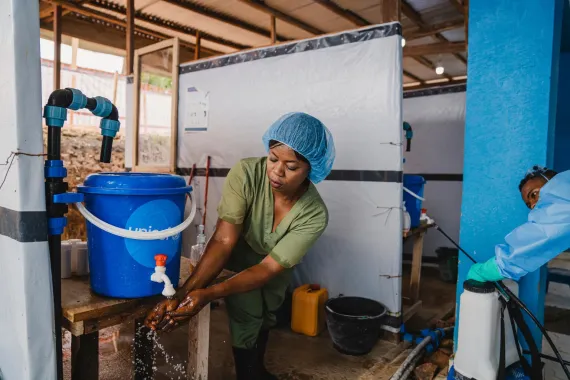
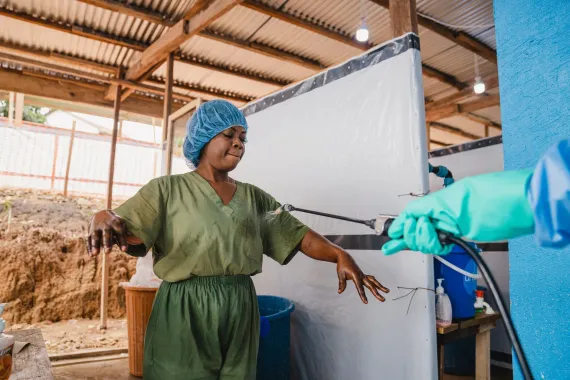
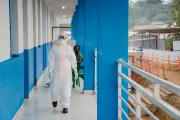
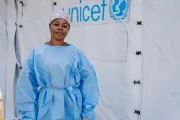
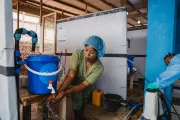
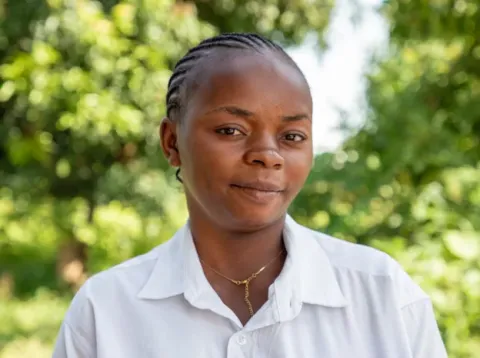
It is barely 8:00 a.m. when Wivine enters the Ebola treatment centre in Bunia. Like every day, she puts on her protective gear before joining the patients and their families.
She is neither a doctor nor a nurse. Yet, her role is essential in the response: she is a psychosocial worker, supported by UNICEF, and she provides support to children and families facing one of the most feared epidemics.
At the Heart of Fear and Uncertainty
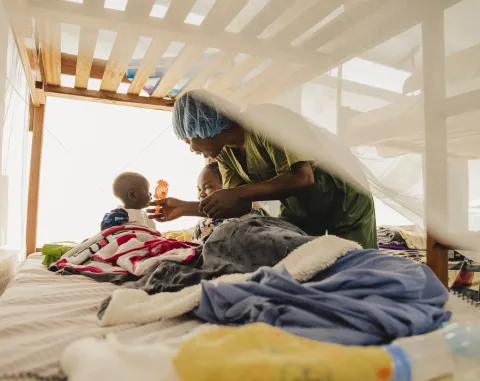
Within a few hours, the centre receives several new patients. For each of them, the diagnosis is still uncertain. But one thing is certain: they all arrive with fear. Among them was a 17-year-old girl accompanied by her six-year-old brother and a three-month-old baby. Their mother was hospitalized elsewhere. The children, disoriented, struggled to understand but knew they would be separated from their parent. Wivine approached them, sat down at their level, and, in simple words, explained where they were and what was going to happen. "They are scared, but what they need most at that moment is to be listened to and reassured," she explained.
Restoring trust
Throughout the day, families arrive outside the centre seeking news of their loved ones. Some arrived anxious, others wary, sometimes influenced by rumours about the illness and the treatment centres. Wivine took the time to explain, answer questions, and dispel misinformation. In just a few hours, she spoke with dozens of people. In the afternoon, a grieving family arrives to collect the body of a loved one. Grief and anger are palpable, and tensions quickly rise at the centre’s entrance. Faced with this situation, Wivine adopts a patient and empathetic approach.
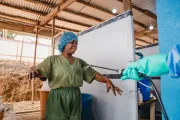
She listens first, then explains the safety measures in place to protect the community. Gradually, tempers ease. Through attentive listening and respectful dialogue, the situation gradually calms down. The family eventually accepts the safety measures, thus helping to limit the risk of transmission within the community. This mediation work not only prevents tensions within the centre but also ensures adherence to essential health protocols to protect other families.
Protecting children in the most critical moments
Later, a patient refuses the offered treatment. Here again, dialogue helps to rebuild trust and prevent a disruption in care. At the end of the day, Wivine goes to the nursery next to the treatment centre, where children are in a safe environment while their parents are in the centre. Some are playing. Others are calling for their parents. She offers them a reassuring presence, a smile, a few simple words essential gestures for children facing a traumatic situation.
Psychosocial support essential to the response
In epidemic contexts, beyond medical care, psychosocial support is essential to protect children, support families, and strengthen trust in health services. Under the leadership of provincial authorities and with the support of UNICEF and its partners, psychosocial workers are deployed in treatment centres and within communities.
UNICEF supports holistic care through a facilitating role within the Psychosocial Support sub-pillar, the provision of a data manager, and the deployment, via the Provincial Division of Social Affairs and National Solidarity (DIVAS), of 24 psychologists and 60 parasocial workers. In Ituri, more than 2,500 people (60 per cent of whom were women and girls) received individualized psychosocial support thanks to the work of 49 social workers and 15 psychologists trained and deployed in the field.
Beyond the numbers, a human response
At the end of the day, reports mention admissions, discharges, deaths, and families made aware of the situation. But for Wivine, the reality goes far beyond the numbers. “Every day, we help children and families overcome their fear and regain confidence. Without this, access to care becomes impossible,” she says. Thanks to this support, more families are accepting treatment and respecting preventive measures, thus helping to curb the spread of the disease.
A message of hope for communities
In the Ebola response, supporting communities is as essential as treating the disease. Without trust, access to care becomes difficult, putting more lives at risk. Today, the work of psychosocial teams helps to break down fear, strengthen adherence to treatment, and protect the most vulnerable children. By seeking prompt treatment, heeding the advice of health teams, and supporting affected families, every community can play a key role in stopping Ebola.
Through the commitment of organizations like Wivine, hope is taking shape: the hope of communities that are more informed, more united, and capable of overcoming the epidemic.