Safi, an entrepreneur committed to her family
In Tanganyika province, cash transfers are empowering women and encouraging better family nutrition

- Français
- English
In the village of Pongo, in Tanganyika province, Safi Fungwa smiles proudly as she holds up the fish she now sells at the local market. Just a few months ago, she started her small business thanks to a cash transfer programme implemented through a partnership between the Irish Government, UNICEF and the World Health Organization (WHO).
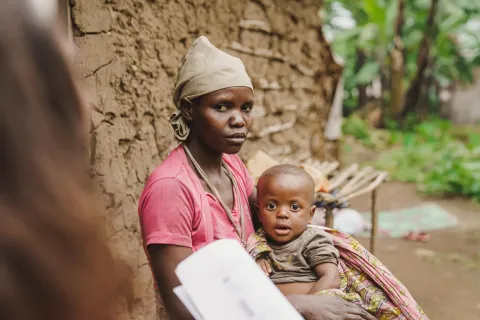
“Community volunteers came to my house and asked questions about my children, whether I was breastfeeding or pregnant,” she recalls. “At the time, I was breastfeeding a child who was already showing signs of malnutrition.”
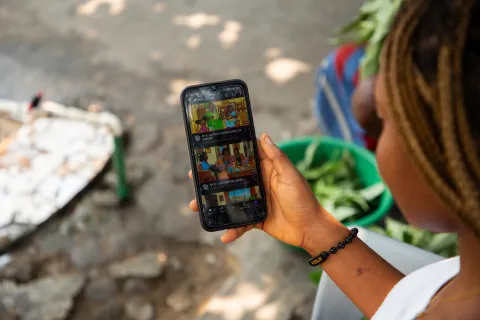
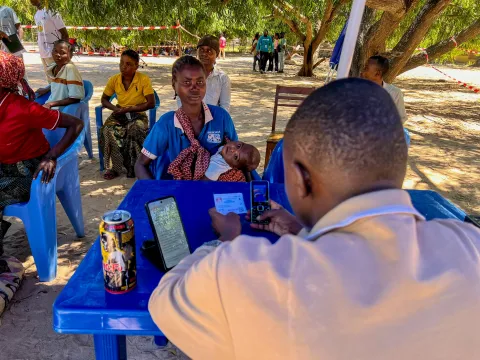
Safi’s family was registered in the programme, and she received a mobile phone to receive the cash transfers. Before that, she earned a small income doing seasonal farm work in other people’s fields: planting, weeding or harvesting, depending on the time of year.

The mobile cash transfers gave Safi a real opportunity to invest in her family’s future. She used part of the money to cover her family’s daily needs. But she didn’t stop there: she chose to invest in a fish business, which she now restocks each week to sell at the market.
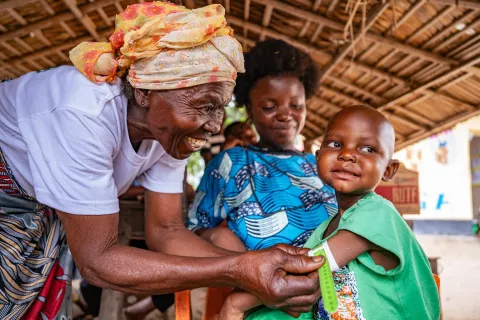
Her youngest daughter, who was suffering from malnutrition, received treatment at Kasu Health Centre, supported by UNICEF. There, she was given ready-to-use therapeutic food. This is a high-energy, nutrient-rich paste used to treat children with severe acute malnutrition.
In Tanganyika province, 52 per cent of children under five are affected by chronic malnutrition. Cash transfers are helping mothers like Safi gain more control over their lives and feed their families with a more varied diet.
Since last year, more than 6,300 families have benefited from the programme with support from the Irish Government. Each household receives the equivalent of $14 US per person per month.

“This support gave me a chance I never had before: I was able to start my own business and finally think about the future,” says Safi.
The steady income means Safi can now provide her children with more nutritious meals. Pregnant with her eleventh child, she takes part in cooking demonstrations organised in her community, learning to prepare balanced meals that meet the needs of growing children and expectant mothers alike.
She is also supported by community workers who help her adopt healthier practices in nutrition, hygiene and healthcare.


But Safi’s story doesn’t end there. Inspired by her experience, she decided to give back. Together with other women in the programme, she helped set up a small local market where people can buy and sell goods each day. They also created a community cooperative.
“Even those who didn’t receive financial aid can now borrow a small amount, start a business, and repay it little by little. We’re all moving forward together,” she says proudly.
Through cash transfers, Safi is not only improving life for her own family, but she’s also standing alongside other families to help fight malnutrition and build a stronger, more resilient community.